 Semiahmoo
 Decks Near California Creek Take a Different Kind of Beating
California Creek sits close enough to the water and the open exposure around Semiahmoo that decks here don't age the way they would twenty miles inland. Salt-laden air off Semiahmoo Bay and Drayton Harbor works into fasteners, flashing, and end grain year-round. Add Whatcom County's long stretch of driving rain and the shaded, damp conditions that let moss and algae take hold on horizontal surfaces for months at a time, and you've got a climate that's genuinely hard on outdoor structures. A deck that would last two or three decades in a dry inland climate can show real structural problems in half that time out here if it wasn't built — or isn't maintained — with this exposure in mind.
We're not describing a worst-case scenario. This is the normal, expected wear pattern for decks in this part of Whatcom County, and it's the reason "deck replacement" around California Creek is rarely a cosmetic upgrade — it's usually a response to rot, corroded hardware, or a structure that's quietly lost load capacity.
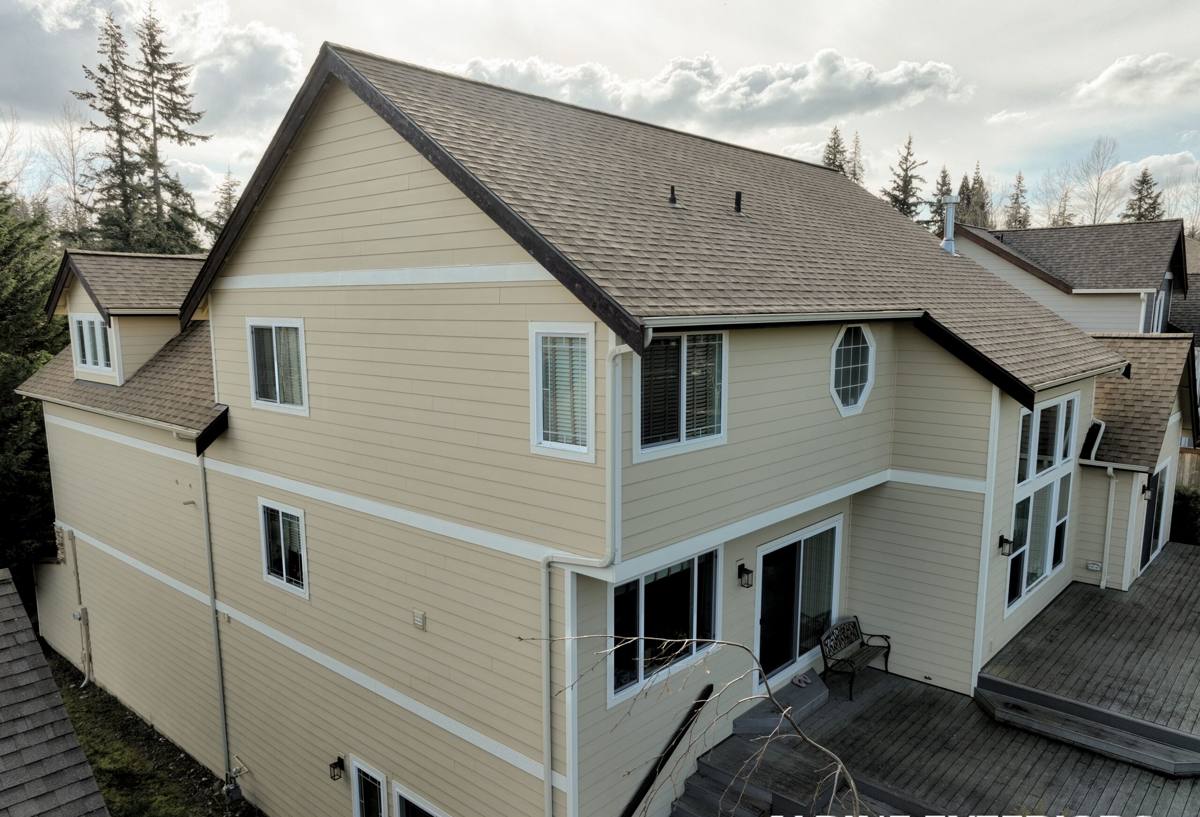
What Salt Air, Rain, and Moss Actually Do to a Deck
Salt Air and Metal Fasteners
Salt in the air accelerates corrosion on anything metal — joist hangers, structural screws, bolts, post bases. Corrosion doesn't just make hardware look bad; it reduces the actual holding strength of the connection. A joist hanger that's rusted through at the nail holes isn't doing its job anymore, even if the wood around it still looks fine from a distance.
Driving Rain and Water Intrusion
Rain that comes in sideways, which is common in this part of the county during fall and winter storms, finds its way into places a straight-down rain never would: behind ledger boards, under poorly lapped flashing, into end grain at board cuts, and around post connections that weren't detailed for wind-driven wetting. Once water gets behind the surface, it stays wet far longer than it takes to dry after a normal rain, and that's where rot starts — usually invisible until it's advanced.
Moss, Algae, and the Long Wet Season
Semiahmoo's long moss season means horizontal deck surfaces and any spot that doesn't get direct sun or airflow can stay damp for weeks. Moss and algae hold moisture against the wood surface, and that constant dampness accelerates decay in the boards themselves, even if the framing underneath is still sound. It also makes decking surfaces slick and genuinely dangerous underfoot, which is a safety issue as much as a maintenance one.
Signs a California Creek Deck Needs Replacing, Not Just Repair
Not every tired-looking deck needs a full replacement. But there's a point where patching individual boards or hardware stops being a real fix and starts being a delay. Some signs we look for on local inspections:
- Soft or spongy decking boards, especially near the house or along low-airflow edges
- Visible rust staining bleeding out from fastener heads or joist hangers
- A ledger board connection with soft wood, gaps, or signs of past water intrusion behind it
- Posts that feel loose or show rot at the base, near grade or near footings
- Persistent moss or algae growth that returns within weeks of cleaning
- Railings that flex or feel less rigid than they should under normal push
- A deck more than 15-20 years old that was built before current fastener and flashing standards were common practice
If you're seeing two or more of these, it's worth a real inspection before you spend more money maintaining a structure that's past the point of being worth saving.
What a Correct Deck Replacement Involves Here
Framing and Structural Connections
Given the corrosion pressure from salt air, we spec stainless steel or heavy-duty coated structural hardware rated for coastal or high-moisture exposure — not the standard-grade fasteners that are fine in a dry inland build but undersized for this environment. Joist hangers, post bases, and structural screws all get chosen with that in mind, not just the cheapest code-compliant option.
Ledger Attachment and Flashing
The ledger-to-house connection is one of the most common failure points on any deck, and it's especially unforgiving here because of how much wind-driven rain the area sees. A correct ledger detail uses proper flashing that sheds water away from the house, with the deck board field pitched slightly away from the structure so water doesn't pool against it. This is the single detail we're most careful about, because getting it wrong is what causes the hidden rot that homeowners don't discover until a board finally gives way.
Decking Material Choice
Material selection matters more here than in a drier climate. We'll walk through the real trade-offs with you rather than push one product:
| Material | Moisture Behavior | Maintenance | Trade-offs |
|---|---|---|---|
| Pressure-treated wood | Resists rot when properly maintained; still absorbs moisture | Regular sealing/staining needed, especially in this climate | Lower upfront cost, shorter realistic lifespan near salt air without upkeep |
| Cedar | Naturally moisture-resistant, but surface still needs protection | Periodic sealing, more sensitive to installation quality | Attractive, but requires disciplined maintenance to hold up in this exposure |
| Composite decking | Doesn't absorb water or rot the way wood does | Low — no staining or sealing needed | Higher upfront cost, framing underneath still needs the same corrosion-rated hardware and proper drainage |
Whichever surface material you choose, the framing and fastener specification underneath it matters just as much for how long the deck actually lasts near Semiahmoo.
Surface Drainage and Airflow
We also pay attention to gapping between boards and any spots where airflow is restricted — under stairs, along house walls, near tight railing sections. Good airflow is one of the simplest, most effective defenses against the moss and algae buildup that's so persistent in this climate, and it costs nothing extra to get right at the design stage.
Our Replacement Process
- On-site inspection — we check framing, ledger connection, posts, and hardware condition, not just the surface boards, so you know exactly what's driving the recommendation
- Honest scope discussion — full replacement, partial reframe, or repair — we tell you which one your deck actually needs and why
- Material and hardware selection — matched to your budget and to the exposure your specific site actually gets (a shaded, low-airflow deck near the water needs different choices than an open, sunny one)
- Demo and structural build — old decking, framing, and hardware removed; new structure built with corrosion-rated fasteners and correctly detailed ledger flashing
- Decking installation — proper board spacing and orientation for drainage and airflow
- Final walkthrough — we go over the finished deck with you, including what maintenance (if any) the material you chose will need going forward
Cost Factors for a California Creek Deck Replacement
Every deck is different, but the biggest cost drivers we see locally are consistent. Rather than quote a number that won't mean much without seeing your site, here's what actually moves the price:
| Factor | Why It Matters Here |
|---|---|
| Deck size and footprint | More square footage means more material and more framing, straightforwardly |
| Height and stair complexity | Elevated decks and multi-run stairs require more structural work and code-compliant railing detail |
| Ledger and house condition | If there's existing rot behind the ledger, that repair adds scope beyond the deck itself |
| Decking material choice | Composite costs more upfront than treated wood but changes the long-term maintenance picture |
| Hardware specification | Coastal-rated stainless hardware costs more than standard-grade but is the right call for this exposure |
| Site access | Waterfront and sloped lots common in this area can add labor for material staging and equipment access |
We give you real numbers after we've actually looked at your deck and your site — not a generic estimate that ignores what your specific structure needs.
Why Local Experience Matters for This Job
A deck replacement done by a crew unfamiliar with this specific microclimate often looks fine on completion day and starts showing problems within a few wet seasons — standard-grade hardware corroding faster than expected, a ledger flashing detail that wasn't built for wind-driven rain, decking that traps moisture because gapping and airflow weren't prioritized. We work in Semiahmoo and the surrounding Whatcom County communities regularly, which means we're not guessing at what this exposure does to a structure over time — we're building to account for it from the start, and we're the ones who get called back if something wasn't done right, so we have every incentive to get it right the first time.
Maintaining Your New Deck Once It's Built
Even a properly built deck benefits from some seasonal attention in this climate:
- Clear moss and debris from the surface and between boards before it has a chance to establish
- Keep gutters and downspouts near the deck clear so runoff isn't dumping extra water onto or under the structure
- Check the ledger flashing area annually for any signs of staining or gaps
- If you chose wood decking, follow a sealing schedule appropriate to the product rather than waiting until it looks weathered
- Trim back vegetation that's shading the deck and keeping it damp longer than it needs to be
None of this is complicated, but skipping it is exactly how a well-built deck ends up needing early repairs in a climate this demanding.
If your deck near California Creek is showing rust stains, soft spots, or persistent moss, we're happy to take a look and give you a straight answer about repair versus replacement. Fill out the form below for a free, no-pressure estimate.