 Semiahmoo
 Why California Creek Siding Takes More Than a Standard Install
California Creek sits close enough to Semiahmoo Bay and Drayton Harbor that saltwater is part of daily life for the homes here, not just a weekend view. Add in the tall conifer cover that shades a lot of lots in this part of Whatcom County, and you get a specific combination working against your siding year-round: salt-laden air pushing moisture into every seam and fastener, driving rain off the water during fall and winter storms, and long stretches of shade that keep north and west walls damp enough for moss and algae to take hold and stay there. None of that is unique to California Creek by itself, but the combination is what separates an easy siding job from one that has to be planned for the site.
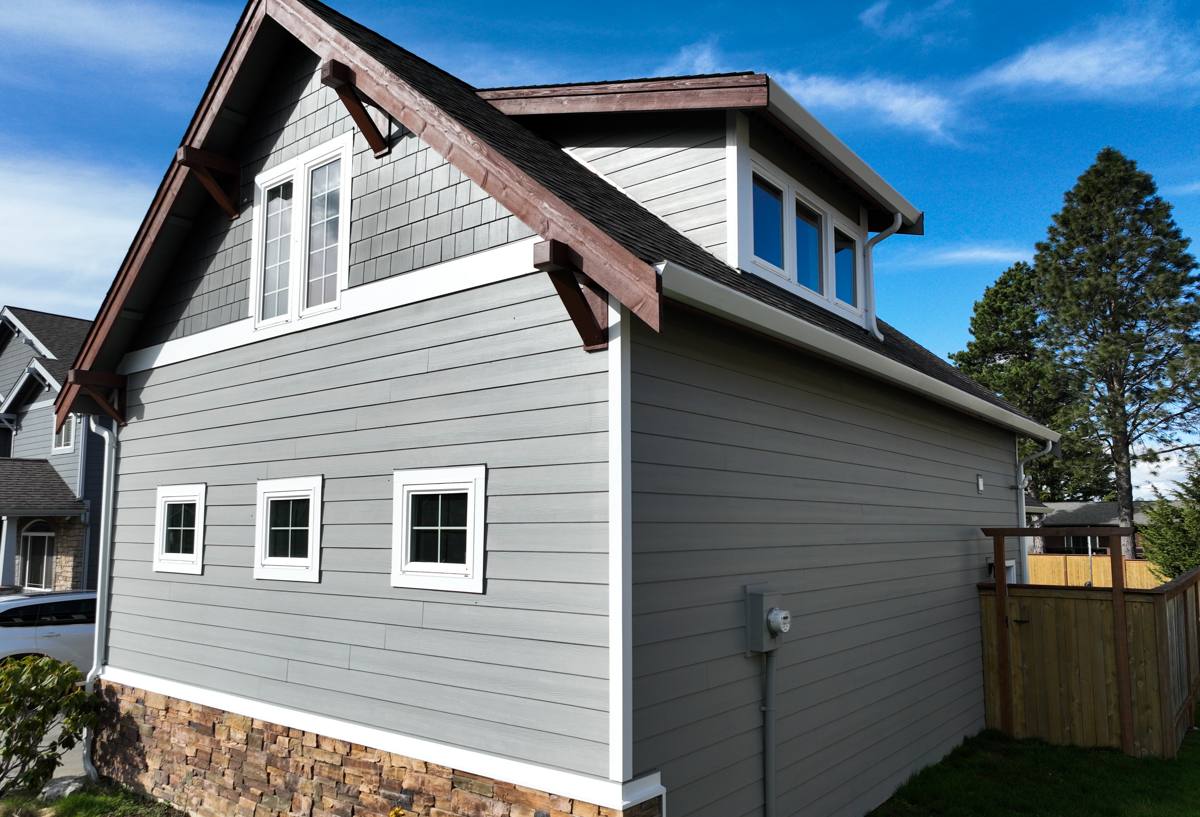
We install exclusively James Hardie fiber cement siding, and the reason comes down to how a product performs under exactly these conditions over 20-30 years, not how it looks on the day it goes up. This page is about what a correct James Hardie install looks like specifically for a California Creek property, and why the crew doing the work matters as much as the product itself.
What Salt Air, Rain, and Moss Actually Do to a Wall
Salt Air
Airborne salt is corrosive to metal and hard on any finish that isn't built to resist it. Fasteners, flashing, and trim that aren't rated for coastal exposure will corrode faster here than they would ten or fifteen miles inland. Paint film on wood or engineered wood siding also breaks down faster under salt exposure, which is part of why repaint cycles near the water tend to be shorter than manufacturers advertise.
Driving Rain
Storms coming off the water don't just fall straight down — wind-driven rain gets pushed sideways into wall assemblies, especially on gable ends and any wall facing open water or a clearing. That means water is testing your laps, your flashing, and your caulking joints far more aggressively than a calm-weather install would suggest. A siding job that looks fine in July can leak in November if the water management behind the siding wasn't done correctly.
Moss and Shade
Tree-covered lots hold moisture longer after a storm passes. Combine that with a long Pacific Northwest wet season and you get walls that stay damp for days at a time, which is exactly the environment moss, algae, and mildew need to establish. Once organic growth gets a foothold on a wall, it holds even more moisture against the surface, which accelerates whatever decay process is already in progress underneath.
Why We Only Install James Hardie Here
We don't install LP SmartSide, vinyl, Cemplank, Allura, primed spruce, or cedar. That's a deliberate standard, not a limitation of what we're capable of installing. For a site like California Creek, the reasons are practical:
- Non-combustible material: fiber cement doesn't feed a fire the way wood-based products can, which matters anywhere near dry summer brush and tree cover.
- Moisture behavior: Hardie's fiber cement doesn't swell, rot, or delaminate the way engineered wood products can when they take on repeated moisture exposure at seams and cut edges.
- Factory-cured ColorPlus finish: the finish is baked on at the factory rather than site-applied, which gives it more consistent resistance to salt air and UV than a field-applied paint job, and it carries its own finish warranty separate from the substrate.
- HZ product engineering: Hardie makes region-specific HZ formulations built for wetter climates, which is what we spec for anything on or near the water in this county.
We're not going to tell you other products are junk — some of them have real strengths in the right application. What we will say is that for this specific combination of salt exposure, driving rain, and shaded moisture retention, we've standardized on the product that holds up best over the long run, and we'd rather turn down a job than install something we don't believe will perform here.
What a Correct Install Involves on a Site Like This
The siding itself is only part of the job. Most siding failures we get called out to inspect near the water aren't a problem with the material — they're a problem with what's underneath it or how it was fastened. On a California Creek property, we pay particular attention to:
Water Management Behind the Siding
A drainage plane and properly lapped weather-resistant barrier behind the siding gives incidental moisture a way out instead of a place to sit. Rainscreen strategy matters more here than in a drier inland area, since the wall assembly needs to shed and dry faster than the rain can reload it.
Flashing at Every Penetration
Windows, doors, deck ledgers, hose bibs, vents — every penetration is a place wind-driven rain will find first. Flashing has to be integrated correctly with the barrier and the siding laps, not just caulked over.
Fasteners and Hardware Rated for Coastal Exposure
We use fasteners and metal components rated to resist corrosion in salt-air environments. Using standard hardware to save a few dollars is exactly the kind of shortcut that shows up as rust streaks and loosened boards a few years down the road.
Correct Fastening Pattern and Clearances
Hardie's installation instructions specify fastener spacing, clearance from grade, and clearance from roof lines and decks for a reason — those clearances keep splashback and standing water away from the bottom of the siding, which is where moisture problems most often start.
Caulking and Joint Treatment
Butt joints and trim intersections get treated as part of the water management plan, not as an afterthought. Under driving rain, a joint that isn't sealed correctly is a direct path for water into the wall assembly.
Our Process
- On-site assessment: we look at sun/shade exposure, prevailing wind and rain direction, existing moisture damage, and the current state of the water-resistive barrier before quoting anything.
- Product and color selection: we walk through HZ product options and ColorPlus finish choices that make sense for the site's exposure.
- Prep and tear-off: removal of old siding, inspection of sheathing for hidden rot or moisture damage, and repair of anything compromised before new material goes up.
- Barrier and flashing install: correct lapping, integration with windows and doors, and rainscreen setup where called for.
- Siding install: installed to Hardie's published specifications for fastening, clearance, and joint treatment.
- Final inspection and cleanup: a walk-through before we consider the job finished, plus site cleanup.
Why Hiring a Crew That Already Works This Area Matters
A crew that's worked properties around Semiahmoo and Drayton Harbor already knows which walls on a shaded, water-adjacent lot take the worst of the rain, where moss tends to establish first, and what water-management details actually hold up here versus what looks fine on paper. That's not something you get from a general contractor working from a standard spec sheet without site-specific judgment. It also means fewer surprises during the estimate — we've seen what these lots do to a wall assembly over time, so we're not guessing at what needs extra attention.
Cost Factors for a James Hardie Job Near the Water
| Factor | Why It Affects Cost |
|---|---|
| Extent of existing moisture damage | Rotted sheathing or framing found during tear-off has to be repaired before new siding goes on |
| Wall exposure and complexity | Gable ends, dormers, and multiple penetrations require more flashing and detail work |
| Product line and finish | HZ5 vs. standard HZ10 formulations and ColorPlus color selection affect material cost |
| Rainscreen vs. standard drainage plane | Added moisture-management detail for high-exposure walls adds labor |
| Access and site conditions | Tree cover, slope, and staging space affect labor time |
| Trim and accessory scope | Fascia, soffit, and trim replacement alongside siding changes total project cost |
Living With Hardie Siding in This Climate
Once it's installed correctly, James Hardie siding is low-maintenance, but "low-maintenance" doesn't mean "no maintenance" on a shaded, coastal lot. A few things owners in this area should plan for:
- Periodic gentle washing of north- and west-facing walls to keep moss and algae from establishing, especially on sections that stay shaded most of the day.
- Checking caulked joints and trim intersections every year or two, since UV and salt exposure will eventually break down any sealant, no matter how good the initial install was.
- Keeping vegetation trimmed back from walls to improve airflow and sun exposure, which reduces how long walls stay damp after a storm.
- Watching for any staining or discoloration near the bottom of the siding, which can signal splashback or a drainage issue worth addressing early.
Questions to Ask Before Hiring Anyone for This Job
- Are they installing to James Hardie's published specifications for fastening, clearance, and joint treatment, or working from general practice?
- Do they inspect and repair sheathing before installing new siding, or just cover what's there?
- What hardware and fasteners do they use, and are they rated for coastal/salt-air exposure?
- Do they include a written scope covering flashing, drainage plane, and rainscreen details, not just the visible siding?
- Can they explain how their approach differs for a shaded, water-adjacent lot versus a standard inland install?
If you're weighing a siding project for a California Creek property, we're happy to walk the site, look at what your walls are dealing with, and put together a straightforward, no-pressure estimate. There's a form below to get that started.