 Semiahmoo
 Why Roofs Around California Creek Wear Differently
A roof in California Creek doesn't age the same way a roof fifty miles inland does. Sitting close to Drayton Harbor and the open water around Semiahmoo, homes here take on a steady dose of salt-laden air that speeds up corrosion on anything metal — nails, flashing, vent stacks, gutter hardware. Add in driving rain that comes in sideways off the water during winter storms, and a shaded, damp growing season that can stretch nine months out of the year, and you've got three separate stressors working on the same roof at once.
None of this means a California Creek roof needs exotic materials or a scare-tactic sales pitch. It means the repair work has to account for salt exposure, wind-driven moisture, and moss the way roofs in drier parts of Whatcom County don't have to. A patch that would hold fine in Yakima can fail here in two winters if it wasn't installed with that in mind.
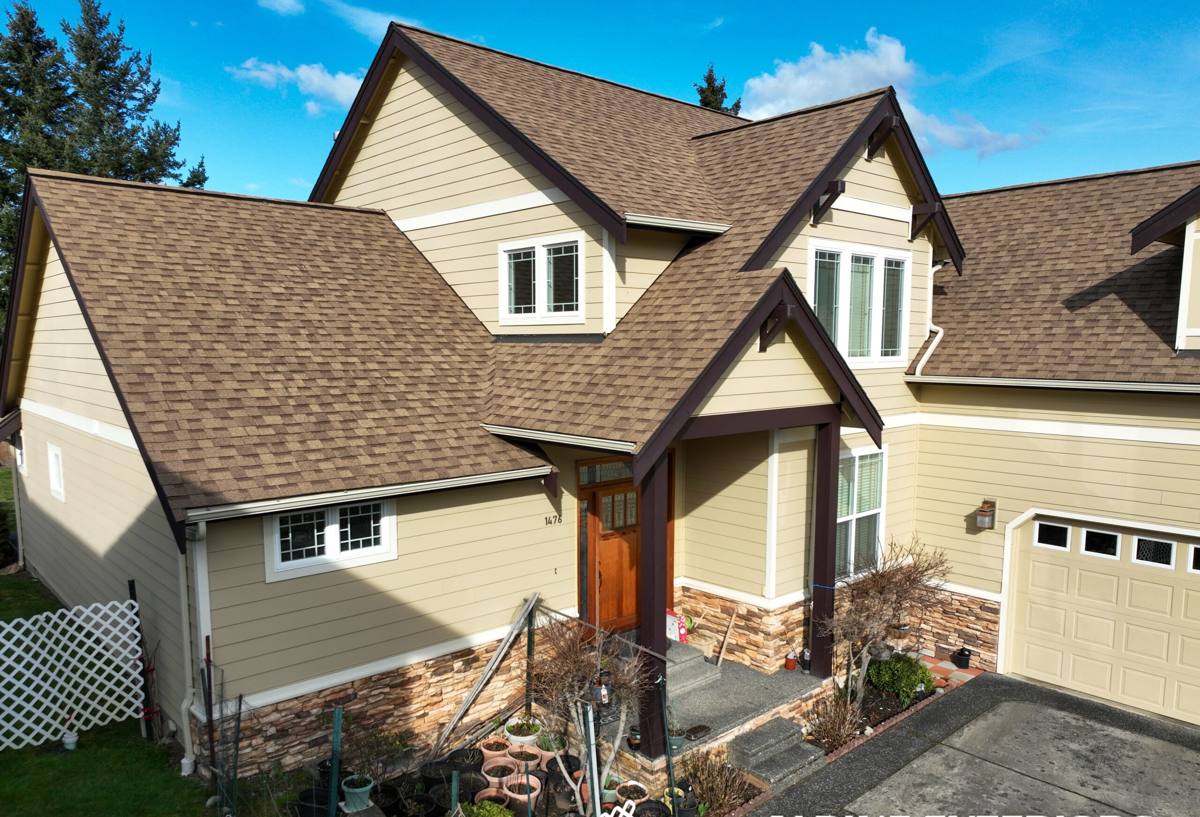
Warning Signs It's Time for Roof Repair
Inside the house
Most homeowners don't catch roof problems from the roof — they catch them from the ceiling. Watch for a brown or yellow stain that grows after a hard rain, a musty smell in an upstairs closet, paint bubbling near a ceiling light, or a soft spot in the attic decking when you press on it. By the time water shows up inside, it's usually been getting in for a while.
Outside the house
From the ground, look for shingles that are curling, cracked, or missing outright, especially after a windstorm. Granules collecting in the gutters or at the base of downspouts mean the shingle surface is wearing thin. Dark streaking is algae; thick green cushions along the north-facing slope or in the shade of trees are moss, and moss holds moisture against the roof deck far longer than the manufacturer ever designed for. Rusty streaks below a vent pipe or chimney flashing usually mean that metal has started to go.
What a Proper Roof Repair Actually Involves
A repair that's done right isn't just swapping a few shingles and calling it done. It starts with figuring out why that spot failed in the first place — because in a salt-air, high-rainfall climate, the visible damage is often a symptom, not the cause.
- Diagnose before patching. We trace the leak back to its actual entry point, which is frequently several feet from where the stain shows up inside.
- Check the decking, not just the surface. If water has been getting in long enough, the plywood or OSB underneath may be soft or delaminating and needs to be cut out and replaced, not covered over.
- Replace flashing with corrosion in mind. Salt air eats through cheap flashing fast. We use materials rated for coastal exposure around chimneys, skylights, and roof-to-wall transitions rather than whatever is cheapest.
- Match materials to what's already there. Shingle color, profile, and granule type vary by manufacturer and even by production run — a mismatched patch is a cosmetic problem you'll see from the street for years.
- Address the moss, not just the hole it caused. Killing and removing moss without fixing the shade or ventilation issue that let it grow just buys you a year or two before it's back.
The Trouble Spots We See Most Often Here
Certain parts of a roof fail first in this climate, and knowing where to look is half the job.
Valleys and low-slope transitions
Water concentrates in valleys, and Whatcom County's heavier winter storms push a lot of it through fast. Old or improperly lapped valley flashing is one of the most common leak points we find.
North and shaded slopes
Anything facing away from the sun, or shaded by fir and cedar trees common around Semiahmoo, dries out slower after rain. That's exactly where moss and algae take hold first, and where the shingle surface breaks down earliest.
Penetrations
Vent pipes, bathroom exhaust fans, and chimney flashing all rely on a seal that's exposed to the weather directly. Salt air and constant damp shorten the working life of the rubber boots and caulking used around these penetrations, so they're worth checking even when the rest of the roof looks fine.
Repair or Replace? Cost Factors to Weigh
Not every roof problem calls for full replacement, and not every leak can be solved with a patch. These are the honest factors that push the decision one way or the other.
| Factor | Leans toward repair | Leans toward replacement |
|---|---|---|
| Age of roof | Under 12–15 years, one or two isolated problem areas | Near or past the manufacturer's expected lifespan |
| Extent of damage | Localized to a valley, flashing point, or a few shingle runs | Widespread granule loss, curling, or moss across most slopes |
| Decking condition | Solid, dry plywood found under the damaged area | Soft, delaminated, or repeatedly re-repaired decking |
| Leak history | First occurrence, single clear cause | Recurring leaks in different spots over several seasons |
| Cost over time | Repair cost is a small fraction of replacement cost | Repeated repairs are starting to add up close to replacement pricing |
We'll tell you straight which category your roof falls into. A repair that's just delaying an unavoidable replacement isn't a good use of your money, and we're not going to sell you a full re-roof when a targeted repair will hold up fine.
Our Roof Repair Process
- Full roof inspection, not just the reported problem area. We walk the whole roof, because in this climate a second issue is often already developing.
- Photos and a plain-English explanation. You see what we see and understand what caused it before any work starts.
- A written scope and price. No verbal estimates that change once the crew is on the roof.
- Repair using materials suited to salt air and moisture. Corrosion-resistant flashing, properly lapped underlayment, and shingles matched as closely as possible to your existing roof.
- Cleanup and a final walkthrough. Debris and old materials hauled off, gutters checked, and the repair explained before we leave.
Questions to Ask Before You Hire
Roof repair is one of those jobs where a rushed hire can cost you twice — once for the bad repair, and again to fix it properly later. Before signing anything, ask:
- Are you licensed and insured to work in Washington, and can you show proof?
- Will you put the scope of work and materials in writing before starting?
- Do you inspect the whole roof or just the spot I called about?
- What warranty covers the repair itself, separate from the shingle manufacturer's warranty?
- Do you have experience with coastal or high-moisture roofs specifically, not just general roofing?
- Will the crew match existing shingle color and profile, or use whatever's on the truck?
Why Local Experience in Semiahmoo and Whatcom County Matters
A crew that works this stretch of Whatcom County regularly already knows which shingle brands hold up to salt air, which flashing details fail first in wind-driven rain, and how aggressive the moss season here actually gets compared to drier parts of the state. That's not something you can fully learn from a manufacturer's install guide — it comes from repairing roofs in this exact climate season after season. It also means we're not guessing at what "normal wear" looks like for a California Creek roof versus one thirty miles inland; we see the difference firsthand.
Keeping a Repaired Roof Healthy Between Service Calls
A good repair buys you years, but a little upkeep buys you more. A few habits make a real difference in this climate:
- Keep gutters and downspouts clear, especially after fall leaf drop — clogged gutters back water up under the shingle edge.
- Trim back tree limbs that shade the roof and keep it damp longer than it needs to be.
- Have moss treated before it forms thick mats, not after — a light growth is a quick job, an established mat isn't.
- Walk the attic once or twice a year, especially after a big windstorm, and look for daylight, damp insulation, or new staining.
- Don't ignore small granule loss or a single lifted shingle — it's a cheap fix now and a bigger one in a year.
If you're seeing any of the warning signs above, or it's just been a while since anyone looked at your roof, we're happy to take a look. Reach out for a free, no-pressure estimate — use the form below and we'll get back to you.