 Semiahmoo
 Why California Creek Homes Wear Siding Differently
California Creek sits close enough to the water that homes here take a different kind of beating than siding fifty miles inland. It's not one big storm that does the damage — it's the daily grind. Salt-laden air off Semiahmoo Bay and Drayton Harbor works into seams, fasteners, and cut edges. Driving rain off the Strait pushes water sideways into laps and trim, not just straight down. And the tree cover and marine humidity around the creek corridor mean moss and algae get a running start almost every year and don't let go until well into summer.
None of that is dramatic on its own. What it does is compound. A siding product that's marginal on moisture resistance, or a install that cut corners on flashing, doesn't fail in year one — it fails in year eight or ten, quietly, behind paint that still looks okay from the street. By the time you can see the damage, there's usually water damage underneath it too.
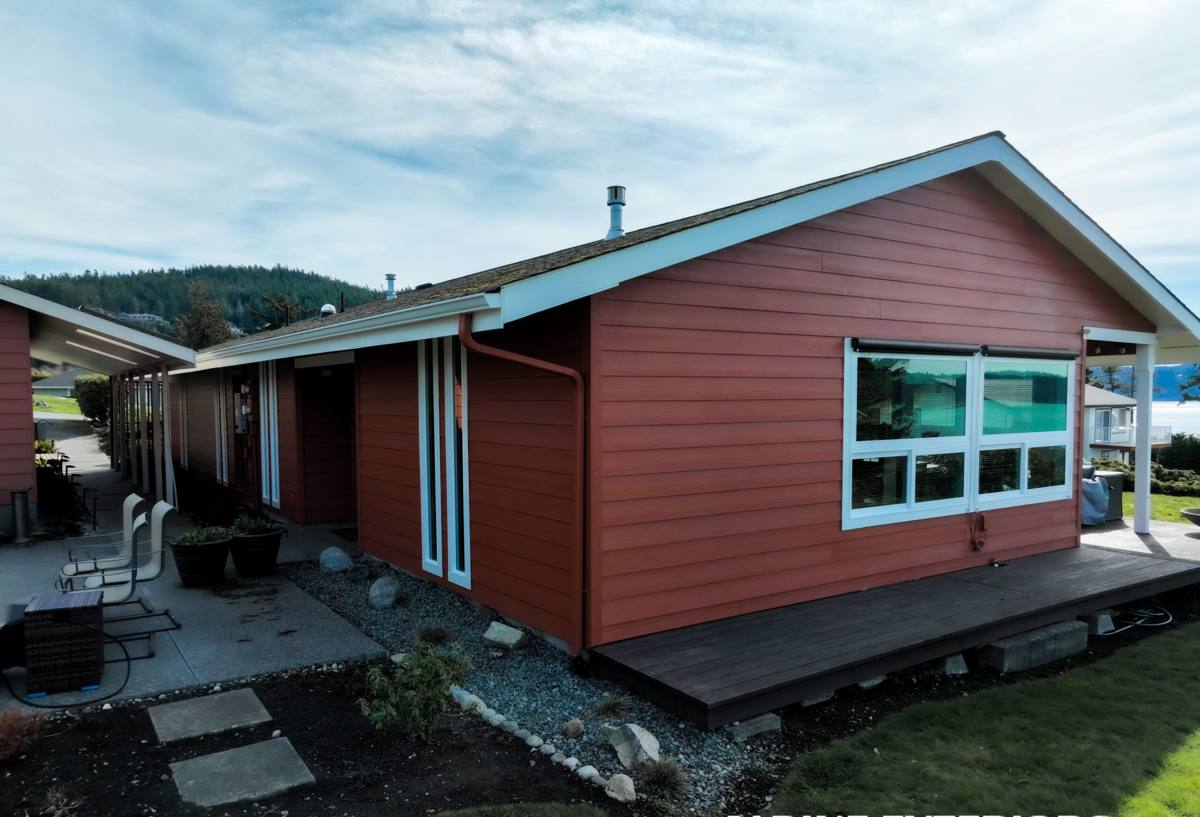
Signs a California Creek Home Needs Siding Replacement
Most homeowners call us after noticing one obvious problem, but a proper inspection almost always turns up more. Here's what we look for, and what you can check yourself before you call anyone:
- Soft or spongy spots when you press on the siding, especially near the bottom courses and around window trim
- Paint that's bubbling, peeling, or needing repainting more often than every 7-10 years
- Persistent moss or dark streaking that comes back within a season of cleaning
- Visible gaps, warping, or buckling boards, particularly on the sides of the house facing the water or prevailing wind
- Cracking at butt joints or corners, which is often the first sign of moisture cycling in wood-based products
- Nail heads popping or streaking with rust
- Interior clues — musty smells, discolored drywall, or trim separating near exterior walls
Any one of these can be a minor repair. Several together, especially on a home more than 15-20 years old, usually mean the siding system itself has reached the end of what it can protect against.
What a Correct Siding Replacement Involves
Replacing siding isn't just swapping old boards for new ones. In a climate like this, most of the long-term performance comes from the parts you never see once the job is done.
Tear-off and inspection
We strip the old siding back to the sheathing and actually look at what's underneath — soft sheathing, rot around window and door openings, and old flashing failures all get found here, not guessed at. This step is non-negotiable near water; covering up hidden damage just buries the problem for the next owner.
Water-resistive barrier and flashing
A weather-resistive barrier goes on correctly lapped, shingle-style, so water drains down and out rather than behind it. Every window, door, and penetration gets properly integrated flashing — this is the single most common thing we find missing or done wrong on older homes near the coast, and it's the difference between siding that lasts and siding that rots from the inside.
Fastening and joints
Fastener spacing, type, and depth all matter more in salt air than they do inland — under- or over-driven nails, or the wrong fastener material, become the entry point for corrosion and moisture years down the line. Butt joints get treated as a weak point by design and detailed accordingly, not just butted and caulked.
Trim, caulking, and paint system
The finish system has to be matched to the substrate and the exposure. On a California Creek job facing the water, we pay particular attention to sealant compatibility and factory-finish integrity, since field-applied caulk and paint are the first things to break down under UV and salt cycling.
Why We Only Install James Hardie Fiber Cement
We get asked why we don't offer vinyl, LP SmartSide, primed spruce, cedar, or other fiber cement brands like Cemplank or Allura. The honest answer is that we standardized on one product because it performs consistently in this specific climate, and we'd rather be excellent at installing one system correctly than average at installing several.
James Hardie fiber cement is non-combustible, doesn't swell or rot the way wood-based products can when moisture gets in at a seam, and the ColorPlus factory finish holds up better against UV and salt exposure than field-applied paint. Hardie also engineers specific product lines (HZ5, for example) for regions with more moisture exposure, which matters directly for a neighborhood sitting this close to Semiahmoo Bay. The warranty is transferable and backed by a manufacturer with decades of track record in coastal Pacific Northwest conditions — not a small consideration when you're planning to own the home for a while, or eventually sell it.
We're happy to talk through the trade-offs of other products if you're comparing options — we just don't install them, and we'd rather tell you why up front than let you find out after a few winters.
Our Process for California Creek Projects
| Stage | What Happens |
|---|---|
| Estimate visit | On-site inspection, moisture check where accessible, honest assessment of whether it's a repair or full replacement |
| Proposal | Written scope, product line and color, timeline, and price — no vague allowances |
| Tear-off and sheathing check | Old siding removed, substrate inspected and repaired as needed before anything new goes on |
| WRB and flashing | Barrier and flashing installed to manufacturer spec around every opening and penetration |
| Hardie installation | Fastened, jointed, and trimmed to spec for the exposure the wall actually faces |
| Final walkthrough | Site cleanup, punch list, and a walk-through so you know what maintenance to expect |
Weather windows near the water can be tighter than they are inland — we plan around the wetter stretches of the year rather than fighting them, and we don't leave sheathing exposed longer than necessary once tear-off starts.
What Affects Cost on a California Creek Home
| Factor | Why It Matters Here |
|---|---|
| Extent of hidden damage | Rot or moisture damage found at tear-off adds repair scope before new siding goes on |
| Wall exposure | Sides facing the bay or prevailing wind may need more attention to flashing and joint detailing |
| Trim and architectural detail | Corners, window casings, and fascia add labor beyond flat wall square footage |
| Product line and profile | Lap width, texture, and HZ line selection affect material cost and suitability for exposure |
| Access and site conditions | Tree cover, slope, or tight lot lines around the creek corridor can affect staging and labor time |
| Color | Factory ColorPlus finishes vary slightly by color and line availability |
We'd rather walk your specific house and give you real numbers than throw out a per-square-foot figure that doesn't account for what's actually going on with your walls.
Why Local Experience in This Neighborhood Matters
A crew that's worked California Creek and the broader Semiahmoo area knows what to expect before the tear-off even starts — which sides of a house typically take the worst weather, how far moss and moisture damage tends to travel under older siding, and which flashing shortcuts show up most often in homes built in different eras around here. That's not something you can fully substitute with a generic checklist. It also means we're not guessing at product selection for the climate; we're specifying it based on what actually holds up a few blocks from the water versus a few miles inland.
Whatcom County's marine exposure isn't uniform — a home tucked back from the water with more tree cover has a different moss and moisture profile than one facing open water on a bluff. Part of doing this job right is reading that difference correctly for your specific lot, not applying a one-size answer to every address in the area.
Maintenance After Replacement
Hardie fiber cement is low-maintenance, not no-maintenance — especially in a moss-prone, salt-air environment like this one. A few habits go a long way:
- Rinse siding annually (garden hose, not pressure washer) to clear salt residue and organic buildup before it sets in
- Keep gutters and downspouts clear so runoff isn't sheeting across wall sections
- Trim back vegetation and tree branches that keep siding shaded and damp longer than necessary
- Re-caulk trim joints and penetrations if you notice cracking or gaps, rather than waiting for a full repaint cycle
- Have joints and flashing points checked periodically, particularly on walls facing the water
None of this is heavy work, but skipping it is how a well-installed system still ends up looking tired early.
Get a Straight Answer on Your Siding
If your California Creek home is showing any of the signs above, or you just want an honest read on how many years you've got left before replacement makes sense, we'll come take a look. The estimate is free, there's no pressure, and we'll tell you plainly if what you have can be repaired instead of replaced.