 Semiahmoo
 Board & Batten Siding Built for Cherry Point's Coastal Climate
Board and batten has a long history on homes along the Whatcom County coastline, and it's easy to see why. The vertical lines read as clean and substantial, they work on everything from a modest ranch to a waterfront custom build, and the profile hides minor wall irregularities better than horizontal lap siding does. But Cherry Point isn't a forgiving place to hang siding. Properties out here sit close to the Strait of Georgia and Semiahmoo Bay, catch wind off the water with little to break it up, and spend a good chunk of the year under damp, low-angle light that never quite dries anything out. A board and batten job that would hold up fine forty miles inland can fail early here if it's built with the wrong material or the wrong details.
This page is about that one job, done right, in this one area — what the local climate actually does to vertical siding, what a correct installation includes, and why we only install it in James Hardie fiber cement.
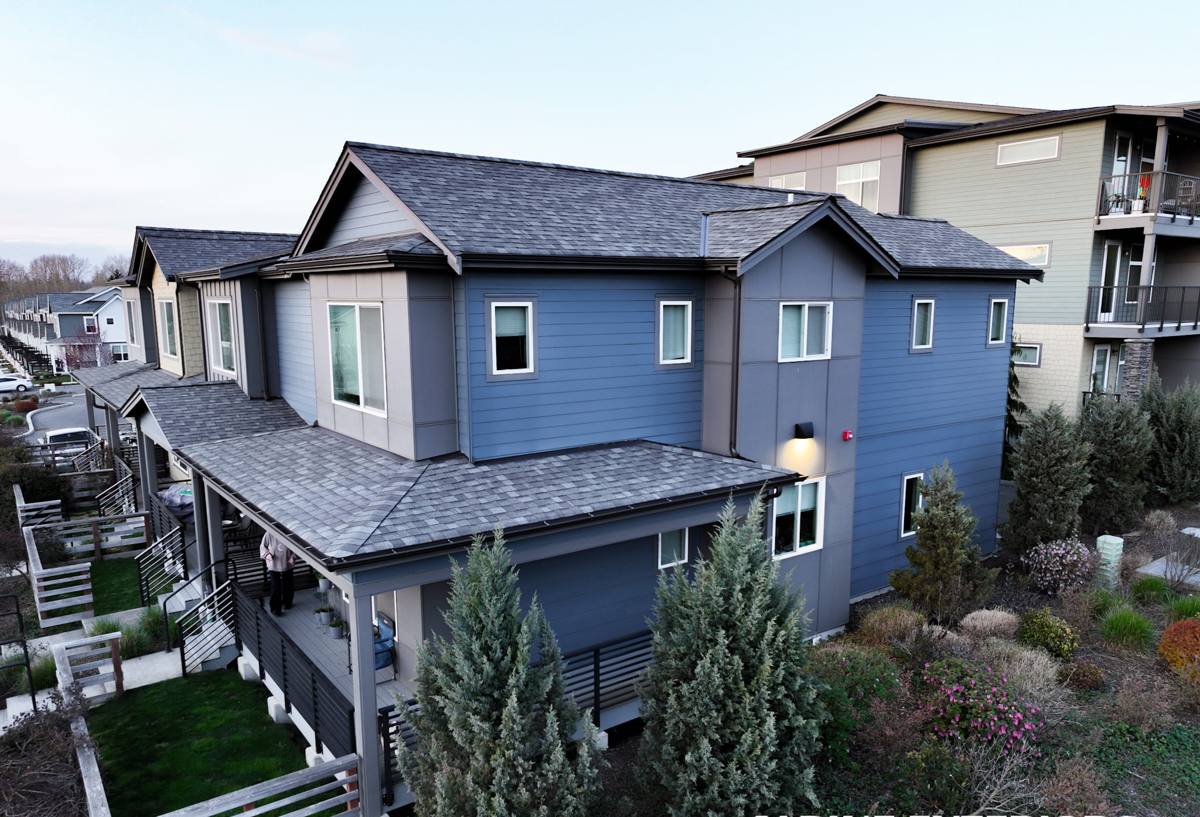
What Semiahmoo-Area Weather Does to Vertical Siding
Salt Air and Fasteners
Cherry Point sits close enough to open salt water that airborne salt is a real factor, not a theoretical one. Salt-laden air accelerates corrosion on anything metal — nail heads, batten fasteners, flashing, trim screws. On a board and batten wall, the battens are typically fastened directly through the panel into the studs, which means there are more exposed fastener points per square foot than on a standard lap job. If those fasteners aren't corrosion-resistant and properly set, you get rust streaking down the face of the siding within a few years and, eventually, a fastener that's lost its grip.
Wind-Driven Rain and Seam Vulnerability
Board and batten relies on the battens to cover the vertical seams between panels. That's a good system when it's built correctly, because the seam itself is never the primary water barrier — the wall assembly behind it is. But it's a bad system when installers treat the batten and a bead of caulk as the only thing keeping water out. Wind-driven rain off the water doesn't fall straight down; it drives sideways into a wall, and it will find any seam that isn't backed by a real drainage plane. This is where a lot of vertical siding jobs go wrong, and it's the single biggest thing we check for on Cherry Point homes.
The Long Moss Season
Whatcom County's wet season runs long, and Cherry Point properties with any tree cover or north-facing exposure hold moisture for extended stretches. Moss and algae need sustained dampness to establish, and once they get a foothold on a porous or absorbent siding material, they hold even more moisture against the wall — which speeds up whatever decay process is already underway. A dense, factory-finished material sheds that growth far more easily than a porous or field-finished one.
Why We Install Board & Batten Only in James Hardie Fiber Cement
We don't offer board and batten in vinyl, LP SmartSide, or primed wood, and that's a deliberate standard, not a limitation of what's available. Vinyl vertical panel systems expand and contract more than fiber cement and can warp or bow on sun-exposed elevations, which is especially visible on a flat vertical profile. Wood-based and OSB-based products depend on their coating staying intact to keep moisture out of an engineered wood core — a real risk in a climate that gives siding very little time to dry between rain events. James Hardie fiber cement is dimensionally stable, doesn't rot, and isn't a food source for moss or insects the way wood-based products can be. It's also non-combustible, which matters to insurers and to anyone weighing wildfire risk in the broader Pacific Northwest. Standardizing on one product line lets our crews build deep, repeatable expertise in installing it correctly, instead of splitting attention across several systems with different failure points.
What a Correctly Installed Board & Batten System Includes
The board and batten look is simple. The wall assembly behind it isn't, or shouldn't be, if it's going to last in this climate. A correct installation includes:
- A continuous weather-resistive barrier installed and lapped correctly behind the siding
- A rainscreen gap (typically furring strips or a drainage mat) that lets any water that gets past the siding drain and dry instead of sitting against the wall sheathing
- Panels and battens fastened per James Hardie's specified pattern and fastener spacing, not "close enough"
- Corrosion-resistant fasteners rated for the exposure — this matters more here than in a drier inland area
- Proper flashing at every window, door, and roof-to-wall intersection, installed before the siding goes on, not caulked in after
- Minimal reliance on sealant as a primary water barrier — caulk is a backup, not the plan
- Factory-cut and factory-primed edges kept intact, with field cuts sealed per manufacturer instructions
Skip any one of these and the siding can still look right for a year or two while the wall behind it is already taking on moisture. That's the part a homeowner can't see from the driveway, which is exactly why the installation details matter more than the finished appearance.
James Hardie Board & Batten Options
James Hardie offers a couple of ways to get the board and batten look, and the right choice depends on the home's style and the elevation's exposure.
| System | How It's Built | Best Fit |
|---|---|---|
| HardiePanel + battens | Large-format vertical panels with separate battens installed over the seams | Traditional farmhouse or craftsman look; larger wall sections |
| Artisan V-Groove vertical siding | Individual boards with a routed V-groove edge, installed with a rainscreen gap | Higher-end, tighter-reveal look; premium builds and accent walls |
| Board & batten as accent only | Vertical panel used on gables or entry features, paired with HardiePlank lap on the main field | Homes wanting the look without full vertical exposure on every elevation |
All three come through James Hardie's ColorPlus factory finish process, which bakes the color onto the board before it ever reaches the site. That matters here specifically because a factory finish resists the UV and salt exposure that fades field-applied paint faster along the water.
Our Process for a Cherry Point Board & Batten Project
- On-site assessment — we look at the existing wall assembly, check for moisture damage behind current siding, and evaluate wind exposure by elevation
- Tear-off and sheathing check — old siding comes off and we inspect the sheathing underneath before anything new goes up
- Weather barrier and rainscreen installation — the drainage plane goes in and gets inspected before it's covered
- Flashing at every penetration — windows, doors, vents, and roof lines are flashed before the siding closes them in
- Panel and batten installation — fastened to James Hardie spec with corrosion-resistant fasteners
- Trim, caulk, and final inspection — walk-through before we consider the job done
Maintaining Board & Batten Siding in This Climate
Fiber cement is low-maintenance, not no-maintenance. In a salt-air, high-moss environment, a short annual routine keeps a board and batten wall performing the way it's supposed to for decades:
- Rinse salt residue off exterior walls once or twice a year, especially on elevations facing the water
- Keep gutters clear so water isn't sheeting down the wall face during heavy rain
- Trim back vegetation and tree cover that keeps a wall section shaded and damp longer than the rest of the house
- Check caulk lines at trim and penetrations annually and re-caulk if it's cracked or pulling away
- Address any moss or algae growth early with a gentle wash rather than letting it establish
- Watch for rust streaking at fastener points, which can signal a fastener issue worth addressing before it spreads
Cost Factors for a Board & Batten Project
| Factor | Why It Affects Cost |
|---|---|
| Tear-off and sheathing condition | Water damage found behind old siding adds repair scope before new siding can go on |
| System chosen | Panel-and-batten, Artisan V-groove, and accent-only applications use different amounts of material and labor |
| Wall height and complexity | Gables, dormers, and multiple elevations take more cuts, more flashing detail, and more time |
| Rainscreen and flashing detail | Doing the drainage plane and flashing correctly costs more upfront than skipping it, and is non-negotiable in this climate |
| Color and finish | ColorPlus factory finishes vary by collection; some premium colors cost more than standard options |
We give exact numbers only after seeing the specific home and wall condition — anyone quoting a firm price sight unseen for a Cherry Point property hasn't accounted for what wind and salt exposure can do to scope once the old siding comes off.
Why Local Cherry Point Experience Matters
A crew that mostly works drier, inland jobs can install board and batten that looks perfect and still misses the details this particular stretch of coastline demands — the fastener spec, the rainscreen, the flashing sequence. Working this area regularly means we've seen what happens when those details get skipped on a previous house, and we build every new wall assembly to avoid repeating it. That's less about brand loyalty and more about not wanting to get called back out to a Cherry Point wall in five years for a problem that was preventable from day one.
If you're weighing board and batten for a home in Cherry Point or elsewhere around Semiahmoo, we're happy to walk the property, look at your current siding and wall condition, and give you a straight assessment — no pressure, no obligation. Reach out below for a free estimate.