 Semiahmoo
 Building a Deck That Belongs on This Coastline
Cherry Point sits close enough to the water that every outdoor structure on a property deals with salt air, wind-driven rain, and a moss season that can run half the year. A deck built the way it would be built forty miles inland — standard lumber, standard fasteners, standard flashing details — will show its age here faster than the homeowner expects. Boards cup, rail posts loosen, hardware streaks with rust, and the north-facing boards under tree cover stay green with moss long after everything else has dried out. None of that is inevitable. It's a function of what materials and details were chosen at the start, and whether the crew that built it had actually worked this stretch of Whatcom County before.
This page is about deck building specifically for Cherry Point properties — what the local climate demands, what a correctly built deck involves from the ground up, how we approach the work, and why local experience matters more here than it does for a lot of exterior projects.
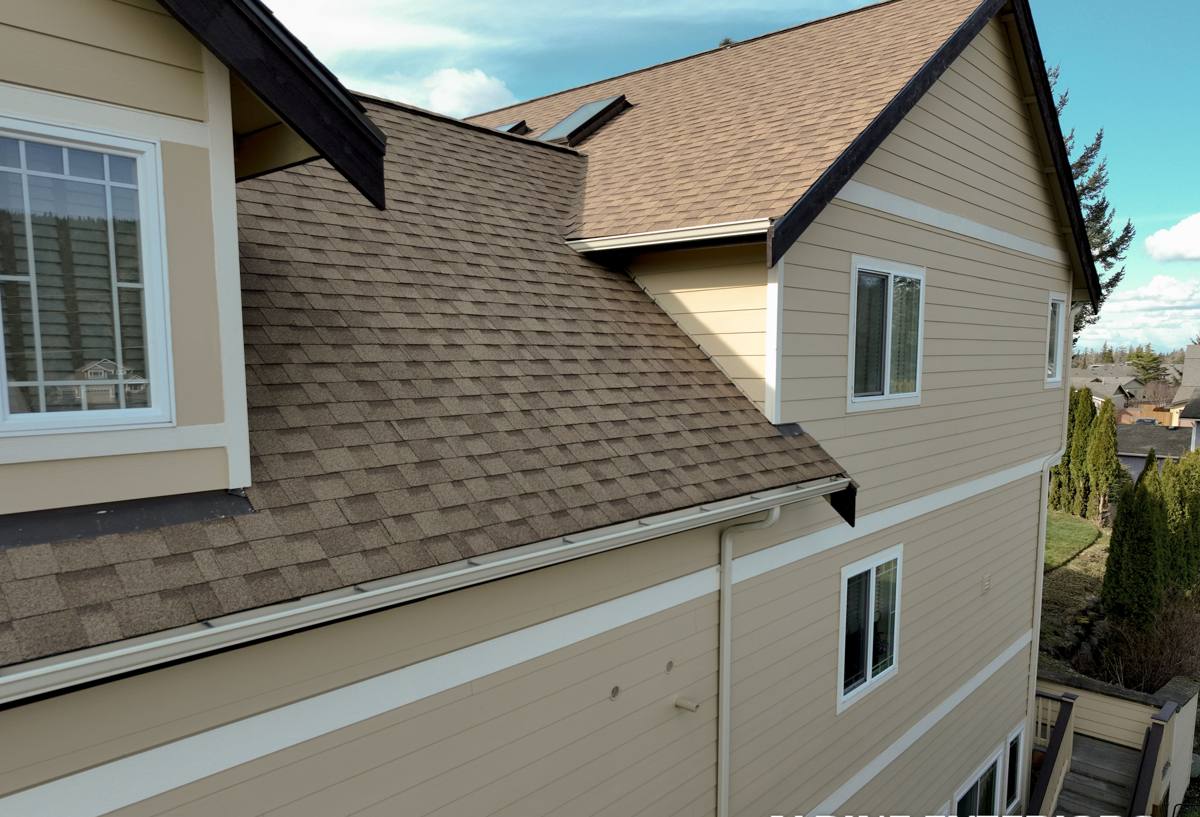
What Salt Air, Rain, and Moss Actually Do to a Deck
It helps to be specific about the failure modes instead of talking about "harsh weather" in the abstract, because each one points to a different fix.
Salt Air and Metal Corrosion
Airborne salt from the strait accelerates corrosion on any exposed metal — fasteners, joist hangers, railing brackets, structural screws. Standard electro-galvanized hardware can start showing surface rust within a couple of seasons this close to the water. Once a fastener starts corroding, it loses holding strength long before it looks obviously bad, which is part of why deck hardware needs to be chosen for the coast, not for a catalog average.
Driving Rain and Water Intrusion
Rain here doesn't just fall straight down — wind pushes it sideways into ledger connections, under railing posts, and into any gap where flashing was skipped or done thin. Water that gets behind a ledger board or into a post base and can't get back out is the single most common cause of hidden deck rot, and it's almost always a detail problem, not a material problem.
Moss, Algae, and Shade
Long wet seasons plus tree cover common around Cherry Point properties mean moss and algae get a real head start on any deck surface that doesn't drain and dry quickly. Moss holds moisture against the board surface, and on wood decking that moisture cycle is what drives rot from the top down, not just the underside up.
What a Correctly Built Deck Involves Here
A deck is only as good as what's underneath it. The visible decking gets all the attention, but the framing, footings, and connections are what determine whether it's still solid in fifteen years.
Footings Sized for Local Soil and Frost Depth
Footing depth and diameter need to match Whatcom County soil conditions and frost line requirements, not a generic rule of thumb. Undersized or shallow footings are a common source of deck movement and settling over time, especially on lots with wetter or less stable soil near the water.
Ledger Attachment and Flashing
Where the deck attaches to the house is the highest-risk connection on the whole structure. It needs proper lag or through-bolt fastening into structural framing, plus flashing that actually sheds water out and away from the house — not just a bead of caulk. This is the detail we see skipped most often on older or lower-bid deck builds in this area, and it's the one most likely to cause hidden rot behind siding.
Fasteners and Hardware Rated for Coastal Exposure
For a Cherry Point build we use stainless or coated hardware rated for coastal/marine exposure on structural connections — joist hangers, structural screws, post bases — rather than standard-grade fasteners that corrode faster in salt air. It costs more up front and pays for itself in avoided repairs.
Framing Layout That Lets Air Move
Joist spacing and under-deck clearance affect how quickly the structure dries out after rain. Tight, low-clearance framing traps moisture; framing built with drainage and airflow in mind sheds it.
Choosing Decking Material for This Climate
There's no single "best" decking material — there's a best fit for a given home, budget, and how much upkeep the owner wants to do. Here's how the common options hold up against salt air, rain, and moss specifically.
| Material | Moss/Algae Resistance | Maintenance | Typical Lifespan Here |
|---|---|---|---|
| Pressure-treated wood | Low — needs regular cleaning and sealing | Annual cleaning, re-sealing every 1-2 years | 10-15 years with upkeep |
| Cedar | Moderate — natural oils help, but fades and needs sealing | Cleaning plus periodic oil/sealant | 15-20 years with upkeep |
| Composite decking | Good — surface doesn't absorb moisture like wood, but still needs cleaning to prevent surface algae | Occasional washing, no sealing/staining | 25+ years |
| PVC/capped composite | Best — fully sealed surface resists moisture and staining | Occasional washing only | 25-30+ years |
Wood costs less to install but carries more ongoing labor and a shorter clock before boards need replacing, especially on shaded sections that stay damp. Composite and capped composite cost more up front but hold up better against the moss cycle and don't need re-sealing, which matters a lot for owners who don't want a yearly deck-maintenance task. We'll walk through the real trade-offs for your specific site — sun exposure, tree cover, budget — rather than push one material across the board.
Railings, Stairs, and Code Requirements
Guardrails, stair rise/run, and baluster spacing all fall under Washington building code, and inspectors in Whatcom County will check them. Beyond meeting code, railing posts and stair stringers are worth over-building here because they're the components most exposed to wind and driving rain, and post connections are where we most often see rot on decks that are otherwise sound. Stainless fasteners and proper post-to-frame bolting (not just deck screws) matter more on a railing than almost anywhere else on the structure, since it's a fall-protection component, not just a finish detail.
Building So Water and Moss Don't Win
A lot of what makes a deck last on this coastline comes down to drainage, not just material choice.
- Decking boards spaced correctly for water to drain between them rather than pool
- Framing pitched slightly away from the house so water doesn't sit against the ledger
- Under-deck clearance high enough for airflow, especially on shaded or low-to-grade decks
- Flashing at every point the deck meets the house, not just at the ledger
- Fastener heads set correctly so they don't hold standing water in the board surface
None of this is unusual or exotic — it's just easy to skip on a rushed build, and the consequences don't show up until a couple of wet seasons later.
Our Process for a Cherry Point Deck Build
We walk every project through the same sequence, adjusted for the specific site conditions:
- On-site assessment — soil conditions, drainage, sun/shade exposure, and how the deck ties into the existing structure.
- Design and material selection — sizing footings and framing to the site, and walking through decking material trade-offs based on your budget and how much maintenance you want to take on.
- Permitting — pulling and coordinating the required Whatcom County permits so the build passes inspection the first time.
- Framing and structural work — footings, ledger attachment and flashing, joist framing, all with coastal-rated hardware.
- Decking, railings, and stairs — installed to code with attention to the drainage and airflow details above.
- Final walkthrough — we go over the finished deck with you, including what maintenance (if any) the material you chose will need going forward.
What Affects the Cost of a Deck Build
Every deck is priced around the specifics of the site and the material chosen, but the main cost drivers are consistent:
| Factor | Why It Matters |
|---|---|
| Deck size and footprint | More square footage means more framing, footings, and decking material |
| Height off grade | Taller decks need more substantial framing and railings, plus stairs |
| Decking material | Wood costs less installed; composite/PVC cost more up front but less over time |
| Site access and soil | Difficult access or poor soil conditions can add labor and footing costs |
| Railing and stair complexity | Multiple stair runs, custom railing, or level changes add labor |
We give straightforward, itemized estimates so you can see where the money is going and where there's room to adjust if the budget needs it.
Maintenance That Keeps a Cherry Point Deck Looking Right
Even a well-built deck needs some upkeep in this climate — how much depends on the material.
- Sweep debris and standing organic matter off the surface regularly, especially under tree cover
- Wash the deck surface at least once a year to knock back algae and moss growth before it takes hold
- Check railing posts and stair connections annually for looseness or corrosion at the hardware
- Re-seal or re-stain wood decking on the schedule the product calls for — don't let it go too long between coats
- Keep gutters and downspouts near the deck clear so runoff isn't dumping extra water onto or under the structure
- Watch for soft spots or discoloration at the ledger and post bases, which are the first places rot shows up
Why Local Experience Matters for This Job
Deck building looks straightforward from the outside, but the details that make a deck last on the Semiahmoo coastline — footing depth for local soil, hardware rated for salt air, ledger flashing that actually works against driving rain, framing that drains instead of trapping moisture — are exactly the details a crew learns by building here repeatedly, not by building decks somewhere drier and applying the same playbook. A crew that already works Cherry Point knows which corners get hit hardest by wind and rain on a given lot, which materials hold up under real tree cover and salt exposure, and what inspectors in Whatcom County are actually looking for. That's the difference between a deck that needs attention again in five years and one that's still solid in twenty-five.
If you're planning a new deck or replacing one that's showing its age, we're happy to come take a look and give you a straightforward, no-pressure estimate — just fill out the form below.