 Semiahmoo
 Why Cherry Point Is a Tougher Test for Siding Than Most of Whatcom County
Cherry Point sits on open water, and that changes what a siding job has to survive. Homes here face a combination that inland Whatcom County properties don't deal with in the same way: near-constant marine air carrying salt, driving rain that comes in sideways during winter storms, and a moss season that can run most of the year in shaded, north-facing exposures. Any one of those is manageable. Together, they punish siding that isn't installed with real attention to water management and material choice.
Salt air is corrosive to exposed metal fasteners and trim, and it accelerates the breakdown of coatings that aren't built to take it. Driving rain doesn't just wet a wall surface — wind-driven rain finds gaps, laps, and fastener penetrations that would stay dry in a calmer inland setting. And moss doesn't just look bad; a moss mat that sits against siding holds moisture against the surface for weeks at a time, which is exactly the condition that causes rot, delamination, and coating failure over the years.
A siding installation done for a Cherry Point address needs to account for all three from day one — not as an afterthought, but as the design basis for flashing, fastening, and product selection.
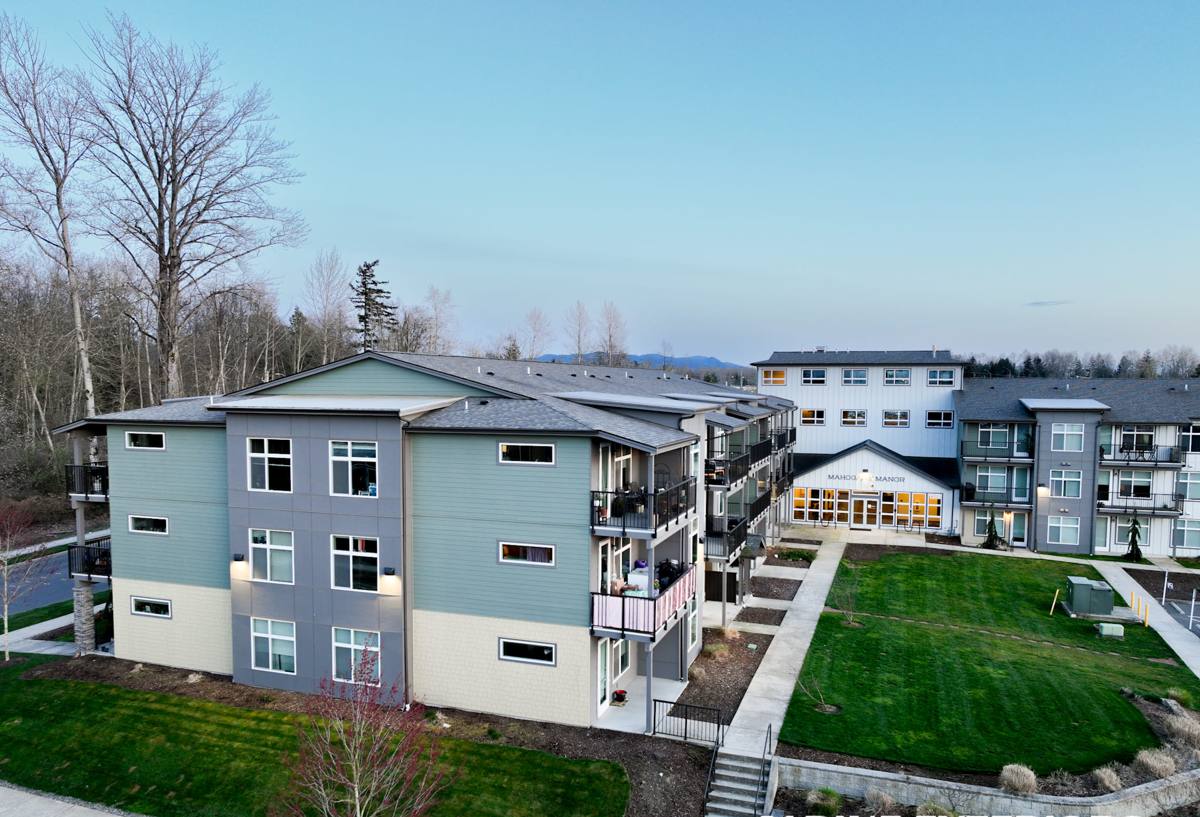
What "Correct" Actually Means for a Cherry Point Installation
Water Management Starts Behind the Siding, Not At It
Most siding failures we get called to inspect aren't failures of the siding material itself — they're failures of what's underneath it. A weather-resistive barrier that's lapped wrong, house wrap that's taped instead of properly shingle-lapped, or window and door flashing that dumps water behind the cladding instead of out and over it will eventually cause a problem no matter what siding is nailed on top. On a shoreline lot exposed to driving rain, that margin for error shrinks to almost nothing.
A correct installation treats the water-resistive barrier and flashing details as the actual waterproofing system, with the siding as the first line of defense and weather cladding — not the only one. That means:
- Weather-resistive barrier lapped shingle-style, top piece over bottom, at every horizontal seam
- Window and door flashing integrated into the barrier so water is directed out and down, never behind the plane of the wall
- Kick-out flashing at roof-to-wall intersections so runoff can't run down behind the siding
- Proper clearance between the bottom edge of the siding and grade, decks, roof lines, and paved surfaces
Fastening and Clearances Matter More This Close to the Water
Salt-laden air will find any fastener that isn't corrosion-resistant and rated for the exposure. It also degrades caulk and sealants faster than an inland environment does, which is why joints and penetrations need to be detailed to shed water on their own rather than relying on caulk as the primary defense. Manufacturer-specified fastener spacing, penetration depth, and clearances aren't a formality on a job like this — they're the difference between siding that looks right for a season and siding that actually holds up through a full Whatcom County winter on the water.
Why We Only Install James Hardie Fiber Cement
We don't install vinyl, LP SmartSide, cedar, primed spruce, Cemplank, or Allura. That's a deliberate standard, not a lack of options. On a site like Cherry Point, the case for James Hardie fiber cement is straightforward:
- Non-combustible — fiber cement doesn't feed a fire the way wood-based or engineered-wood products can
- Moisture-resistant core — it doesn't absorb and swell the way wood substrates and OSB-based products do when repeatedly wetted by driving rain
- ColorPlus factory finish — a baked-on finish system engineered to resist fading and coating failure in coastal UV and salt exposure better than field-applied paint
- HZ5 / marine-climate-engineered product lines — Hardie makes versions of its plank and panel products specifically formulated for high-moisture, coastal climate zones like ours
- Strong, transferable warranty — backed by a manufacturer with decades of installed track record in wet coastal climates, not just marketing claims
None of this means other products are junk. Vinyl is affordable and low-maintenance in the right setting. Cedar has real appeal. But on a shoreline property that's going to take decades of salt air and driving rain, we'd rather stand behind one product system installed correctly than offer five and hope the cheapest one holds up.
Our Process for a Cherry Point Siding Installation
- On-site assessment. We look at your home's specific exposure — which walls face the water and prevailing wind, where moss and moisture are already showing up, and the condition of the sheathing and existing water barrier underneath the current siding.
- Tear-off and substrate inspection. Old siding comes off and we inspect sheathing for rot or soft spots before anything new goes up. Any water damage found gets addressed before we move forward — covering over a bad substrate is how good siding fails early.
- Water-resistive barrier and flashing. New barrier installed with correct shingle-lap sequencing, integrated window/door flashing, and kick-out flashing at roof intersections.
- James Hardie installation to manufacturer spec. Correct fastener type, spacing, and penetration; correct clearances from grade, roofline, and decks; joints and butt seams detailed per Hardie's installation guidelines for our climate zone.
- Trim, caulking, and finish details. Sealant used where specified, not as a substitute for proper flashing — and only in the joints designed to be sealed.
- Final walkthrough. We go over the finished job with you, including what routine maintenance to expect given your specific exposure to sun, wind, and moisture.
Cost Factors on a Shoreline Property
Every home is different, but a few factors consistently move the price on a Cherry Point job more than they would on a sheltered inland lot:
| Factor | Why It Matters Here |
|---|---|
| Substrate condition | Homes with long-term moisture exposure are more likely to need sheathing repair before new siding goes on |
| Wall exposure | Walls facing prevailing wind and rain often need more flashing detail work and heavier trim treatment |
| Existing moss/moisture damage | Areas with established moss growth usually mean hidden moisture behind the old siding that has to be remediated |
| Access and site conditions | Waterfront lots can have tighter access, slopes, or landscaping that add setup and staging time |
| Trim and detail complexity | Homes with more windows, dormers, and roof intersections require more flashing work per square foot |
We'll walk through these specifics for your property during a free estimate rather than quoting a number in the abstract — a house with clean, dry sheathing and simple wall lines costs a lot less to re-side correctly than one with hidden rot behind old cladding.
Living With a Long Moss Season
Moss isn't a siding defect — it's a fact of life this close to the water, especially on shaded and north-facing walls. What matters is keeping it from becoming a moisture problem:
- Trim back vegetation and tree cover that keeps walls in constant shade and dampness where practical
- Gently rinse or brush moss and algae off siding periodically rather than letting it build into a thick mat
- Avoid pressure-washing directly into seams, laps, or trim joints — this can force water where it shouldn't go regardless of siding material
- Check and clear gutters and downspouts before the fall rains so runoff isn't sheeting down wall surfaces
- Have flashing and caulked joints checked periodically, since UV and salt exposure age sealants faster here than inland
James Hardie's factory ColorPlus finish resists the staining and coating breakdown that make moss and mildew look worse over time, but no siding material is immune to moss itself — the fix is managing moisture and shade, not the cladding alone.
Why a Crew That Already Works Cherry Point Matters
A contractor who mainly works inland, drier parts of Whatcom County can still do competent general siding work — but they may not default to marine-grade fastening, kick-out flashing at every roof intersection, or the extra scrutiny of sheathing condition that a shoreline home actually needs. A crew that regularly works Cherry Point and the Semiahmoo area builds those details into the process automatically, because they've seen what happens on the water when they're skipped.
That local pattern recognition also shows up in smaller ways: knowing which wall orientations on this stretch of coast take the worst of winter storms, what moisture signs to look for when pulling old siding on a waterfront property, and how much clearance actually holds up against driving rain here versus what a general specification sheet assumes for a milder climate.
What to Ask Before You Hire Anyone for a Job Like This
- Do they inspect and address sheathing condition before installing new siding, or just cover over what's there?
- Do they detail kick-out flashing at every roof-to-wall intersection, not just some?
- Are fasteners and hardware rated for coastal/salt-air exposure?
- Do they install to the specific manufacturer's climate-zone specifications, not a generic installation method?
- Can they explain their water-resistive barrier lap sequence without hesitating?
- Are they willing to show you the substrate before it's closed up, not just the finished exterior?
If your Cherry Point home needs new siding — or you're not sure whether what's on the walls now is doing its job against the salt air and rain — we're happy to take a look. A free, no-pressure estimate gets you a straight answer on the condition of what's there now and what correct James Hardie installation would involve for your specific exposure. The form below gets that started.