 Semiahmoo
 Decking That Has to Answer to Blaine Harbor's Weather
Blaine Harbor sits right where the Strait of Georgia meets Semiahmoo Bay, which means every deck out here deals with three things at once: salt-laden air blowing in off the water, driving rain that comes in sideways more often than straight down, and a moss season that can run from October clear through April. A deck built for an inland Whatcom County lot doesn't always hold up the same way a few blocks from the water. That's the gap we're filling with this page — what composite decking actually needs to do in a harbor-adjacent yard, and what a correct installation looks like here.
None of this is exotic. It's mostly about picking the right materials, framing for drainage instead of against it, and fastening things so salt air doesn't work its way into every joint over the next decade. Get those basics right and a composite deck in Blaine Harbor will outlast almost anything else you could put down.
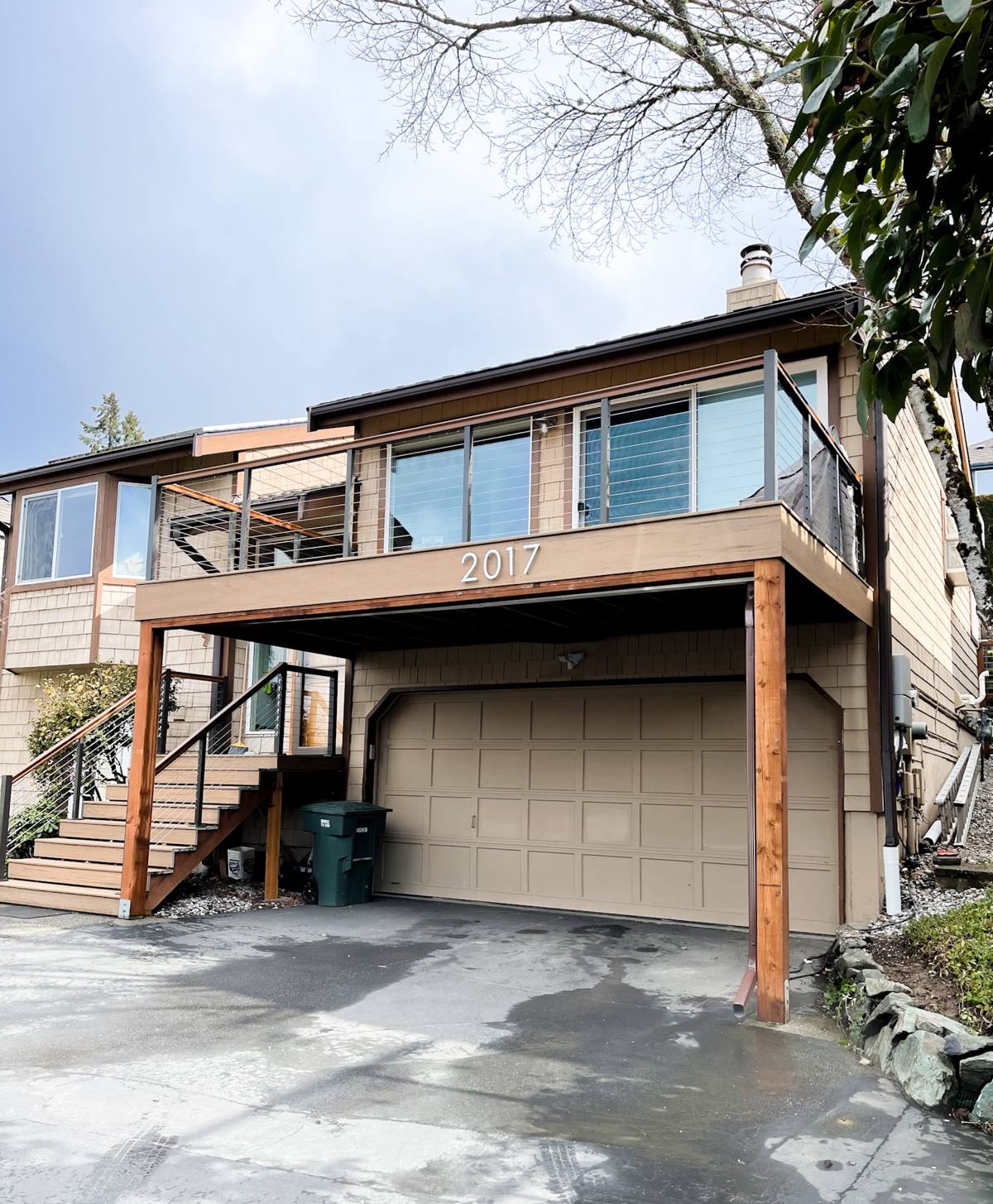
Why Composite Makes Sense Near the Water
Wood decking isn't a bad product, but it asks a lot of a homeowner in this environment — annual sealing, sanding, and constant vigilance for the graying and splintering that salt air and moisture accelerate. Composite decking (a wood-fiber-and-polymer blend, capped with a protective outer shell on most modern boards) sidesteps a lot of that maintenance burden, which matters more here than it does twenty miles inland.
What Salt Air Actually Does to a Deck
Salt air isn't just "humid air." It carries fine mineral particulate that settles into exposed grain, corrodes unprotected metal fasteners, and accelerates the breakdown of finishes that aren't rated for coastal exposure. On wood decking, this shows up as premature graying, fastener staining, and softer spots where moisture gets trapped. On composite decking, the risk shifts — it's less about the boards degrading and more about what's underneath and around them: hardware, ledger connections, and end grain where boards get cut on site.
What Long Moss Seasons Do
A five- or six-month stretch of damp, low-light weather gives moss and algae plenty of time to establish on any horizontal surface that doesn't drain and dry quickly. Moss on decking isn't just cosmetic — it holds moisture against the board surface and creates a genuinely slick, slip-prone film, especially on stairs and low-traffic areas that don't get foot or sun exposure to keep them dry.
What a Correct Composite Deck Build Involves Here
The board itself is maybe a third of what determines how a deck performs long-term in this climate. The rest is substructure, drainage, and fastening decisions that don't show up in a brochure photo.
Framing and Substructure
- Joists spaced and rated for the specific composite board being installed — manufacturers publish different span tables for composite than for wood, and ignoring that leads to bounce and premature sagging.
- Joist tape or another moisture barrier on top of every joist, since composite decking traps moisture against framing differently than wood does.
- Corrosion-resistant, coastal-rated fasteners and structural hardware throughout — not just at the ledger board, but at every joist hanger and post connection.
- A ledger board connection detailed to shed water away from the house rim joist, not into it.
Drainage and Grading
Composite boards don't absorb water the way wood does, which is a benefit, but it also means water that lands on the deck has to go somewhere fast. A deck built dead-level, or worse, pitched slightly toward the house, will pond water and give moss and algae exactly the standing moisture they need. We build in a slight pitch away from the structure and keep gaps between boards consistent so water sheets off rather than sitting.
Fastening and Board Layout
Hidden fastener systems keep the deck surface clean and reduce the number of exposed metal points where salt corrosion or staining could start. Board layout also matters near the water — running boards to shed rain in the prevailing direction and mitering end cuts properly (with cut ends sealed per manufacturer spec) keeps moisture from wicking into the core of the board at the one point where the protective cap isn't present.
Choosing a Composite Board for a Harbor-Adjacent Lot
Not every composite product is built the same, and the differences matter more here than they would on a sheltered inland deck. We walk homeowners through the real trade-offs rather than pushing whatever's easiest to install.
| Factor | What to Look For | Why It Matters in Blaine Harbor |
|---|---|---|
| Cap type | Fully capped (all four sides) vs. capped top/sides only | Fully capped boards resist moisture wicking at cut ends and edges exposed to driving rain |
| Color/finish | Streaked or variegated finishes vs. solid tones | Variegated finishes hide the fine mineral film salt air can leave between cleanings |
| Fastener compatibility | Manufacturer-matched hidden fastener systems | Mismatched fasteners can void warranty coverage and corrode faster near salt air |
| Warranty structure | Fade, stain, and structural coverage terms read closely | Some warranties limit coverage in "coastal" or high-salinity zones — worth confirming before you buy |
| Slip resistance | Textured or grooved surface profile | Helps offset the slickness moss and algae buildup can cause during wet months |
That warranty line is worth repeating: some manufacturers define coastal exclusion zones in their fine print. Before we recommend a specific product for a Blaine Harbor project, we confirm the warranty actually covers a property this close to the water — not just the general Pacific Northwest climate.
Our Process for a Blaine Harbor Composite Deck
We treat every deck here as a coastal build, not a standard build with composite boards swapped in. That shows up in a few concrete steps:
- On-site assessment — we look at existing framing (if any), grading, prevailing wind and rain direction, and how close the site sits to open water or exposed shoreline.
- Material selection — we walk through board options with the coastal warranty question answered up front, not after the sale.
- Substructure build or reinforcement — joists, hangers, and ledger connections detailed for coastal fastener corrosion resistance and correct span ratings for the chosen board.
- Drainage-first layout — pitch, board spacing, and board direction planned before the first fastener goes in.
- Installation — hidden fastening where the product supports it, properly sealed end cuts, and manufacturer-spec gapping for seasonal expansion.
- Walkthrough — we go over basic seasonal upkeep (a periodic rinse and soft-brush cleaning schedule that fits our moss season) so the deck starts its life clean and stays that way longer.
Maintenance Reality: What Composite Still Needs Here
Composite decking is lower-maintenance than wood, not maintenance-free — that distinction matters most in a climate like ours. Homeowners who treat it as "install and forget" are the ones who end up with moss-stained boards by year three.
- A rinse and soft-brush cleaning at the start and end of the wet season keeps salt film and early moss spores from taking hold.
- Keep gutters and downspouts near the deck clear — misdirected roof runoff is one of the most common causes of localized moss and algae patches on an otherwise well-built deck.
- Trim back overhanging vegetation where practical; shade and moisture together are what let moss establish fastest.
- Check hidden fastener clips and visible hardware annually for corrosion, especially in the first few years after install.
- Avoid pressure washing at high PSI directly into board grooves — it can drive water and grit into the fastener channels rather than actually cleaning them.
Composite vs. Continuing to Maintain Wood
For homeowners weighing a straight repair or replacement decision, it helps to see the maintenance burden side by side:
| Wood Decking | Composite Decking | |
|---|---|---|
| Annual upkeep | Sealing/staining, sanding graying boards | Periodic rinse and cleaning, no sealing |
| Salt air exposure | Accelerates graying, splintering, fastener staining | Cap layer resists surface degradation; hardware still needs coastal-rated fasteners |
| Moss/algae resistance | Grain holds moisture, promotes growth | Sealed surface sheds moisture faster; still needs cleaning |
| Upfront cost | Generally lower material cost | Higher material cost, offset over time by lower upkeep |
| Typical lifespan with proper build | Long-lasting with consistent maintenance | Long-lasting with minimal maintenance if substructure is built correctly |
Why Local Experience with Blaine Harbor Matters
A crew that mostly builds decks inland can still put together a technically sound deck — but they may not think to ask about coastal warranty exclusions, or default to the fastener grade that actually holds up against salt air, or plan drainage around a moss season that runs half the year. Working Whatcom County's coastal edge regularly means we've already worked through those decisions on other homes nearby, not learning them on your project.
It also means we're not guessing at how a particular board or finish actually performs a few years out in this exact microclimate — we've seen it. That's the difference between a deck that's built to a general specification and one that's built for Blaine Harbor specifically.
Common Composite Decking Mistakes We See and Fix
- Boards installed dead-flat with no drainage pitch, leading to standing water and moss even on a "low-maintenance" product.
- Standard (non-coastal-rated) fasteners used because they were on hand, leading to early corrosion and staining around screw heads or hidden clips.
- Cut ends left unsealed, allowing moisture to wick into the board core at the one vulnerable point in an otherwise capped product.
- Ledger connections that funnel water back toward the house rim joist instead of away from it.
- Joist spacing based on wood span tables instead of the composite manufacturer's own span requirements.
Getting Started
If you're planning a new deck or replacing an aging one near Blaine Harbor, we're happy to walk the site, talk through board options with the coastal warranty question answered honestly, and give you a straightforward estimate. No pressure, no upsell — just a clear look at what your specific lot needs given how close it sits to the water. Use the form below to request a free estimate.