 Semiahmoo
 Decking Built for How Sumas Actually Weathers
A deck in Sumas doesn't sit in the same conditions as a deck in Spokane or Sacramento. Homes here deal with long stretches of driving rain, damp shaded ground that never fully dries out, salt-laden air drifting in off the water, and a moss season that can run from fall through spring. Any decking material you put down has to survive that cycle year after year, not just look good on installation day. Composite decking has become a common answer for homeowners in this part of Whatcom County precisely because it's built to shrug off moisture in a way that solid wood struggles to match over time.
This page is specifically about composite decking work in Sumas — what the local climate does to a deck, what a correct installation actually involves, and how we approach the job when we're out at your property.
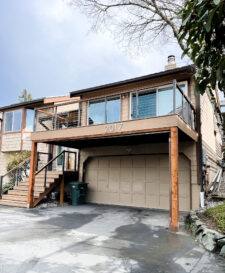
What Our Climate Does to an Outdoor Deck
Every material reacts to weather differently, and it's worth understanding the specific stresses at play before you pick one.
Moisture that never really leaves
Whatcom County doesn't get brutal downpours so much as it gets persistent, extended dampness. Boards, joists, and fasteners stay wet longer than they would in a drier climate, which is exactly the condition that causes wood to cup, splinter, and rot from the inside out, usually starting underneath where you can't see it.
Moss and algae growth
Shaded decks, decks under trees, and decks on the north side of a house are especially prone to moss and green algae film building up on the surface. Beyond looking bad, a mossy deck surface gets slick and dangerous in the rain, and constant scrubbing wears down whatever finish is protecting the boards.
Salt air and metal fasteners
Properties closer to the water pick up salt-laden air that accelerates corrosion on unprotected screws, brackets, and connectors. A deck can look fine on the surface while its hardware is quietly failing underneath.
Temperature swings
Our winters aren't extreme, but freeze-thaw cycles still happen, and any water that's soaked into a board or a joist connection can expand and work fasteners loose or crack a board over a few seasons.
Composite vs. Wood vs. PVC: An Honest Comparison
There's no single "best" decking material for every situation, but for our climate, the trade-offs generally shake out like this:
| Material | Moisture behavior | Maintenance | Typical lifespan here | Upfront cost |
|---|---|---|---|---|
| Pressure-treated wood | Absorbs water, prone to cupping and rot in shaded/damp areas | Annual staining or sealing to keep moisture out | 10-15 years with upkeep | Lowest |
| Composite (capped) | Resists moisture absorption, doesn't rot | Occasional washing, no staining or sealing | 25-30+ years | Mid-to-higher |
| Composite (uncapped) | Some moisture and stain absorption at the surface layer | More frequent cleaning; can fade or stain over time | 15-20 years | Mid |
| PVC/vinyl decking | Fully moisture-resistant | Low; occasional washing | 25-30+ years | Highest |
We install composite decking specifically because, for the price point, it holds up to sustained damp and shade better than uncapped wood without the added cost of full PVC systems. We steer clients away from cheaper uncapped composite boards for anything shaded or ground-level in this climate, not because the product is bad, but because it puts more of the moisture-resistance burden on maintenance the homeowner has to keep up with.
What a Correct Composite Deck Installation Involves
Composite boards are only as good as what's underneath them. A lot of deck problems we get called out to inspect trace back to shortcuts in the structure, not the decking material itself.
The substructure
Joist spacing matters more with composite than with wood, since composite can flex differently under load and temperature change. We follow manufacturer spacing requirements rather than reusing whatever spacing an old wood deck happened to have.
Ledger board flashing
Where the deck attaches to the house, proper flashing keeps water from tracking behind the siding and into the wall framing. This is one of the most common failure points we find on older decks — it's invisible until there's rot behind the siding, which turns a deck job into a siding repair job too.
Drainage and airflow underneath
A deck built low to the ground or over a patio needs somewhere for water to go and air to move, or the underside stays perpetually damp — ideal conditions for mold and the kind of slow rot you won't notice until boards start feeling soft.
Fasteners and hardware
We use corrosion-resistant, coated fasteners and hidden fastener systems rated for composite, which also gives a cleaner surface with no exposed screw heads for water and grime to sit in.
Footings
Posts and footings need to be set to the correct depth for our frost line and soil conditions, not just poured to "look deep enough." A deck that heaves slightly every winter is almost always a footing problem, not a decking problem.
Choosing the Right Board for a Sumas Property
Not every composite board is built the same, and the right choice depends on how exposed your deck is.
- Capped composite — a protective outer shell resists moisture, staining, and fading; the better choice for shaded, ground-level, or heavily-used decks.
- Color and moss visibility — lighter boards show moss and organic staining faster than mid-tone or darker boards; if your deck sits under trees, that's worth factoring into color choice.
- Surface texture — a textured, grippier surface matters more here than in drier climates, since boards stay damp longer and slick surfaces get genuinely dangerous underfoot.
- Railing and fastener finish — matching corrosion resistance on railings and hardware to the decking itself, so one part of the system doesn't fail years before the other.
How We Handle a Composite Decking Project
The process is straightforward, but each step exists for a reason:
- On-site assessment — we look at the existing structure (if there is one), grading, drainage, sun/shade exposure, and how the deck will actually be used, then talk through board and layout options.
- Written estimate — a clear scope covering demolition (if applicable), structural work, decking, railing, and hardware, so there are no surprise line items mid-job.
- Tear-out, if replacing an old deck — we check the substructure underneath for rot or damage before building on top of it; a new composite surface on a compromised frame just hides the problem.
- Framing and structural correction — joists, ledger flashing, and footings are brought up to correct spec before any decking goes down.
- Composite installation — boards, hidden fasteners, and trim are installed to manufacturer spec, with attention to drainage gaps and ventilation.
- Railing and finish work — railings, stairs, post caps, and any fascia are installed and checked for level and secure attachment.
- Final walkthrough — we go over the finished deck with you, including basic care expectations for our climate.
What a Composite Deck Actually Costs
Composite decking costs more upfront than pressure-treated wood, but the total cost of ownership tends to close that gap once you account for staining, sealing, and repair over the years. Rough factors that move the number:
| Cost factor | Why it matters |
|---|---|
| Deck size and layout complexity | Multiple levels, angles, or curves increase labor and material cutting |
| Board tier (uncapped vs. capped) | Capped boards cost more but need less long-term maintenance |
| Substructure condition | Existing rot or undersized framing adds structural repair before decking begins |
| Height and railing requirements | Taller decks need code-compliant railings, which add material and labor |
| Stairs and access points | Each stair run adds framing, cutting, and hardware |
| Site access | Tight lots or sloped yards can add time for material handling |
We'd rather walk your specific property and give you real numbers than quote a range that doesn't reflect what your deck actually needs.
Maintaining a Composite Deck in This Climate
Composite decking is low-maintenance, not no-maintenance. A little seasonal attention goes a long way here:
- Rinse or sweep off fallen leaves and debris regularly — trapped organic matter holds moisture and feeds moss and algae growth.
- Wash the deck surface a couple of times a year with a soft-bristle brush and mild cleaner to keep moss and green film from taking hold.
- Keep gutters and downspouts clear so runoff isn't dumping directly onto or under the deck.
- Avoid leaving planters, mats, or furniture with non-breathable bases in one spot for long stretches — trapped moisture underneath can cause surface staining even on capped boards.
- Check railing and stair hardware once a year for looseness, especially after a hard winter.
Why Local Experience in Sumas Matters
Deck work in this part of Whatcom County isn't the same job as deck work somewhere dry and sunny. A crew that already works in Sumas knows how the local rain patterns and shade conditions affect drainage decisions, understands regional frost depth for footings, and has already seen how salt air and moss behave on decks in this specific area over multiple seasons — not just in a manufacturer's spec sheet. That experience shows up in decisions like where to add extra drainage, which board finishes hold up best on a shaded lot, and how to flash a ledger board so it doesn't turn into a hidden moisture problem five years down the line.
It also means straightforward scheduling and accountability — a crew that's already established in the area, working on decks like yours in this same climate, rather than a one-off crew unfamiliar with how a Whatcom County winter treats an outdoor structure.
Questions Worth Asking Before You Start
Whether you're comparing quotes or just researching, these are worth working through:
- Is the existing structure being inspected, or is the new decking just being laid over what's already there?
- What fastener and hardware finish is being used, and is it rated for coastal or high-moisture conditions?
- Is ledger board flashing part of the scope, or does it need to be added separately?
- Capped or uncapped composite — and why, given how the deck will be used and where it sits?
- What does the written estimate include, and what could add to the cost once work begins?
If you're weighing a new composite deck or replacing one that's showing its age, we're happy to come out, take a real look at your property, and put together a straightforward estimate — no pressure, no obligation. Use the form below to get started.