 Semiahmoo
 Custer Roofs Fight a Different Battle
Custer sits close enough to the water that a roof here deals with things a shingle roof further inland rarely sees in the same combination: salt-tinged air, wind-driven rain that comes in sideways off the Salish Sea, and long stretches of shade and dampness that keep moss and moisture-loving growth active most of the year. None of that is dramatic on its own. It's the combination, repeated year after year, that wears a roof down faster than the shingle's age alone would suggest.
Salt-laden moisture speeds up granule loss on asphalt shingles, especially on slopes that catch the prevailing wind. Driving rain finds its way under shingles that are laid correctly for a drier climate but not for ours, working into valleys, chimney flashing, and low-slope transitions. And moss doesn't just look bad — it holds water against the shingle surface and lifts tabs as it grows, which is exactly what shortens a roof's working life in Whatcom County.
None of this means asphalt shingles are the wrong choice for a home near Custer. It means the installation has to account for these conditions from the start, not patch around them later.
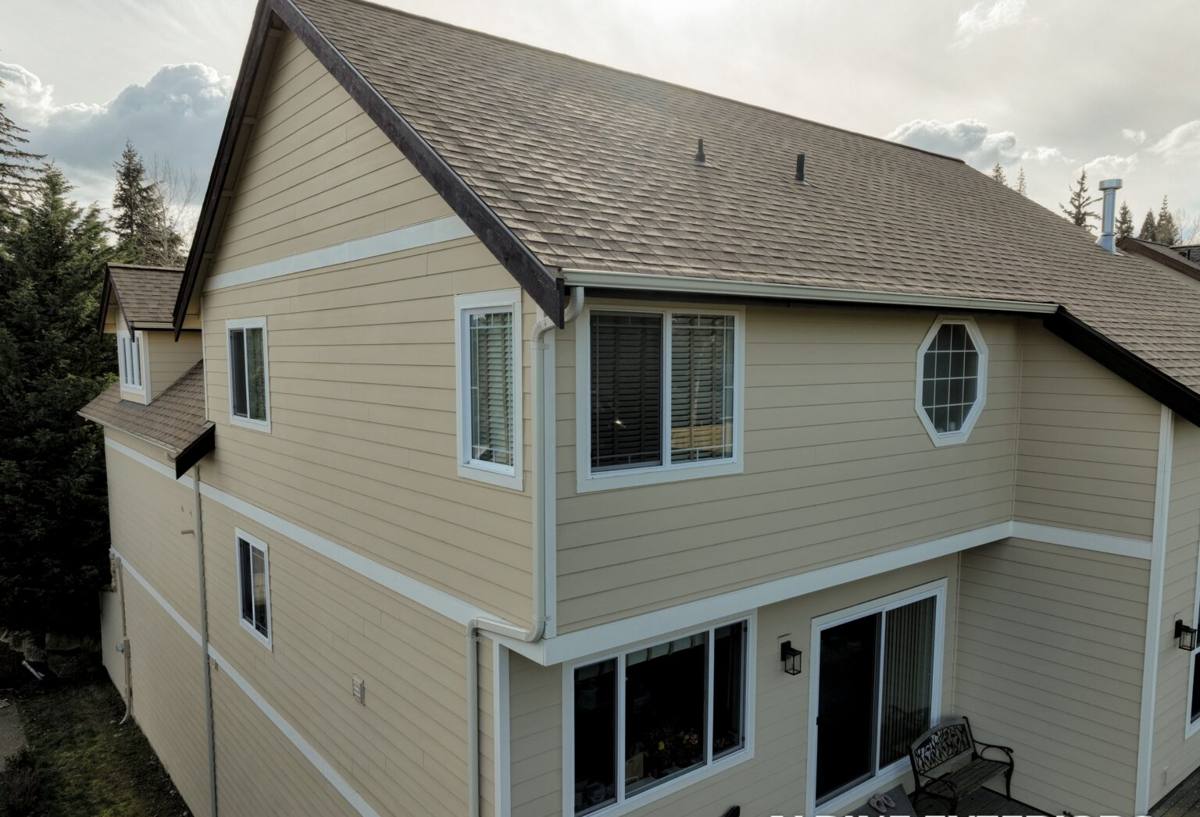
What a Correctly Installed Shingle Roof Needs Here
Underlayment and ice-and-water protection
A synthetic underlayment rated for wind and moisture resistance is the baseline, not an upgrade. At eaves, valleys, and any roof-to-wall transition, self-adhering ice-and-water membrane belongs under the shingles — not because we get heavy ice buildup here, but because that membrane is also the best defense against wind-driven rain forcing its way under the shingle field during a fall or winter storm.
Ventilation that actually balances
Intake and exhaust ventilation need to be sized to work together. A roof with plenty of ridge vent but blocked or undersized soffit intake still traps moist air in the attic, and that trapped moisture condenses on the underside of the deck — which shows up later as soft spots, mold, or premature shingle failure from underneath. In a damp climate, this detail matters more than most homeowners realize.
Flashing at every transition
Valleys, chimneys, skylights, and sidewalls are where the vast majority of roof leaks start — not in the open field of shingles. Correctly formed step flashing, counterflashing, and valley metal (or a properly woven valley, depending on the shingle) are what keep driving rain from working its way sideways into the structure.
Signs Your Roof Is Telling You Something
Most roof problems near Custer don't announce themselves with a dramatic leak. They show up as small, easy-to-miss signs first:
- Dark streaking or a greenish-black cast on north-facing or shaded slopes
- Moss visibly established at the butt edges of shingles, especially along valleys
- Granules collecting in gutters or at downspout outlets
- Shingle tabs that look curled, cupped, or lifted at the corners
- Soft or spongy spots when the roof is walked
- Daylight visible through the attic roof deck, or damp insulation below it
- Stains on interior ceilings near exterior walls or chimneys after a heavy rain
Any one of these is worth a look. Several at once usually means the roof needs more than a quick repair.
Our Process, Start to Finish
- Inspection and honest assessment. We get on the roof (or use a camera where access is limited), check the deck condition, flashing, ventilation, and shingle wear, and tell you plainly whether you're looking at a repair, a partial re-roof, or a full replacement.
- Tear-off vs. overlay decision. We don't install new shingles over an existing layer as a default shortcut. Overlaying traps moisture, hides deck problems, and voids most manufacturer warranties — we'll walk you through when a full tear-off is genuinely the right call.
- Deck prep and repair. Any soft, delaminated, or water-damaged sheathing gets replaced before anything new goes down. This is the step that gets skipped by crews in a hurry, and it's the one that determines whether the new roof lasts.
- Underlayment, ice-and-water shield, and flashing. Installed to match the exposure of each slope, not a one-size approach across the whole roof.
- Shingle installation to manufacturer nailing specs. Correct nail placement and count is what keeps shingles from lifting in wind — a detail that's invisible once the job is done but shows up the first time a storm rolls through if it was rushed.
- Ventilation check and correction. If intake or exhaust is inadequate, we address it as part of the job rather than leaving a new roof sitting on an attic that still traps moisture.
- Cleanup and final walkthrough. Magnetic sweep for nails, debris hauled off, and a walkthrough so you know exactly what was done and what to watch for going forward.
Shingle Options and What They Cost to Own
Shingle choice affects more than upfront price — it affects how the roof handles wind, moss, and salt exposure over its lifespan. Here's a general comparison to work from; your contractor should walk through actual pricing for your roof's size and complexity.
| Shingle Type | Typical Lifespan | Wind & Moisture Performance | Best Fit |
|---|---|---|---|
| 3-tab asphalt | 15–20 years | Lower wind rating; less resistant to lifting in exposed spots | Budget-driven projects on well-sheltered roofs |
| Architectural (dimensional) asphalt | 25–30 years | Higher wind rating, thicker mat holds up better to driving rain | Most homes near Custer — the standard recommendation |
| Premium/impact-rated asphalt | 30+ years | Best wind and impact resistance, often with algae-resistant granules | Exposed roofs, steep slopes, or homeowners planning to stay long-term |
That algae-resistant granule option is worth a real look for this area specifically. It doesn't stop moss on its own, but it does slow the black streaking and algae growth that shaded, damp slopes are prone to, which keeps the roof looking better longer and reduces (though doesn't eliminate) how often it needs cleaning.
Cost factors beyond the shingle itself
Roof pitch, the number of valleys and penetrations, deck condition once the old roofing comes off, and access for equipment and disposal all move the price more than the shingle line item does. A roof with a simple gable and few penetrations will cost less to do right than a cut-up roof with multiple valleys and skylights, even with the identical shingle.
Why a Crew That Already Works in Custer Matters
A roofer who works this stretch of Whatcom County regularly knows which slopes on a typical local roof take the worst of the wind-driven rain, how much intake ventilation a given attic usually needs given the moisture load, and what a deck that's been through a few damp winters actually looks like under the shingles before it's opened up. That's not something you can fully substitute with a generic install — it's built from doing the work here repeatedly.
It also means fewer surprises on permitting and inspection, because the process is familiar rather than something being figured out for the first time on your roof. And it means the crew isn't guessing at material choices — we know what holds up in this climate and what tends to underperform, based on what we see when we're called back to fix someone else's shortcuts.
Living With Moss: Realistic Maintenance
What actually slows moss down
Trimming back overhanging branches to get more sun and airflow onto shaded slopes helps more than most treatments applied after the fact. Zinc or copper strips near the ridge, installed at the time of roofing, release trace metals that discourage moss growth on the slopes below them — it's a modest, low-maintenance defense worth discussing at install time rather than adding later.
Gutter and valley upkeep
Valleys and gutters are where moss and debris collect fastest, and a clogged valley is one of the more common causes of a slow leak that shows up months after the fact. A yearly check — more often under heavy tree cover — of gutters, downspouts, and valleys goes a long way toward avoiding water backing up under the shingle edge.
We don't recommend pressure washing a shingle roof. It strips granules and shortens the shingle's life faster than the moss it's removing would on its own. A soft wash or manual removal, done carefully, is the safer route when moss buildup needs to come off.
What We Stand Behind
We install to the shingle manufacturer's specifications because that's what keeps the material warranty valid, and we back our own installation work separately from that. Before we leave a job, you'll know in plain terms what's covered, for how long, and what would void it — no fine print you're discovering for the first time when something goes wrong.
If your roof near Custer is showing wear, or you just want an honest read on how much life it has left, we're glad to take a look. There's no pressure and no cost to get a straight answer — use the form below to request a free estimate.