 Semiahmoo
 Roofing in Custer Means Building for Wind, Rain, and Moss — Not Just Looks
Custer sits close enough to the water that salt-laden air reaches roofs here even on properties that aren't waterfront, and it sits squarely in the path of the driving rain that rolls off the Strait and Georgia Strait through the fall and winter. Add Whatcom County's long, damp shoulder seasons — where a roof can stay wet or shaded for weeks at a stretch — and you get a climate that is genuinely harder on a roof than most of the country deals with. A new roof installation here isn't just about picking a shingle color. It's about choosing materials and details that hold up to sustained moisture, wind-driven rain at the edges and valleys, and the moss and algae growth that this region is famous for.
We install roofs on Custer homes with that climate in mind first, and the finished look second. Both matter, but only one of them determines whether you're calling us back in five years or in twenty-five.
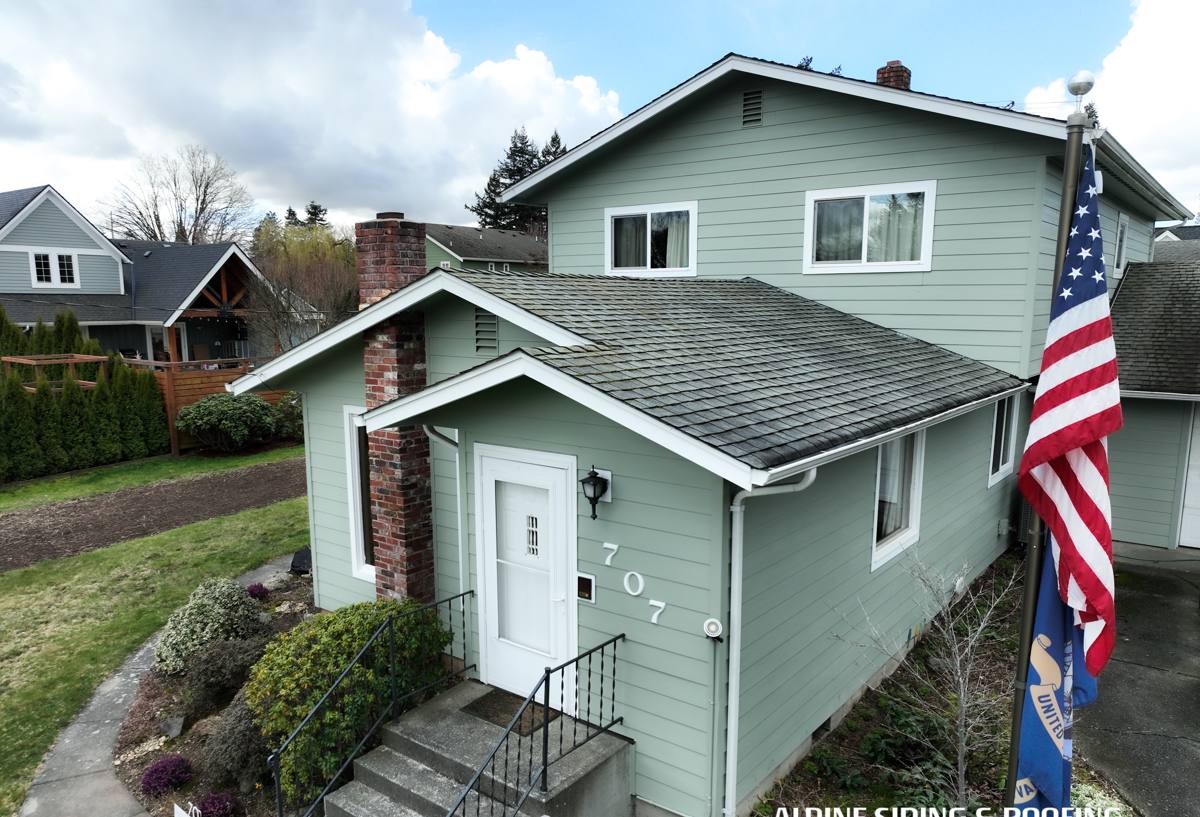
What a Correctly Installed Roof Actually Involves
A roof is a system, not a single product. The shingles or panels you see are the last layer of a stack that has to work together — and in a wet climate like Whatcom County, the layers underneath the surface material matter as much as the surface itself.
The Layers That Do the Real Work
- Deck inspection and repair — plywood or OSB sheathing has to be sound before anything goes on top of it. Soft or delaminated decking gets replaced, not covered over.
- Ice-and-water shield at eaves, valleys, and penetrations — a self-adhering waterproof membrane in the spots most likely to see standing water or wind-driven rain forced up under the shingle line.
- Synthetic underlayment across the field — a water-resistant barrier over the rest of the deck that also protects the structure during the install itself, since Custer weather rarely gives you a guaranteed dry week.
- Flashing at every transition — chimneys, skylights, sidewalls, and roof-to-wall intersections are where most leaks actually start, not in the open field of shingles.
- Balanced ventilation — intake at the soffits, exhaust at the ridge, sized to move air through the attic evenly.
- The finish material — shingles, metal, or another roofing product, installed to the manufacturer's nailing pattern and exposure specs, not shortcuts.
Skip or shortcut any one of those layers and the finished roof can still look right for a year or two before problems show up. That's exactly why cheap roofing jobs fail early in this climate — the failure is invisible until the water finds it.
Choosing a Roofing Material for a Custer Home
There's no single "best" roofing material for every house — it depends on your roof's slope, how much shade and tree cover you have, your budget, and how the house looks with each option. Here's how the common choices stack up for this specific climate.
| Material | How it handles this climate | Maintenance burden | Typical lifespan here |
|---|---|---|---|
| Architectural (laminate) asphalt shingles | Good wind resistance when properly nailed and sealed; standard choice for most Custer homes | Periodic moss/debris removal, especially on shaded roofs | 25–30 years with proper ventilation |
| 3-tab asphalt shingles | Lower wind rating, flatter profile sheds moss debris less easily | Similar upkeep, shorter service life | 15–20 years |
| Standing seam metal | Excellent water shedding on steeper slopes, sheds moss and moisture fastest | Low; occasional fastener/sealant check on exposed-fastener styles | 40–50+ years |
| Cedar shake/shingle | Traditional look but holds moisture longer in shaded, damp conditions unless well ventilated and maintained | Higher — regular treatment and moss control needed | Varies widely with maintenance |
| Synthetic composite shingle/shake | Mimics wood or slate look with better moisture resistance than natural cedar | Low to moderate | 30–50 years depending on product |
We don't push one material on every homeowner. What we will tell you honestly: on a heavily shaded, low-slope roof in Custer, a product that sheds water and debris quickly is going to outperform one that traps moisture against the deck, regardless of how good it looks on day one. We'll walk your specific roof with you and explain the trade-offs for your situation before you commit to anything.
Our Installation Process, Start to Finish
Homeowners generally want to know two things: what happens to my house during this, and how do I know it's being done right. Here's the sequence we follow on a full tear-off and replacement.
- On-site inspection and estimate — we walk the roof (or use a lift/drone when needed), check the attic for existing ventilation and moisture issues, and measure for materials.
- Written scope and material selection — you get a clear breakdown of what's being removed, what's being replaced, and what product options fit your roof and budget.
- Scheduling around the weather window — in Whatcom County we plan tear-offs for stretches of dry forecast where possible, and we protect open sections of deck with tarps or dry-in membrane if weather turns mid-job.
- Tear-off and deck inspection — old roofing comes off down to the deck, and any soft, rotted, or delaminated sheathing is identified and replaced before anything new goes down.
- Underlayment and flashing installation — ice-and-water membrane at vulnerable areas, synthetic underlayment across the field, new flashing at every penetration and transition.
- Ventilation correction — if your attic's intake and exhaust venting is undersized or unbalanced, we address it here rather than leaving the same moisture problem under a new roof.
- Finish material installation — shingles, metal panels, or your chosen product, installed to spec.
- Cleanup and magnetic sweep — job site, gutters, and yard cleared of debris and stray nails.
- Final walkthrough — we go over the finished roof with you before calling the job done.
Ventilation and Moisture Control — The Part You Don't See
Most roof failures we're called out to inspect in this area aren't caused by bad shingles. They're caused by trapped moisture — an attic that can't breathe, condensation building up under the deck, or a roof valley that funnels more water than it was built to handle.
Why This Matters More in Custer Than in Drier Climates
When an attic can't exhale warm, moist air fast enough, that moisture condenses on the underside of the roof deck. Over a Whatcom County winter, that cycle repeats for months. The result is soft sheathing, mold, and premature failure of the underlayment — problems that show up from the inside long before they show up as a visible leak. A correctly balanced system — enough intake at the soffits, matched by enough exhaust at or near the ridge — keeps air moving and keeps that moisture from ever building up in the first place.
We check this on every new roof install, not as an upsell but because installing a new roof over an unbalanced attic just resets the clock on the same problem.
Moss, Algae, and Why Custer Roofs Age Differently
Whatcom County's moss season is long — shaded, north-facing, and low-slope roofs can stay damp for months at a time, which is exactly what moss and algae need to take hold. Left unchecked, moss doesn't just look bad; it lifts shingle edges, holds water against the surface, and accelerates granule loss.
A few things we build into new installations to fight this from day one:
- Zinc or copper control strips near the ridge on shingle roofs, which release trace metal ions in the rain runoff that inhibit moss and algae growth down the slope.
- Material choices that shed water and debris faster on the shadiest sections of roof, where moss pressure is highest.
- Recommending tree trimming where overhanging branches keep a section of roof shaded and damp longer than the rest.
- Making sure gutters and valleys are sized and clear so water isn't sitting and pooling debris that feeds moss growth.
None of this makes a roof moss-proof forever — it's still a good idea to have moss removed (not power-washed, which can strip granules) every few years. But the right install choices meaningfully slow it down.
Signs a Custer Home Needs a New Roof, Not a Repair
Not every roofing problem means starting over. But there's a point where patching stops being the economical choice. Some signs worth a real inspection rather than another repair:
- Shingles that are cupping, curling, or losing granules across large sections rather than one isolated spot
- Daylight visible through the roof deck from inside the attic
- Soft or spongy spots underfoot when walking the roof
- Recurring leaks in different locations after repairs, rather than the same spot
- Roof is 20+ years old (asphalt) and has never had ventilation upgrades
- Heavy moss growth that's lifted shingle tabs rather than just sitting on the surface
- Visible sagging along the roofline or between rafters
If you're only seeing one or two of these and they're localized, a repair may genuinely be the right call — we'll tell you that if it's true. A full replacement makes sense when the underlying materials are past the point where patching buys you meaningful extra years.
Permits, Timeline, and What to Expect
Most residential re-roofs in unincorporated Whatcom County require a building permit, and we handle that paperwork as part of the job rather than leaving it to you. A typical single-family tear-off and replacement runs one to three days of active work depending on roof size, pitch, and complexity — steep or cut-up roofs with multiple valleys and dormers take longer than a simple gable roof.
The biggest variable in Custer isn't the crew's speed — it's the weather. We build scheduling flexibility into every job so we're not rushing a tear-off into a rain system, and your home is never left exposed with an open deck overnight.
Why It Matters to Hire a Crew That Already Works in Custer
A roofing crew that mainly works drier inland climates will often spec a roof the same way they would anywhere else — because that's what they know. A crew that works Whatcom County roofs regularly makes different calls by default: heavier underlayment at the eaves, moss-control strips as standard rather than an add-on, ventilation checked as part of every estimate instead of only when something looks obviously wrong.
We also know how the microclimates around Custer differ from a roof a few miles inland versus one closer to the water — how much salt exposure and wind-driven rain a given roof actually deals with, and where that changes the recommendation. That local pattern recognition doesn't show up on a spec sheet, but it shows up in how long the roof lasts.
Get a Straight Answer About Your Roof
If you're weighing a repair against a full replacement, or you just want an honest read on what your current roof needs, we'll come take a look. The estimate is free, there's no pressure to sign anything on the spot, and you'll get a clear explanation of what we find and what your real options are — fill out the form below to get started.