 Semiahmoo
 Building a Deck That Actually Holds Up in Blaine Harbor
Blaine Harbor sits right where Semiahmoo's marine air meets the open water, and that combination is harder on outdoor structures than most homeowners expect. A deck built with inland assumptions — standard fasteners, generic sealants, framing details that would be fine forty miles east — tends to show problems within a few seasons here: streaking hardware, soft spots at the ledger, moss creeping across boards that never fully dry out between rains. A deck built for this specific stretch of Whatcom County coastline is a different project from a deck built anywhere else, and it should be treated that way from the first framing decision onward.
This page is about one thing: custom deck construction for homes in and around Blaine Harbor, and what it actually takes to get one right in this climate.
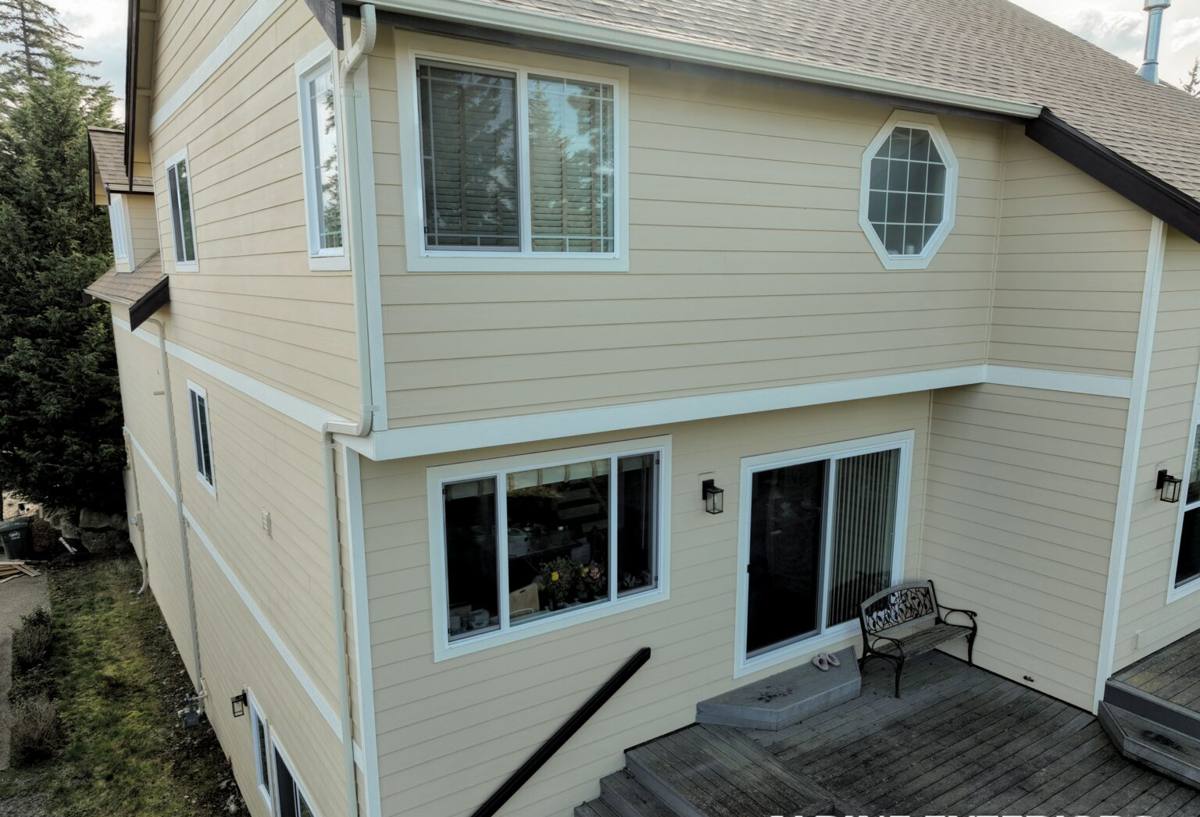
What Salt Air, Driving Rain, and Moss Season Do to a Deck
Salt Air
Airborne salt from the harbor settles on every exposed surface, and it's persistent — wind carries it further inland than people assume, and it doesn't wash off completely even with regular rain. On a deck, salt accelerates corrosion on any hardware that isn't rated for it: standard galvanized screws, cheap joist hangers, and lower-grade fasteners can start showing rust streaks and pitting well before a wood or composite deck surface shows any wear at all. Once a fastener corrodes, it loses holding strength long before it looks obviously bad, which is exactly why fastener selection matters more here than in a drier, inland build.
Driving Rain
Storms off the water don't just fall straight down — wind-driven rain gets pushed sideways into ledger connections, under railings, and into any gap in the decking pattern that wasn't detailed to shed water. A deck that's fine in a light, vertical rain can still take on water at a horizontal wind-driven angle if flashing and spacing weren't planned for it.
The Long Moss Season
Whatcom County's wet season runs long, and shaded or low-airflow sections of a deck can stay damp for weeks at a time. That's exactly the environment moss and algae need. Beyond looking bad, a mossy deck surface holds moisture against the board and gets slick and genuinely dangerous underfoot — a real safety issue on stairs and ramps, not just a cosmetic one.
What a Correctly Built Deck Involves Here
Framing and Substructure
The framing is the part nobody sees once the project is done, and it's also the part that determines whether the deck is still solid in fifteen years. For Blaine Harbor builds, that means corrosion-resistant structural hardware throughout, ledger flashing detailed to shed water away from the house rather than trap it against the rim joist, and joist spacing and blocking that accounts for the decking material's actual movement in wet-dry cycles — not just manufacturer minimums.
Decking Material Choice
There's no single "best" decking material for a marine climate — there's a best material for a given homeowner's budget, maintenance appetite, and how exposed the deck is to weather. We walk through the honest trade-offs rather than pushing one product.
| Material | How it handles this climate | Maintenance reality |
|---|---|---|
| Cedar / wood | Naturally rot-resistant when detailed and finished correctly, but needs consistent upkeep to stay that way in salt air and long wet spells | Re-sealing or staining every 1-3 years; more if fully exposed to weather |
| Composite decking | Doesn't absorb moisture the way wood does, resists rot; surface can still collect moss/algae film in shaded, low-airflow spots | Occasional cleaning; no staining or sealing, but not "zero maintenance" as often advertised |
| PVC / capped polymer | Very strong moisture resistance, good option for the wettest, most shaded sections of a lot | Low upkeep; higher upfront material cost |
| Pressure-treated framing lumber (structural only) | Standard for substructure, but hardware and flashing quality matter more than the lumber treatment itself in salt air | Inspect connections periodically; not a decking surface choice |
We size this recommendation to the actual site — how much sun and airflow the deck gets, whether it's within direct salt spray of the water, and how much upkeep the homeowner actually wants to do. A shaded, low-airflow deck close to the harbor is a different recommendation than a sunny, elevated deck set back from the water, even on the same street.
Fasteners, Flashing, and the Details That Actually Determine Lifespan
Most deck failures we get called out to repair in coastal Whatcom County aren't decking-surface problems — they're connection problems. The ledger board attachment, the joist hangers, the post bases, and the fastener grade are what actually fail first in a salt-air environment, usually years before the visible boards do. Correct practice for this area includes:
- Stainless steel or otherwise marine-rated fasteners at all structural connections, not just at the visible surface screws
- Ledger flashing that directs water away from the house sheathing, installed before the deck boards go down, not patched in afterward
- Post bases set to keep end-grain wood off standing water and away from constant moisture contact
- Hardware inspected for the specific coating rating, since "galvanized" alone isn't a single standard — coating thickness and quality vary widely between suppliers
None of this is visible once the deck is finished, which is exactly why it's worth asking a contractor directly what hardware and flashing spec they're using before work starts, rather than assuming.
Designing Against Moss and Standing Moisture
A lot of the moss problem on decks isn't a maintenance failure — it's a design outcome baked in from the start. Boards laid with insufficient gapping, decks built low to grade with poor airflow underneath, and shaded corners with no drainage path all but guarantee moss and slick buildup during the wet months. Correct design choices that reduce this over the life of the deck include:
- Board spacing sized to allow real drainage and airflow, not the tightest gap that still looks acceptable
- Substructure height and venting that lets air move underneath rather than trapping ground moisture against the joists
- Drainage grading so water sheds off the deck surface and away from the foundation, not pooling at low points
- Material and finish choices matched to the shadiest, dampest sections separately from the sunnier ones, if the lot has both
Our Process for a Blaine Harbor Deck Project
- On-site assessment — we look at sun exposure, prevailing wind and rain direction, drainage, and how close the site sits to direct salt exposure from the harbor.
- Design and material selection — we walk through decking and railing options against the homeowner's budget and maintenance preferences, with the trade-offs explained plainly.
- Permitting — we handle the permit application through the applicable local jurisdiction, including any setback or structural requirements that apply to the property.
- Framing and structural build — corrosion-resistant hardware, proper ledger flashing, and substructure spec built for this climate rather than a generic build.
- Decking, railing, and finish work — installed with drainage and airflow accounted for, not just visual fit.
- Final walkthrough — we go over the maintenance the specific materials chosen will actually need, so there are no surprises the first wet winter.
Maintaining a Deck Through Whatcom County's Wet Season
Even a well-built deck needs some seasonal attention in this climate — the difference is that a correctly built one needs far less, and what it does need is manageable. A simple seasonal checklist we give homeowners:
- Sweep debris and standing leaves off the deck surface regularly through fall, since trapped organic matter is what feeds moss growth
- Rinse the surface periodically during the wet months, especially shaded sections, to slow algae and moss buildup before it takes hold
- Check railing and stair connections once a year for looseness — often the first sign of a fastener issue, not the surface boards
- Re-seal or stain wood decking on the schedule the specific product needs, rather than waiting until it visibly looks dry
- Keep gutters and downspouts near the deck clear so runoff isn't dumping extra water directly onto or under the structure
Permits and Local Considerations
Deck projects in this area typically require a permit, and requirements can include setback distances, guardrail and stair code specifics, and — depending on proximity to the water — additional review tied to shoreline or critical-area regulations that apply near Semiahmoo and Blaine Harbor. We handle this as part of the project rather than leaving it to the homeowner to sort out, since getting it wrong can mean rework or delays partway through the build.
Why It Matters That We Already Work Blaine Harbor
A contractor who builds decks across a wide inland region and occasionally takes a coastal job will often default to their standard spec — because that spec works fine everywhere else they build. A crew that regularly works Blaine Harbor and the surrounding Semiahmoo area already knows which hardware grade holds up here, which sections of a typical lot need extra drainage attention, and which decking materials are worth the added upfront cost versus which ones are overkill for a given site's exposure. That's not something you get from a spec sheet — it's from having repaired and replaced enough decks in this specific stretch of coastline to know what actually fails first and why.
If you're planning a new deck or replacing one that hasn't held up to the harbor climate, we're glad to take a look and put together a straightforward plan — no pressure, no obligation. Use the form below to request a free estimate.