 Semiahmoo
 Building Decks for Semiahmoo Resort's Marine Climate
A deck at Semiahmoo Resort lives a harder life than a deck ten miles inland. The lot sits right up against Semiahmoo Bay and Drayton Harbor, which means salt-laden air moves across every board, fastener, and post base almost daily. Add Whatcom County's long, wet winters and the moss that comes with them, and you've got a structure that's under constant low-grade attack from three directions at once: corrosion, moisture intrusion, and organic growth. None of that means a deck can't last decades here — it means it has to be built with those three things in mind from the footings up, not patched for them later.
This page is about deck building specifically for homes and units in and around Semiahmoo Resort — what the site conditions demand, what a correctly built deck actually involves, and how we approach the work as a crew that's already spent time on this stretch of coastline.
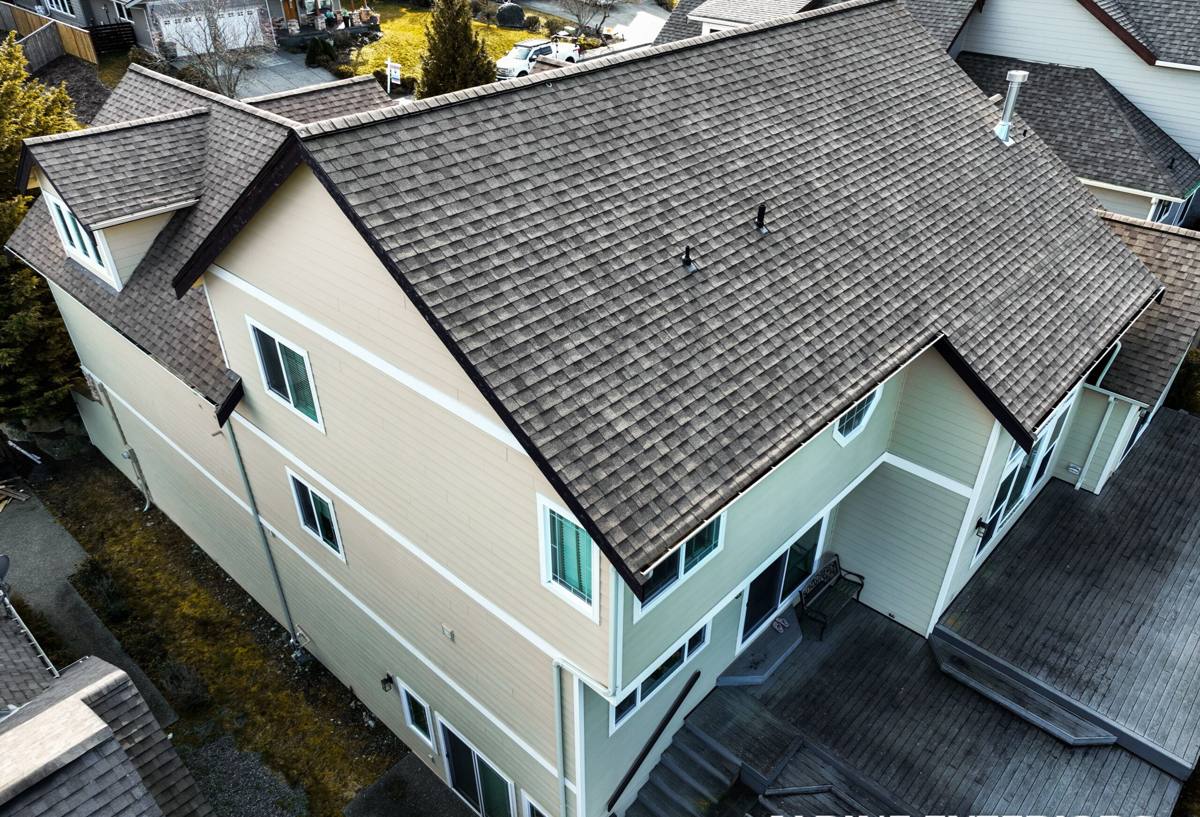
What Salt Air, Driving Rain, and Moss Season Do to a Deck
Salt air and corrosion
Airborne salt accelerates corrosion on anything metal — fasteners, joist hangers, post bases, railing brackets. A screw or hanger rated for general PNW use inland can start showing rust streaks within a couple of seasons this close to the water. Once a fastener corrodes, it loses holding strength long before it looks obviously bad, which is the real danger: the deck can seem fine while its connections are quietly weakening.
Driving rain
Storms off the water don't just fall straight down here — wind-driven rain gets pushed sideways into ledger connections, under railing posts, and into any gap in flashing or trim. A deck built the way you'd build one in a drier climate — relying on caulk alone at the ledger, for example — will eventually let water track behind the siding and into the rim joist or wall framing. That's one of the most expensive repairs a deck can cause if it's missed at construction.
Moss season
Whatcom County's wet season runs long, and shaded or north-facing decks near mature trees or tight to the house can hold moisture for weeks at a time. Moss and algae aren't just cosmetic — they hold water against the decking surface, make boards slick and unsafe underfoot, and on wood decking they accelerate rot in exactly the spots where boards butt together or meet fasteners.
Framing and Fasteners: The Part Nobody Sees But Everyone Regrets
The visible decking gets all the attention, but the framing underneath and the fasteners holding it together are what determine whether a deck is still sound in fifteen years. In a marine environment we treat this as non-negotiable, not an upsell:
- Stainless steel or heavy hot-dip galvanized fasteners throughout — not the lighter coated screws that are fine forty miles inland but corrode visibly within a few years of salt exposure
- Structural connectors (joist hangers, post bases, hurricane ties) rated for coastal/high-corrosion use, matched to the fastener material to avoid galvanic corrosion between dissimilar metals
- Pressure-treated framing lumber rated for ground contact where posts meet grade, even if the visible decking above is a different material
- Proper ledger flashing with a drainage gap and self-adhered membrane behind it, not just caulk and lag bolts
Mixing a premium composite deck board with budget-grade fasteners underneath is a common shortcut that looks fine on delivery day and causes problems five to eight years out — right around when the corrosion has had time to do real damage but the deck otherwise still looks new.
Choosing Decking Material for This Site
There's no single "best" decking material — there's a best material for this climate, this budget, and how much maintenance a homeowner actually wants to do. Here's how the common options hold up specifically against salt air, rain, and moss:
| Material | Salt air resistance | Moss/rain performance | Maintenance | Typical lifespan here |
|---|---|---|---|---|
| Capped composite | Very good — no corrosion, cap resists staining | Sheds water well, but surface can still grow algae if shaded and not cleaned | Occasional wash | 25-30+ years |
| Cedar | Naturally rot-resistant but softens over time near salt spray | Needs regular sealing to resist moss and cupping | Re-stain/seal every 1-2 years | 15-20 years with upkeep |
| Tropical hardwood (ipe, etc.) | Excellent density resists rot and salt | Very good if fastened correctly; can still get slick when mossy | Periodic oiling for color, low structural upkeep | 30+ years |
| Pressure-treated pine | Adequate if fasteners and hardware are upgraded | Prone to moss and splitting if not sealed | Sealing every 1-2 years, more frequent inspection | 10-15 years before major repair |
Composite has become the most common choice for coastal Whatcom County homeowners because it removes the sealing/staining cycle entirely, but we install all four when that's the right fit for a homeowner's budget and the look they want. What we won't do is install a premium board over undersized or under-protected framing — the decking is only as good as what's underneath it.
Footings, Drainage, and Keeping Water Moving
A deck built on this stretch of coast needs a plan for where water goes, both above and below the boards. Post footings need to be set below frost depth and, given how saturated soil can get here in winter, sized and placed with real drainage around them rather than sitting in a pocket that holds water. Under the deck itself, grading and gravel or a proper drainage system keep water from pooling against posts and ledger connections.
On raised decks, we also pay attention to airflow underneath — a deck that's boxed in tight with skirting and no ventilation traps moisture exactly where framing is most vulnerable. A few well-placed vents or gaps in the skirting cost nothing to plan for up front and make a real difference in how long the substructure lasts.
Our Deck-Building Process
- Site walk and design — we look at sun exposure, wind direction off the water, existing drainage, and how the deck ties into the house before drawing anything up
- Material selection — honest conversation about composite vs. wood vs. hardwood for this budget and this exposure, no pushing one brand over another without reason
- Permitting — Whatcom County and local jurisdiction requirements handled before framing starts, not after
- Framing and flashing — ledger, footings, and structural connections built to the coastal-hardware standard described above
- Decking and railing installation — fastening patterns and gapping set for the specific material's expansion behavior in this climate
- Final walkthrough — we go over maintenance expectations specific to the material chosen so there are no surprises
Permits and Local Considerations
Deck projects at Semiahmoo Resort typically require a building permit once they exceed a certain height or are attached to the structure, and setback rules matter more here given the proximity to the shoreline in some areas. We handle the permit application and inspections as part of the job rather than leaving it to the homeowner to sort out — it's a normal part of building correctly in Whatcom County, not an extra step.
Maintenance Checklist for a Semiahmoo Resort Deck
Whatever material is chosen, a few habits go a long way against this specific climate:
- Rinse or sweep the deck surface every few weeks during the wet season to keep moss spores from taking hold
- Check fastener heads and railing hardware once a year for early rust or looseness, especially on wood decks
- Keep gutters and downspouts near the deck clear so runoff isn't dumping directly onto the structure
- Reseal or re-stain wood decking on schedule — don't stretch the interval just because it "still looks okay"
- Clear leaves and debris from between boards and around post bases before winter
- Have the substructure looked at every few years, not just the visible decking, especially on older builds
Cost Factors to Expect
| Factor | Why it moves the price |
|---|---|
| Decking material | Composite and hardwood cost more up front than pressure-treated pine but need far less maintenance spending over time |
| Height and structure | A raised deck needs more substantial footings, framing, and often stairs and code-required guardrails |
| Hardware upgrade | Stainless or heavy-duty coastal-rated fasteners and connectors cost more than standard hardware but are the right call this close to the water |
| Site access and drainage work | Sloped or poorly drained lots may need extra grading, gravel, or footing work before framing starts |
| Railing style | Cable, glass, or custom railing systems add cost over standard wood or composite balusters |
We give real numbers based on the actual site and material choice — broad ranges without seeing the lot don't help anyone plan a budget.
Why a Local Crew Matters Here
A deck built to a generic spec sheet, without accounting for salt exposure, wind-driven rain angles, and how long moss season really runs here, tends to show its weak points early — usually right at the fasteners and the ledger connection first. Working this specific stretch of Whatcom County coastline regularly means we're not guessing at what holds up; we've seen which hardware corrodes fast, which flashing details actually keep water out in a sideways rainstorm, and which materials owners are still happy with a decade later. That local track record is worth more on a deck than it is on almost any other part of the house, because a deck's structure is largely hidden until something fails.
If you're planning a new deck at Semiahmoo Resort or need an honest look at one that's showing its age, we're happy to come out for a free, no-pressure estimate — no obligation, just a straight assessment of what your site and budget call for.