 Semiahmoo
 Ferndale Sits Right Where the Weather Gets Serious
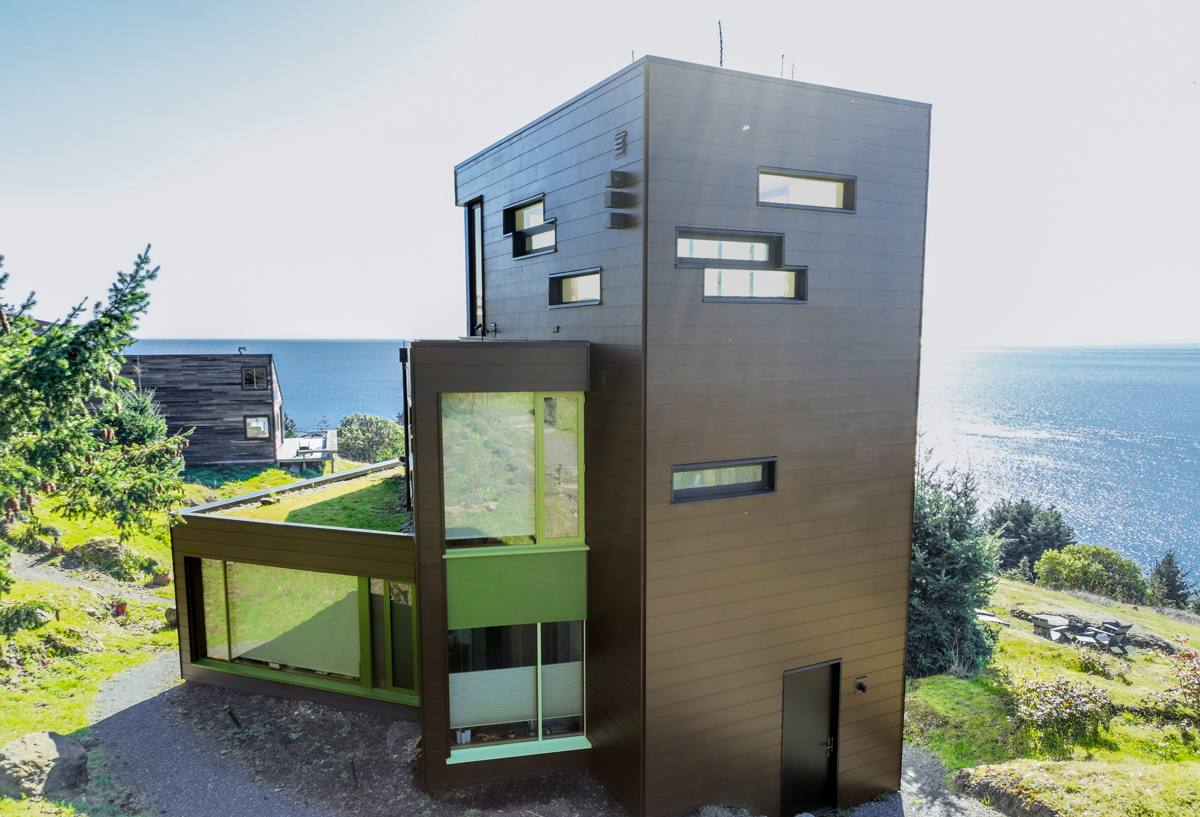
Ferndale homes take a beating that inland Whatcom County houses simply don't deal with. You're close enough to Semiahmoo Bay and the Strait of Georgia to get salt-laden air working its way into every seam and fastener on your exterior. Add driving rain off the water, long gray stretches where siding never fully dries out, and a moss season that can run from October through May, and you've got a climate that punishes any siding product with a weak spot. We install James Hardie fiber cement siding, and we install it specifically with this coastline in mind — not generic Pacific Northwest weather, but the particular combination of salt exposure and sustained moisture that Ferndale and the surrounding Semiahmoo area deal with every year.
What Salt Air and Moss Actually Do to Siding
Salt air is corrosive to fasteners and hardware, and it accelerates the breakdown of finishes that aren't built to resist it. On top of that, moss and algae don't just look bad — they hold moisture against the siding surface for weeks at a time, which is exactly the condition that causes rot, delamination, and paint failure in lesser materials. A siding product that's marginal in a dry climate becomes a real liability here. That's why the products we deliberately don't install — vinyl, LP SmartSide, primed spruce, raw cedar — all have known weak points that show up faster in a Ferndale backyard than they would forty miles inland.
- Vinyl softens, fades, and can warp under direct afternoon sun reflecting off water, while staying brittle in the cold snaps that follow a wet front
- LP SmartSide is an engineered wood product — any breach in its factory coating or field-cut edge sealing invites moisture into the substrate
- Primed spruce and raw cedar both need active, ongoing maintenance to resist the constant damp, and moss gets a foothold fast on wood grain
- Any siding with exposed, uncoated fasteners will show corrosion streaking sooner near the water than it would elsewhere
None of these are "bad" products in every setting. They're just not the right call for a home that sits this close to Semiahmoo Bay, which is why we standardized on James Hardie fiber cement and don't install the alternatives.
Why James Hardie Is the Right Material for This Climate
James Hardie siding is fiber cement — a mix of cement, sand, and cellulose fiber that doesn't rot, doesn't feed pests, and doesn't absorb moisture the way wood-based products do. It's non-combustible, which matters less for salt air specifically but is part of why it holds up as a long-term investment. The bigger relevant piece for Ferndale is the ColorPlus factory finish: a baked-on coating applied in a controlled environment, not a field-sprayed paint job. That finish is engineered to resist fading, chipping, and cracking, and it holds color far longer in salt-air, high-UV-reflection conditions than a site-applied paint ever will. When a product's finish is baked on before it ever reaches your house, there's no thin spot, no missed section, no inconsistency in cure time — all things that matter when the surrounding air is actively working to break a coating down.
HardieZone HZ5 — Engineered for This Region
James Hardie makes region-specific formulations under its HardieZone system, and the Pacific Northwest falls under HZ5 — engineered for climates with significant moisture exposure and freeze-thaw cycling. That's not a marketing label; it changes the actual composition and moisture resistance of the board. Installing an HZ5-rated product on a Ferndale home means the siding itself was formulated for weather like this, not a generic national spec.
What a Correct Installation Actually Involves
The siding board is only part of the story. Most siding failures we get called out to inspect — regardless of brand — trace back to installation details, not the material itself. In a climate like Ferndale's, those details matter more, not less, because there's less margin for error before moisture finds a way in.
Moisture Management Comes First
Before a single piece of Hardie board goes up, the wall needs a correctly lapped weather-resistive barrier and properly integrated flashing at every window, door, and roofline intersection. Water has to have a planned path down and out, not just a hope that the siding face keeps it out. This is the step that gets rushed on low-bid jobs, and it's the one that determines whether a house stays dry for thirty years or develops hidden rot behind siding that still looks fine from the curb.
Gapping and Clearance
Fiber cement needs proper gapping at butt joints and around penetrations, plus the correct clearance from grade, roof lines, and decks — James Hardie publishes minimum clearances for a reason. Too tight, and the board can't shed water or move slightly with temperature changes; too tight to grade or a deck surface, and you're inviting the exact moss and moisture buildup that causes trouble on this coastline.
Fastening
Corrosion-resistant fasteners, driven correctly — not overdriven, not underdriven — set at the manufacturer's specified pattern. In salt air, fastener quality is not a place to cut corners; the wrong fastener corrodes years before the siding around it would ever fail on its own.
Caulking and Sealant at Transitions
Sealant belongs at specific transitions, not everywhere, and it has to be a product rated for the movement and exposure it'll see. Over-caulking traps moisture as often as it keeps it out.
Material Comparison for a Semiahmoo-Area Home
| Factor | James Hardie Fiber Cement | Vinyl | LP SmartSide / Engineered Wood | Raw or Primed Wood (Cedar/Spruce) |
|---|---|---|---|---|
| Salt air resistance | Strong — non-organic, factory finish | Moderate — can chalk and discolor | Moderate — coating breach is the risk point | Weak — organic material, needs constant upkeep |
| Moss/algae resistance | Strong with proper detailing | Moderate | Moderate | Weak — grain holds moisture |
| Finish longevity | Baked-on ColorPlus, long fade resistance | Color molded in, can fade/chalk over time | Factory or field coating, needs monitoring | Requires repainting/restaining every few years |
| Fire performance | Non-combustible | Combustible, can melt/warp | Combustible | Combustible |
| Long-term maintenance | Low — inspect and touch up as needed | Low, but limited repair options when damaged | Moderate — watch coating and edges | High — recurring sealing/painting |
Our Process on Ferndale Homes
We start with a real walk of the exterior — not a drive-by estimate. That means checking the existing wall assembly, looking for any signs of past moisture intrusion, and noting drainage, grade, and roofline conditions before we ever price the job. From there:
- Full removal of the old siding and inspection of the sheathing underneath for hidden rot or damage
- Repair of any compromised sheathing before anything new goes up — never siding over a problem
- Installation of a correctly lapped weather-resistive barrier with integrated flashing at every opening
- James Hardie board and trim installed to manufacturer clearance and fastening specifications
- Sealant applied only at engineered transition points, using a product rated for coastal exposure
- Final walk-through so you can see the completed detailing before we consider the job done
Every step is about giving the siding the conditions it needs to perform for decades, not just look good on installation day.
Why a Crew That Already Works Ferndale Matters
A crew that's worked this stretch of Whatcom County knows the difference between a Ferndale exposure and a job twenty miles inland. That shows up in small decisions — where extra flashing attention matters most on a given elevation, how much clearance to leave near landscaping that holds moisture, which details deserve extra time given how long moss season runs here. It also means you're working with people who understand local permitting expectations and who aren't learning coastal Whatcom conditions on your project. Experience with this specific climate isn't a bonus feature — it's the difference between a Hardie installation that lives up to its warranty and one that runs into avoidable problems in year six or seven because a detail got treated like it was optional.
What to Check Before You Hire Anyone for Siding Work
- Are they installing to the manufacturer's published clearance and fastening specifications, or their own shortcut version?
- Do they inspect and repair sheathing before installing new siding, or just cover what's there?
- Can they explain how they handle flashing at windows, doors, and roof intersections — specifically, not generally?
- Are they James Hardie certified or experienced specifically with fiber cement, not just siding in general?
- Do they have real experience with coastal Whatcom County homes, or mostly inland projects?
- Will the finished warranty be backed by both the manufacturer and the installer?
Living With Hardie Siding in Ferndale
Once it's installed correctly, James Hardie siding is low-maintenance, not no-maintenance. An annual rinse to knock off accumulated salt residue and any early moss growth, plus a periodic visual check of caulked transitions and any spots where landscaping has grown close to the wall, is generally all it takes. Because the ColorPlus finish is factory-applied, you're not on a repainting schedule the way you would be with wood siding — that's one of the practical, ongoing advantages that matters most in a climate that's hard on exterior finishes.
If you're planning a siding project in Ferndale or anywhere around Semiahmoo, we're glad to walk your home, look at what's actually going on with your current exterior, and give you a straight, no-pressure estimate for a correctly installed James Hardie system. Use the form below to get started.