 Semiahmoo
 Decks in Laurel Take a Different Kind of Beating
Laurel sits close enough to the water around Semiahmoo that decks here don't age the way they would fifty miles inland. Salt-laden air works into fasteners and metal connectors faster than plain moisture does, wind-driven rain gets pushed sideways under railings and ledger boards, and the wet season runs long enough that a deck can stay damp for weeks at a stretch. Add Whatcom County's moss and algae growth, and you get a surface that looks fine from the porch but is quietly losing ground underneath.
Most of the deck repair calls we get in this part of Semiahmoo aren't dramatic. They're slow failures — a soft spot near a downspout, a railing post that's gone spongy, fasteners bleeding rust through the decking. Left alone, these small problems compound because the same conditions that started the damage keep working on it year-round.
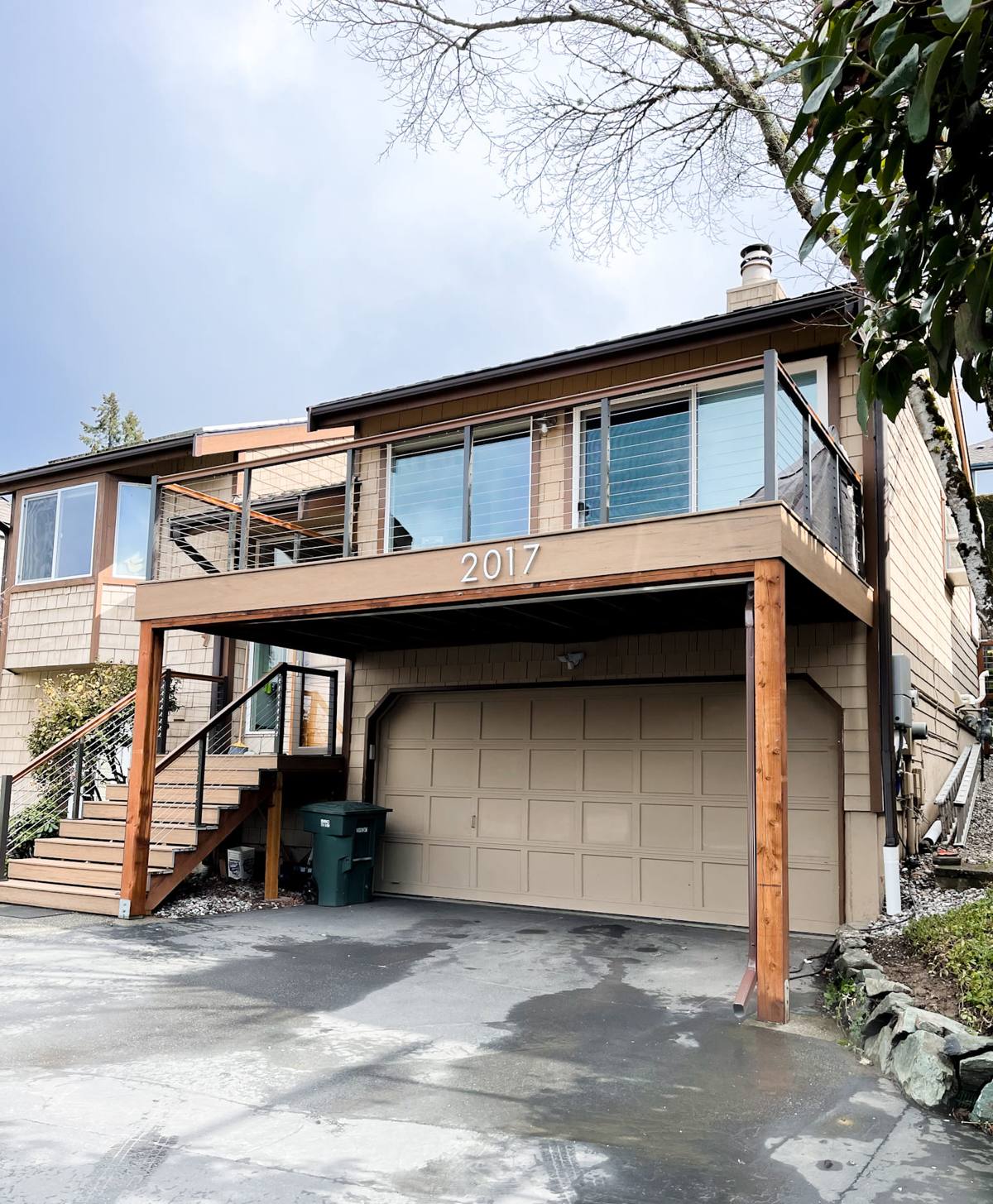
Why Local Climate Drives the Repair Approach
Salt Air and Metal Fatigue
Hardware — joist hangers, lag bolts, screws, post bases — is usually the first thing to show wear on a Laurel deck. Salt in the air accelerates corrosion on anything that isn't rated for coastal exposure, and once a fastener starts rusting, it swells slightly and can crack the wood fibers around it, which lets in even more moisture. We check hardware condition on every repair, not just the decking boards, because replacing boards over corroded connectors just buys a homeowner a year or two before the same problem resurfaces.
Driving Rain and Water Path
Rain that comes in sideways off the water finds every gap in a deck's defenses — under rail caps, behind ledger flashing, into end-grain cuts that were never sealed. A repair that only patches the visible damage without correcting how water moves across and off the deck will fail again in the same spot. Part of doing this right is tracing where water is actually getting in, not just where it shows up.
The Long Moss Season
Shaded or north-facing sections of a deck in this area can stay damp long after the rest of the yard has dried out, which is exactly what moss and algae need to take hold. Beyond looking bad, moss holds moisture against the wood surface and makes boards slick and dangerous underfoot. Any competent deck repair addresses this by improving airflow and drainage where possible, not just cleaning the surface once and leaving the underlying conditions unchanged.
What a Correct Deck Repair Actually Involves
A repair that holds up in Semiahmoo's climate goes beyond swapping out a few boards. Here's what we check and address on every job:
- Structural framing — joists, beams, and posts checked for soft spots, splitting, or rot, especially near ground contact and under high-traffic areas
- Fastener and hardware condition — corrosion, loosening, or cracked wood around connectors
- Ledger board attachment to the house — this is the single most safety-critical connection on most decks and one of the most commonly overlooked failure points
- Water drainage and flashing — making sure water sheds off the deck and away from the house rather than pooling or running behind trim
- Railing and stair stability — movement or flex here is often a sign of deeper post or footing issues, not just a loose bracket
- Surface condition — cupping, splintering, moss staining, and finish failure on the decking boards themselves
Repairs generally fall into a few categories, and it's worth knowing which one you're actually dealing with before hiring anyone:
| Repair Type | Typical Cause in This Area | What's Involved |
|---|---|---|
| Board replacement | UV and moisture cycling, moss holding damp against the surface | Remove and replace individual boards; check joists underneath before refastening |
| Railing/post repair | Wind exposure, corroded connectors, water intrusion at post base | Reset or replace posts, upgrade hardware to corrosion-resistant fasteners |
| Structural/framing repair | Long-term moisture at ledger, joists, or beam connections | Sister or replace damaged framing members, correct flashing and water path |
| Ledger reattachment | Water intrusion behind house flashing over time | Detach deck from house, correct flashing, reattach with proper hardware |
| Surface restoration | Moss, algae, weathering | Clean, treat, and refinish or reseal decking surface |
How We Approach a Laurel Deck Repair
1. On-Site Assessment
We start by walking the whole deck, not just the spot the homeowner called about. A soft board near the stairs is often a symptom, and we want to know if the cause is isolated or connected to a bigger drainage or framing issue before we quote anything.
2. Identifying the Water Source
Because most deck damage in this climate traces back to water getting somewhere it shouldn't, we spend time figuring out the actual path — a missing flashing detail, a low spot that holds rainwater, a shaded corner that never fully dries. Fixing the symptom without addressing the source just means a repeat visit down the road.
3. Matching Repair to Damage
Not every problem needs a full rebuild, and not every soft board can be safely patched around. We give homeowners a straight answer on which situation they're in, including when a repair genuinely isn't worth it compared to replacing a section outright.
4. Corrosion-Resistant Hardware
Given the salt air around Semiahmoo, we use fasteners and connectors rated for coastal or marine-grade exposure on repair work, not standard interior-grade hardware that will corrode again within a few seasons.
5. Correcting Drainage and Airflow
Where moss or standing water has been part of the problem, we look for practical ways to improve airflow underneath and drainage across the surface — sometimes as simple as adjusting board spacing or clearing debris paths that were blocked.
Signs a Laurel Deck Needs Attention Now
- Boards that feel spongy, bounce, or flex underfoot
- Visible gaps opening up between decking boards or at the ledger
- Rust streaks running down from screws or hardware
- Persistent moss or algae in the same spots season after season
- Railings or posts that wiggle or shift when leaned on
- Peeling, cracking, or gray weathered wood that wasn't there a year or two ago
- Water pooling on the deck surface instead of draining off
Any one of these on its own might be minor. Several at once usually means the deck's overall water management has broken down and it's worth a proper look before winter's wet stretch adds more stress.
Repair vs. Replacement
Homeowners often assume a deck showing damage needs full replacement, but that's frequently not the case. If the framing is sound and the damage is limited to decking boards, railings, or isolated hardware, targeted repair is usually the more sensible option — both in cost and in disruption. Replacement makes more sense when the structural framing itself has widespread rot, when the ledger connection has been compromised for a long time, or when repeated repairs in the same areas suggest the underlying design doesn't handle this climate well. We'll tell you honestly which category your deck falls into rather than defaulting to the bigger job.
Why Local Experience Matters for This Work
A deck repair crew that hasn't worked in coastal Whatcom County conditions can miss things that aren't obvious from a quick look — which hardware grades actually hold up against salt air, where driving rain typically finds its way in on homes near the water, which shaded spots in a yard like Laurel's tend to stay damp long enough to grow moss even in drier months. That's the kind of knowledge that comes from doing this work repeatedly in this specific area, not from a general deck-repair checklist. It shows up in fewer callbacks and repairs that actually last through the wet season instead of needing to be redone.
Maintaining a Deck After Repair
A repair holds up longer with a bit of routine upkeep, especially in this climate:
- Sweep debris out of gaps between boards regularly so water and organic matter don't sit and feed moss growth
- Rinse off salt residue and grime a few times a year, particularly after storms with onshore wind
- Check railings and stair connections for movement once or twice a year
- Reseal or refinish exposed wood on the schedule the product calls for — coastal exposure often shortens that interval compared to inland homes
- Trim back vegetation that's shading and keeping sections of the deck perpetually damp
If your deck in Laurel is showing any of the signs above, we're happy to take a look and give you a straight assessment — no pressure, no upsell, just an honest read on what it needs. Fill out the form below for a free estimate.