 Semiahmoo
 Deck Repair Built for Lynden's Weather, Not Just Any Deck
A deck in Lynden works harder than it looks. Whatcom County sits under a long stretch of Pacific weather — driving rain for months at a time, heavy dew, and a moss season that can start in October and not let go until May. Add in the seasonal exposure that reaches inland from the saltwater areas around Semiahmoo, and you get a climate that is genuinely tough on exterior wood and fasteners, even on decks that look fine from a distance. Deck repair here isn't just about swapping a rotten board. It's about understanding why that board rotted in the first place and fixing the underlying cause, not just the symptom.
This page covers what deck repair actually involves for homes in and around Lynden, what our process looks like, and how to tell the difference between a deck that needs a repair and one that's quietly telling you it needs to be replaced.
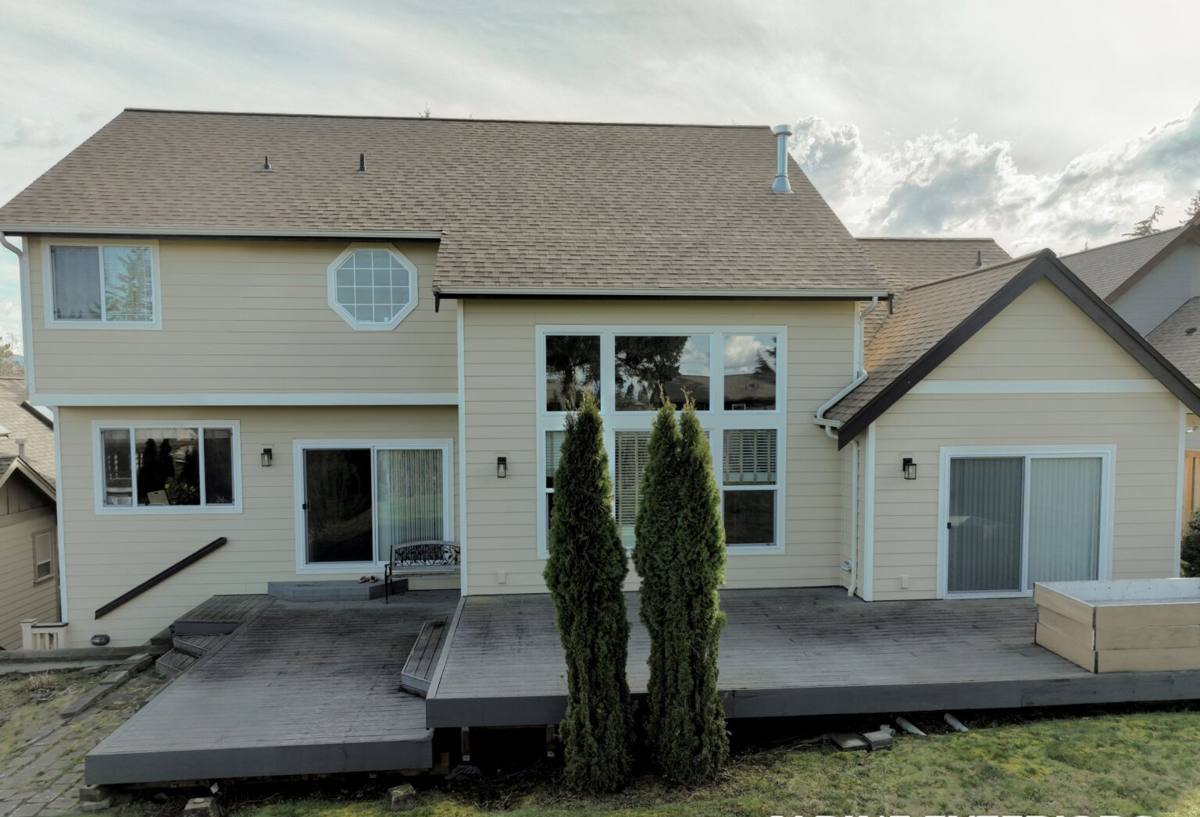
Why Local Decks Wear Out Faster Than People Expect
Most deck damage we see isn't from one big storm — it's from repeated small exposure that never fully dries out between rain events. A few things specific to this region make that worse:
Moss and Organic Buildup
Moss doesn't just look bad. It holds moisture directly against the wood surface and inside joints, ledger boards, and fastener holes. A deck that stays shaded under trees or on the north side of a house can hold a layer of damp moss for weeks, which is exactly the kind of sustained moisture that leads to rot underneath boards long before the surface looks bad.
Driving Rain and Poor Drainage
Rain that comes in at an angle — common in this part of Whatcom County — gets pushed under railings, into board gaps, and behind ledger connections where a builder assumed water would just run off. Decks with flat or poorly sloped surfaces, or ones missing proper flashing where they meet the house, trap water instead of shedding it.
Freeze-Thaw and Humidity Cycling
Wood that stays damp through a wet fall and winter, then dries out and swells again in spring, goes through repeated expansion and contraction. That cycle loosens fasteners, opens up hairline cracks for water to get into, and accelerates rot at joints — even on decks that are only ten or fifteen years old.
Salt-Influenced Air
Properties with more open exposure toward the water can also deal with airborne salt, which speeds up corrosion on nails, screws, and metal connectors. Corroded fasteners are one of the most common hidden causes of a deck that feels "soft" or slightly loose, even when the boards themselves look okay.
Signs Your Deck Needs Repair — And What They Actually Mean
Homeowners usually notice one of a handful of warning signs. Here's what each one is typically telling us before we even get on site:
- Soft or spongy boards — usually surface or subsurface rot, often worse than it looks from the top
- Boards that have cupped or crowned — moisture absorption and drying imbalance, a sign the wood has been wet longer than it should be
- Rust streaks around fasteners — corroding hardware, which weakens the structural connection even if the wood nearby looks fine
- Wobbly railings or stairs — loosened structural connections, sometimes from rot at the post base or ledger
- Green or black staining that won't scrub off — active moss, algae, or mildew growth that's been sitting long enough to discolor the wood
- Gaps opening up where the deck meets the house — a possible flashing or ledger issue, which is a safety concern, not just cosmetic
None of these automatically mean the whole deck needs to be torn out. But they do mean it's time for an honest inspection rather than guessing.
What a Proper Deck Repair Actually Involves
A repair that's done right addresses the cause of the damage, not just the visible piece. That generally breaks down into a few stages:
1. Inspection of the Structure, Not Just the Surface
We check ledger board attachment, joist condition, post bases, and fastener condition — not just the decking boards people walk on. A lot of the damage that matters most is underneath what you can see standing on the deck.
2. Isolating and Removing Compromised Material
Rot spreads. If we find a soft joist or a rotted post base, we trace it back to solid wood rather than patching around the damaged section and hoping it stops. Cutting a repair short here is one of the most common reasons a "fixed" deck fails again within a year or two.
3. Correcting the Moisture Path
If the original problem was drainage, missing flashing, or a ledger connection without a proper water barrier, we fix that as part of the repair. Replacing boards without correcting how water moves across and off the deck just sets up the same failure again.
4. Rebuilding with Appropriate Fasteners and Materials
Given the moisture and, in some cases, salt exposure locally, we use corrosion-resistant fasteners and connectors rated for exterior and coastal-influenced conditions rather than standard hardware that will start rusting within a few seasons.
Common Repairs We're Called For in Lynden
| Issue | Typical Cause | What the Repair Involves |
|---|---|---|
| Rotted decking boards | Trapped moisture, moss, poor airflow underneath | Remove and replace affected boards, address ventilation or drainage if that's the root cause |
| Loose or wobbly railing | Corroded fasteners or rotted post base | Rebuild post connection with new hardware rated for wet exposure |
| Soft spot near the house | Failed or missing ledger flashing | Correct flashing and ledger attachment, replace damaged framing |
| Stairs that flex or creak | Loosened stringer connections | Reinforce or replace stringers, re-secure to proper structural support |
| Persistent moss or black staining | Shade, poor drying time, organic buildup | Clean and treat surface, evaluate whether trimming back vegetation or improving airflow will prevent recurrence |
Repair or Replace? How We Help You Decide
Not every deck problem calls for a full rebuild, and not every deck is worth patching indefinitely. A few honest guidelines:
- If the structural framing (joists, ledger, posts) is sound and the damage is isolated to a handful of boards or a railing section, repair is usually the right call and the more cost-effective one.
- If rot has spread through multiple structural members, or the deck was built without proper flashing and it's failed more than once in the same spot, repair becomes a temporary fix — replacement is usually the better long-term investment.
- Age matters, but condition matters more. A well-built 20-year-old deck with good drainage can outlast a poorly flashed 8-year-old one.
- If you're regularly re-treating or re-staining a deck that still looks tired within a year, that's often a sign of an underlying moisture problem, not a coatings problem.
We'll always tell you plainly which category your deck falls into rather than defaulting to the bigger job.
Our Process
We keep the process straightforward:
- On-site inspection. We walk the deck, check the structure from underneath where accessible, and identify both visible damage and likely causes.
- Clear scope and estimate. You get a plain explanation of what needs to be repaired, why, and what it will cost — no vague line items.
- Repair work. We remove and replace only what's compromised, correct any drainage or flashing issues found, and rebuild with fasteners suited to this climate.
- Final check. We walk the deck with you again once the repair is complete so you can see exactly what was done.
Materials: What We Use and Why
For structural repairs — joists, posts, stringers — we use pressure-treated lumber rated for ground contact or exterior structural use, since that's what will hold up against the sustained moisture this area sees. For decking surfaces, both quality wood and composite boards have a place, and the right choice depends on the deck:
Wood Decking
Costs less upfront and matches an existing deck's look, but requires regular cleaning and refinishing to keep moisture and moss from taking hold. In a climate with this much sustained wet weather, wood decking that isn't maintained on schedule will show wear faster than the same product would in a drier region.
Composite Decking
Higher upfront cost, but far less vulnerable to rot, moss staining, and the freeze-thaw cycling that damages wood fiber over time. For homeowners who are tired of repeat repairs on the same section of deck, composite is often the more practical long-term choice, particularly on decks with limited sun exposure or poor natural airflow.
We don't push one material over the other by default — we tell you honestly which one fits your deck's exposure, your maintenance habits, and your budget.
Simple Maintenance That Prevents Most Repairs
A lot of the repair calls we get could have been smaller jobs — or avoided altogether — with a bit of regular upkeep. A few habits go a long way in this climate:
- Sweep off standing debris and leaves regularly, especially in fall, so moisture doesn't sit trapped against the boards
- Clean moss and algae off the surface before it builds up into a persistent stain or moisture trap
- Check railings and stair connections once a year for looseness before it becomes a safety issue
- Keep gutters and downspouts clear so runoff isn't draining directly onto or under the deck
- Re-stain or reseal wood decking on the schedule recommended for the product — skipping a cycle in a wet region adds up fast
- Trim back overhanging vegetation to improve airflow and sun exposure where moss tends to collect
Why Hire a Crew That Already Works in Lynden
Deck repair done by someone unfamiliar with this region's weather often misses the actual cause of the damage — they'll replace the board you can see and leave the drainage or flashing issue that caused it in the first place. Working throughout Whatcom County, from properties closer to the water near Semiahmoo to inland communities like Lynden, means we've seen how this specific combination of rain, moss, and moisture cycling actually breaks decks down over time, and we build repairs to hold up against it rather than just patch what's visible.
If you've got a deck that's showing wear, feels a little soft in places, or just hasn't been looked at in a few years, we're happy to come take an honest look. There's no pressure and no cost for the estimate — just a clear read on what your deck actually needs.