 Semiahmoo
 Why Lynden Roofs Work Harder Than They Look Like They Should
Lynden sits inland in the Nooksack Valley, surrounded by farmland and tree-lined properties, but it shares the same weather engine as the rest of Whatcom County: long stretches of low-pressure systems rolling in off the Pacific, mild temperatures that rarely dry a roof out completely, and a rainy season that can run for months without much of a break. That combination is exactly what shortens the life of a roofing material that isn't suited to it. Constant dampness feeds moss and algae, freeze-thaw cycles work at fasteners and flashing, and driving rain finds every gap a roof wasn't built to handle.
A lot of homeowners assume roofing problems here come from big storm events. More often, it's the slow stuff: moss lifting shingle edges over a couple of wet winters, a flashing detail that was never quite right letting water track into the attic, or a roof surface that just can't shed water fast enough during a heavy rain. Metal roofing, installed correctly, deals with most of that head-on. Installed poorly, it can create its own set of problems just as fast as any other material.
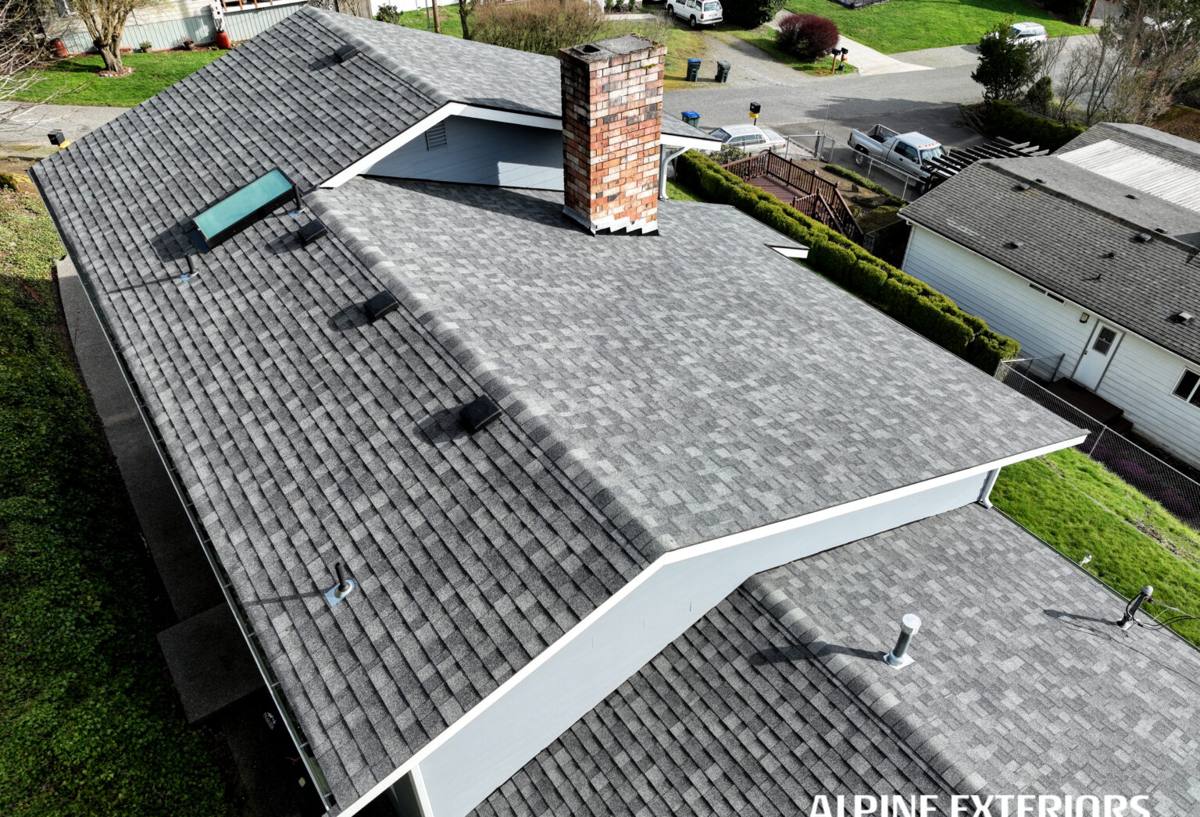
What a Metal Roof Needs to Do in This Climate
Before we talk installation details, it helps to know what we're actually solving for on a Lynden roof:
- Shed water fast and completely. Long, steady rain events need clean water paths off the roof, not just a surface that's technically waterproof.
- Resist moss and organic growth. Metal doesn't feed moss the way shingle granules and wood-based products do, but it still needs the right slope, ventilation, and periodic cleaning to stay ahead of it.
- Hold up to corrosion. Whatcom County's marine-influenced air, damp winters, and coastal weather systems moving through the region mean fasteners, flashing, and cut edges need real corrosion resistance, not just a factory finish on the flat panel surfaces.
- Handle expansion and contraction. Metal moves more than shingles or shakes with temperature swings. A roof that isn't fastened to allow for that movement will eventually show it — oil-canning, popped fasteners, or stress cracks at the seams.
Standing Seam vs. Exposed-Fastener Panels
Most of the metal roofing decisions we walk through with Lynden homeowners come down to one of these two systems. Both are legitimate options; the right one depends on the roof, the budget, and how long you want to go before any maintenance is needed.
| Feature | Standing Seam | Exposed-Fastener Panel |
|---|---|---|
| How it's fastened | Hidden clips under the seams — no fasteners penetrate the panel face | Screws driven through the panel face into the roof deck or purlins |
| Movement tolerance | Clips allow the panel to expand and contract without stress | Fasteners can back out or elongate their holes over time as the metal moves |
| Long-term maintenance | Very low — no exposed fasteners to reseal or replace | Fastener washers age and eventually need inspection or replacement |
| Upfront cost | Higher material and labor cost | More budget-friendly upfront |
| Best fit | Primary residences, longer ownership horizons, steeper or more visible rooflines | Shops, outbuildings, barns, and budget-driven projects |
Given how much rain Whatcom County sees over a typical winter, we lean toward standing seam for main homes whenever the budget allows — the lack of exposed fastener penetrations removes one of the most common long-term leak points. Exposed-fastener panels are still a sound choice for secondary structures or when they're maintained on a regular schedule.
Steel or Aluminum?
Both hold up well when specified correctly. Steel panels, properly coated, offer strength and a lower cost per square. Aluminum costs more but resists corrosion on its own, without relying entirely on the coating — a real advantage anywhere exposed to persistent damp air, including inland communities that still get plenty of moisture-laden weather moving through from the coast. We'll talk through both options honestly rather than push whichever happens to be in stock.
What a Correct Installation Actually Involves
The panels themselves get most of the attention, but the parts underneath and around them are what actually determine whether a metal roof performs for decades or causes headaches in five years.
Underlayment
Metal roofing needs a synthetic underlayment rated for the higher heat and UV exposure metal panels create, not a leftover roll of felt. In valleys, around chimneys, and at eave edges where ice and wind-driven rain are most likely to find a way in, we use self-adhering ice-and-water membrane as extra insurance — cheap protection compared to the cost of chasing a leak later.
Ventilation and Condensation Control
Metal is a poor insulator and conducts temperature swings straight through to the underside of the deck. Without adequate attic or roof-deck ventilation, that can lead to condensation forming on the underside of the panels — which looks and behaves a lot like a leak but isn't caused by rain at all. We check existing ventilation as part of every metal roofing estimate, not as an afterthought once panels are already up.
Flashing and Penetrations
Every plumbing vent, chimney, skylight, and wall transition is a spot where two different materials meet — and where most roof leaks actually start, regardless of the roofing material chosen. Metal roofing has its own flashing details (boots, counterflashing, closures at ridges and eaves) that are different from asphalt shingle flashing. Reusing shingle-style details on a metal roof is one of the more common shortcuts that leads to callbacks.
Fastening and Panel Layout
Panel layout should account for prevailing wind direction and roof slope so laps shed water rather than fight it. Fastener spacing, clip spacing on standing seam, and torque on exposed fasteners all matter more than they look like they would — overdriven screws crush their washers and stop sealing; underdriven ones back out with thermal cycling.
Our Process for a Lynden Metal Roof
- On-site assessment. We look at the existing roof structure, decking condition, ventilation, and any moss or moisture damage before recommending anything.
- Material and system selection. We walk through standing seam vs. exposed-fastener, gauge, and coating options based on your roof, budget, and how long you plan to own the home.
- Tear-off or overlay decision. Metal can sometimes go over an existing roof surface if the deck and code allow it, but we're honest when a tear-off is the better long-term call rather than the easier short-term one.
- Underlayment and flashing installation. This is the stage that determines whether the roof performs — done carefully, before a single panel goes down.
- Panel installation. Panels, seams or fasteners, ridge caps, and trim installed to manufacturer spec, not shortcuts.
- Final walkthrough and cleanup. We review the finished roof with you and clear the site of debris, scrap, and fasteners before we consider the job done.
What Affects the Cost of a Metal Roof in This Area
| Factor | Why It Matters |
|---|---|
| Panel system | Standing seam costs more upfront than exposed-fastener panel due to labor and hardware |
| Roof complexity | Valleys, dormers, and multiple roof planes add flashing work and cutting time |
| Tear-off vs. overlay | Removing an old roof adds labor and disposal cost but avoids trapping moisture or issues underneath |
| Material gauge and coating | Heavier gauge and better factory coatings cost more but extend service life and reduce maintenance |
| Decking condition | Rotted or undersized decking found during tear-off needs to be replaced before panels go on |
| Ventilation upgrades | Adding or correcting attic ventilation as part of the project affects both cost and long-term performance |
We give straightforward, itemized estimates so you can see what you're actually paying for — not just a single bottom-line number.
Maintenance: Metal Roofing Still Needs Some Attention
Metal roofing is low-maintenance compared to shingles, not maintenance-free. In a climate that keeps roofs damp for a good part of the year, a little attention goes a long way:
- Clear leaves, needles, and debris from valleys and gutters at least once or twice a year — trapped debris holds moisture against the panel surface.
- Check for moss or algae starting on shaded, north-facing slopes and address it early rather than letting it establish.
- Inspect exposed fasteners periodically if you went with an exposed-fastener system — washers do have a service life.
- Keep an eye on flashing around chimneys, vents, and skylights after major wind events.
- Trim back overhanging branches that keep sections of roof shaded and slow to dry.
Why It Matters to Hire a Crew That Already Works in Lynden
Metal roofing done wrong doesn't usually fail on day one — it fails two or three winters in, once flashing details or fastener choices get tested by a full rainy season. A crew that already works throughout Whatcom County has seen how local roofs actually perform over time, not just how they look the day the job wraps up. That means fewer surprises on older Lynden homes with layered or non-standard roof framing, a better read on how much ventilation a given attic really needs, and installation details that account for how much water this area actually sees rather than a generic spec sheet.
It also means someone is around to answer a warranty question or check on a flashing detail without a long drive being part of the equation. Roofing warranties are only as good as the contractor's willingness to stand behind the labor, not just the manufacturer's paperwork on the material.
Get an Honest Look at Your Roof
If you're weighing metal roofing for a home in Lynden, we're glad to come take a look, walk you through what your specific roof needs, and put together a straightforward estimate — no pressure, no upsell. Use the form below to get started.