 Semiahmoo
 Building a Deck That Actually Holds Up in Marietta
Marietta sits close enough to the water that every deck built here is fighting a low-grade battle against moisture and salt from the day the first post goes in. That's not a knock on the neighborhood — it's just what comes with living near Semiahmoo Bay and Drayton Harbor. A deck built the way it would be built inland, forty miles from the coast, will show its age here in a fraction of the time. Fasteners rust faster. Wood surfaces stay damp longer between rains. Moss gets a foothold in shaded corners and never really leaves. None of that means you can't have a great deck in Marietta — it means the build has to account for the environment from the ground up, not as an afterthought.
This page is about deck building specifically for this part of Semiahmoo — not a generic rundown of decking options. If you're planning a new deck, replacing an old one, or trying to figure out why yours is failing early, the details below are the ones that actually matter here.
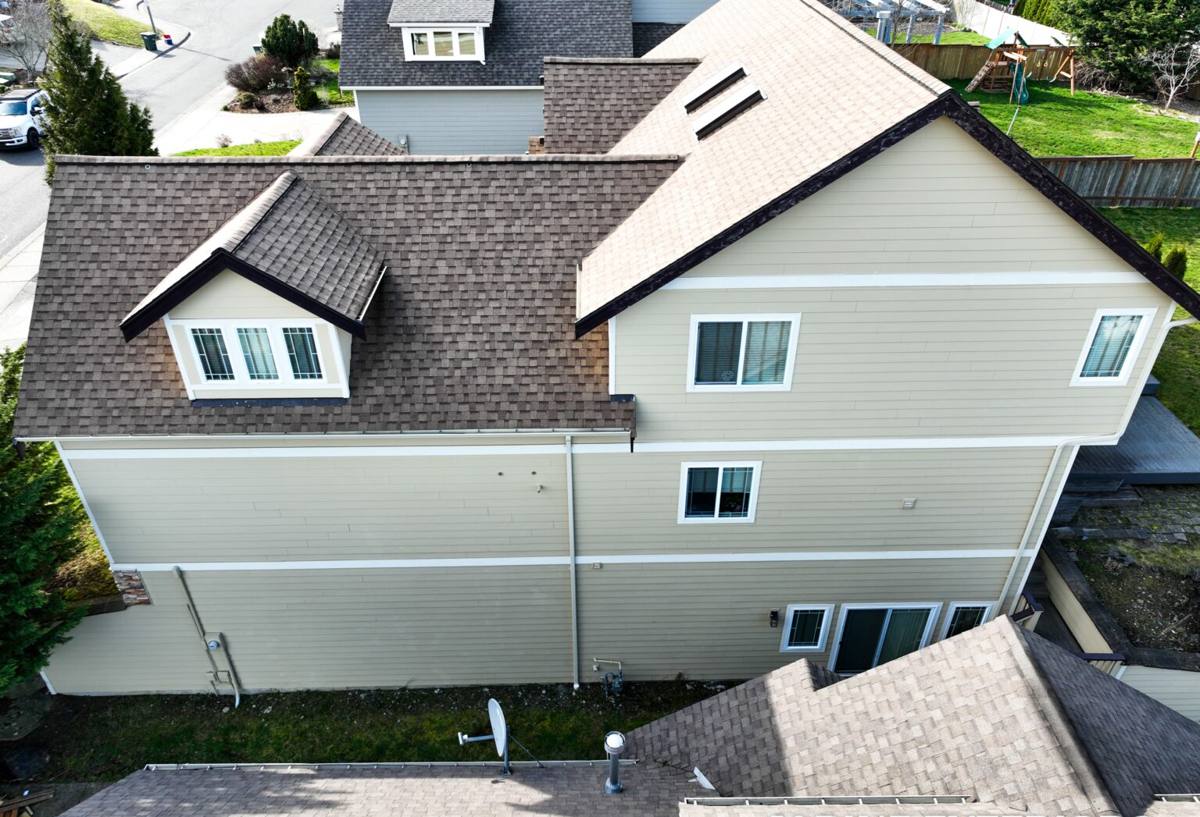
What Salt Air, Driving Rain, and Moss Season Do to a Deck
Whatcom County's marine climate means Marietta gets a long wet season, frequent wind-driven rain, and enough salt content in the air near the water to accelerate corrosion on anything metal that isn't rated for it. Over a few seasons, that combination shows up in predictable ways:
- Fastener corrosion — standard coated screws and nails can start bleeding rust stains and losing holding strength well before the wood around them fails.
- Moss and algae growth — shaded, north-facing, or tree-covered sections of decking stay damp far longer after a rain, giving moss and algae time to establish and making boards slick.
- Wood swelling and checking — repeated wet-dry cycling causes boards to swell, shrink, and eventually crack or cup if they weren't installed with the right gaps and orientation.
- Hidden rot at connection points — ledger boards, post bases, and joist hangers are where water collects and sits longest, which is exactly where rot tends to start rather than out in the open field of the deck.
None of these problems are unique to any one deck — they're the standard challenges of building in a coastal Pacific Northwest climate. The difference between a deck that lasts fifteen years and one that lasts thirty is almost entirely in the material choices and the details at those connection points.
Choosing the Right Decking Material for This Stretch of Semiahmoo
There's no single "correct" decking material — it depends on budget, how much upkeep you're willing to do, and how close to the water your lot sits. Here's how the common options actually perform under Marietta conditions:
| Material | How it handles salt air & moisture | Maintenance | Typical lifespan here |
|---|---|---|---|
| Pressure-treated fir/hem-fir | Good rot resistance in the wood itself, but hardware and fasteners need to be corrosion-rated | Annual cleaning, re-staining every 2-3 years | 15-20 years with upkeep |
| Western red cedar | Naturally rot- and insect-resistant, ages to a silver-gray if left untreated | Periodic cleaning; oiling/staining if you want to keep the original color | 15-25 years |
| Composite decking | Doesn't rot or absorb moisture into the board itself; performs well near salt air | Occasional washing to keep moss/algae off the surface | 25-30+ years, backed by manufacturer warranty |
| PVC/capped polymer | Fully sealed surface, best resistance to moisture and salt exposure | Lowest maintenance of the group | 25-30+ years |
We install all of these depending on what a homeowner wants, but for decks close to the water or in heavily shaded, slow-drying spots, we usually steer people toward composite or capped polymer boards — not because wood is a bad product, but because the maintenance burden of keeping a wood deck looking good in a wet, salty microclimate is real, and most homeowners underestimate it until year three or four.
A Note on "Cheap" Pressure-Treated Lumber
Not all pressure-treated lumber is graded the same way, and using an interior-grade or under-spec board for ground-contact or near-water applications is one of the most common corner-cuts we see on decks that fail early. If wood is the right choice for your project, it needs to be rated for the exposure it's actually going to see.
The Framing and Fasteners That Actually Matter
The decking boards on top are the part everyone sees, but the framing underneath is what determines whether the deck is still safe in fifteen years. In a salt-air environment, three things matter more than they would elsewhere:
- Fastener rating — we use stainless steel or hot-dip galvanized fasteners and hardware rated for coastal/marine exposure, not the standard coated screws that are fine further inland but corrode faster here.
- Joist hangers and structural connectors — same logic. A joist hanger that rusts through is a structural problem, not a cosmetic one, and it's hidden under the decking where you won't see it happening.
- Ledger board flashing — where the deck attaches to the house is the single most common spot for hidden rot on any deck, anywhere. Proper flashing that sheds water away from the house sheathing is non-negotiable, especially with the driving rain this area gets.
Drainage, Grading, and Keeping Moss From Taking Over
A deck that drains well fights moss and rot for you without any extra maintenance. A few details we build into every Marietta deck:
- Proper board spacing so water sheds through rather than pooling on the surface
- Grading and drainage under the deck so water doesn't sit and wick back up into the framing
- Ventilation gaps around the perimeter so airflow can dry out the underside after a storm instead of trapping moisture against the joists
- Keeping decking clear of overhanging tree canopy where practical, since shaded, debris-covered boards are where moss establishes fastest
If you're dealing with an existing deck that's already got moss or slick, dark patches, it's usually a drainage or airflow problem more than a materials problem — worth having someone look at before assuming the whole deck needs replacing.
Railings, Stairs, and Local Code Requirements
Any deck more than a certain height off grade needs a compliant guardrail, and Whatcom County follows the state building code for guardrail height, baluster spacing, and stair rise/run. Permits are typically required for new decks and significant rebuilds — this isn't a place to guess, since an unpermitted deck can become a real problem when you go to sell the house. We handle the permit process as part of the job so you're not the one chasing it down.
Our Deck-Building Process
Every deck we build in Marietta follows the same basic sequence, adjusted for the specific site:
- On-site assessment — we look at sun/shade exposure, drainage, proximity to water, and the condition of anything we're tying into (like the house's rim joist or existing footings on a rebuild).
- Material and layout conversation — we talk through wood versus composite/PVC honestly, based on your budget and how much upkeep you want to take on, not a one-size-fits-all pitch.
- Permit and design — we pull the required permit and finalize footing placement, framing layout, and railing details to meet code.
- Footings and framing — proper footing depth and structural framing with marine-grade hardware and fasteners throughout.
- Decking, railing, and stairs — installed with the spacing and flashing details that matter for drainage and long-term performance.
- Final walkthrough — we go over basic care so you know what to expect in year one versus year five.
Cost Factors to Expect
Every deck is priced on its own specifics — size, height off grade, material, and site access all move the number — but the main cost drivers on a Marietta project are usually these:
| Factor | Why it affects cost |
|---|---|
| Decking material | Composite and PVC cost more up front than wood but less over the life of the deck |
| Height off grade / stairs | Taller decks need more footing depth, structural bracing, and code-required railing and stair work |
| Site access and existing structure | Tying into an existing house, dealing with slopes, or removing an old deck adds labor |
| Fastener and hardware grade | Marine-rated stainless or hot-dip galvanized hardware costs more than standard coated hardware but is what actually holds up here |
| Railing style | Cable, glass, and custom railing systems cost more than standard baluster railing |
Maintenance Checklist for Marietta Homeowners
Whatever material you choose, a little seasonal attention goes a long way in this climate:
- Sweep debris off the deck regularly, especially in fall, so leaves and needles don't trap moisture against the boards
- Wash the surface once or twice a year to break up early moss and algae growth before it gets established
- Check railings and stair connections annually for any looseness
- Look under the deck occasionally for signs of standing water or blocked drainage
- Re-stain or re-seal wood decking on the schedule the product calls for — don't wait until it's visibly gray and worn
- Watch for rust staining around fasteners, which is an early sign hardware needs attention
Why a Crew That Already Works in Marietta Matters
A lot of the decisions that determine whether a deck lasts here — fastener grade, flashing details, drainage planning, how much shade a given lot actually gets through the year — come from having built decks in this specific environment before, not from a general contracting background. A crew that mostly works drier, inland areas may not default to marine-grade hardware or think as carefully about drainage under the deck, simply because it hasn't been the deciding factor on their other jobs. Working regularly in Semiahmoo and the surrounding Whatcom County coastline means we're building to the conditions that are actually going to hit the deck, not the conditions a spec sheet assumes.
If you're planning a new deck in Marietta, replacing one that's showing its age, or just want an honest look at what shape yours is in, we're happy to come take a look. Fill out the form below for a free, no-pressure estimate.