 Semiahmoo
 Marietta's Roofs Work Harder Than Most
Homes in Marietta sit close enough to the water and the marine weather patterns of Whatcom County that roofing materials get tested constantly. It's not one bad storm a year that wears a roof down here — it's the steady combination of salt-laden air drifting in off the bay, driving rain that comes in sideways during winter fronts, and a moss season that can stretch from October well into spring. A roof that's fine in a drier inland climate can start showing real problems in Marietta within a decade if it wasn't chosen and installed with these conditions in mind.
Metal roofing has become a popular answer for homeowners here because, done correctly, it holds up against all three of those pressures better than most alternatives. But "metal roofing" covers a wide range of products and installation quality, and not every metal roof performs the same way once it's been through a few Whatcom County winters. This page walks through what actually matters for a metal roof on a Marietta home — the climate factors, the product choices, the installation details, and what a local crew brings to the job that an out-of-area company usually can't.
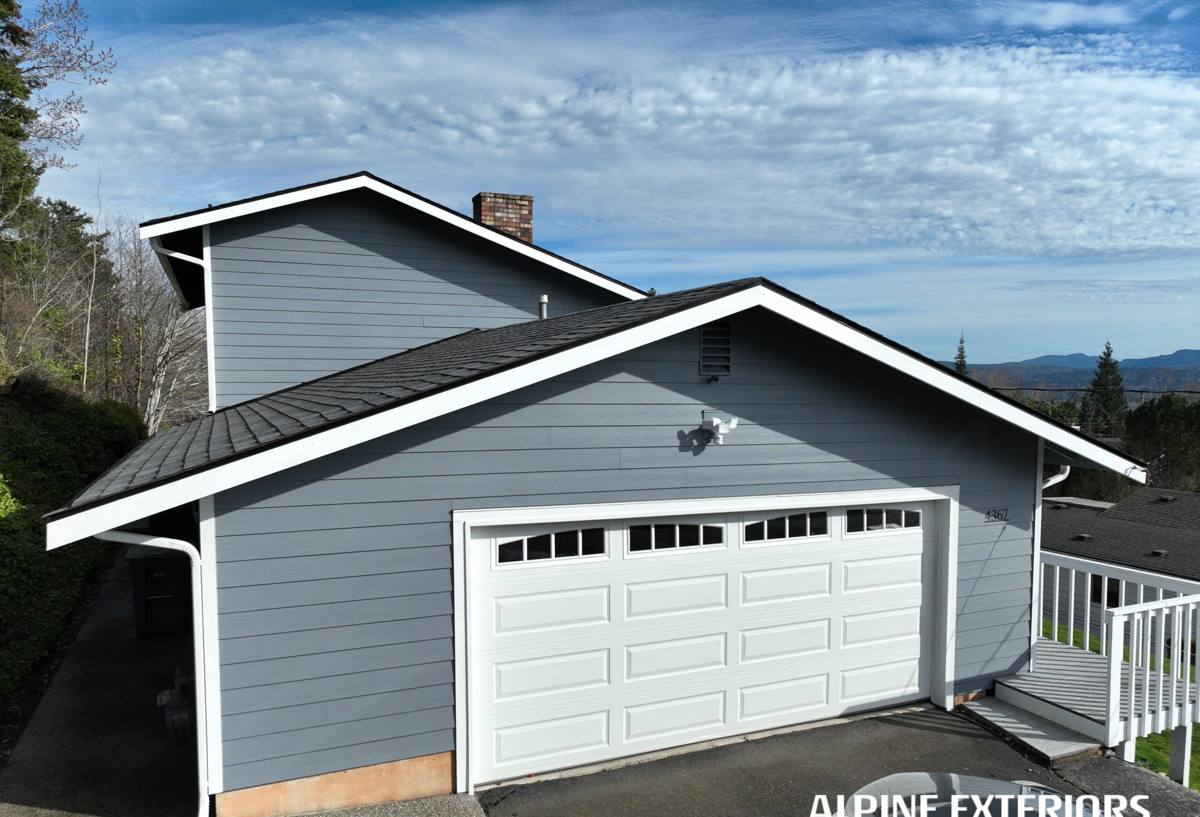
What Salt Air, Rain, and Moss Actually Do to a Roof
Salt Air
Proximity to Semiahmoo Bay and the Salish Sea means the air carries fine salt particles that settle on exterior surfaces, including roofing. On unprotected or poorly coated metal, that salt content accelerates corrosion, especially at cut edges, fastener heads, and anywhere the protective coating has been scratched or worn thin. It also affects other roofing materials — it can degrade asphalt granules faster and contribute to premature aging of exposed sealants.
Driving Rain
Western Washington's winter storms don't just drop rain straight down — wind-driven rain gets pushed sideways and upward under roof edges, around penetrations, and into any gap in flashing or underlayment. A roof that only handles vertical rainfall well isn't enough here. Every seam, valley, and transition has to be detailed to shed water that's arriving at an angle, sometimes for days at a stretch.
Moss Season
Long, mild, wet stretches are ideal growing conditions for moss and algae. On roofing materials with any texture or organic component, moss takes hold, holds moisture against the surface, and works its way under shingles or shakes over time. It also grows in gutters and valleys, which backs up water exactly where a roof is most vulnerable. A roof surface that resists organic growth — or at least doesn't give it anywhere to anchor — is a real advantage in this climate.
Why Metal Roofing Fits These Conditions
A correctly specified and installed metal roof addresses all three issues directly:
- Corrosion resistance — quality metal roofing uses coated steel or aluminum with finishes rated for coastal exposure, which resist the salt-driven corrosion that shortens the life of lesser materials.
- Water shedding — the long, largely seamless panel runs and mechanically locked seams (on standing seam systems especially) give wind-driven rain far fewer entry points than a shingled surface with thousands of individual tabs and edges.
- Moss resistance — metal's smooth, non-porous surface gives moss and algae very little to grip onto, and without organic material trapping moisture against the roof deck, growth is dramatically reduced compared to wood or composition materials.
None of that means metal roofing is maintenance-free or that any metal product will perform the same way. The coating quality, panel design, and — most importantly — the installation details determine whether a metal roof delivers on that potential or just becomes an expensive roof that still leaks at the valleys.
Comparing Metal Roofing Systems for Marietta Homes
Not every metal roof is built the same way, and the differences matter more in a coastal, high-moisture climate than they would somewhere drier. Here's how the common options compare for a Marietta home:
| System | How It Sheds Water | Coastal Durability | Best Fit |
|---|---|---|---|
| Standing Seam | Raised, mechanically locked seams with no exposed fasteners | Excellent — fewest penetration points for wind-driven rain or salt exposure | Homes wanting the longest service life and lowest long-term maintenance |
| Exposed Fastener Panel | Screws through the panel face with rubber-washered fasteners | Good, but fastener washers and heads are the first thing to wear and need eventual attention | Budget-conscious projects, outbuildings, or shorter-term ownership plans |
| Metal Shingle / Shake Profile | Interlocking panels styled to mimic shingle or shake appearance | Good, with similar coating durability to standing seam if properly finished | Homeowners who want a traditional look with metal's performance |
For most Marietta homes we work on, standing seam is the system we recommend when budget allows, specifically because it minimizes the fastener penetrations that salt air and driving rain both exploit over time. That's a professional judgment based on how each system performs here — not a claim that exposed fastener panels are unusable, just that they carry a different maintenance profile.
What a Correct Installation Actually Involves
The material is only part of the story. A metal roof installed without attention to detail can underperform a well-installed composition roof. Here's what we consider non-negotiable on every metal roofing job:
Deck and Underlayment
The roof deck gets inspected and repaired before anything goes down — metal will telegraph an uneven or soft deck. A high-temperature, self-adhering underlayment goes over the full deck, not just the vulnerable spots, since it's the backup layer if wind-driven rain ever gets past the metal at a seam or penetration.
Flashing and Penetrations
Valleys, chimneys, vent pipes, and wall transitions are where most roof leaks actually start, regardless of the roofing material. Flashing has to be formed to match the panel profile and installed in the correct sequence with the panels — not caulked on afterward as a patch.
Fastening and Panel Layout
Panel spacing, clip placement (for standing seam), and fastener torque all affect how the roof handles thermal expansion and contraction, which is a real factor with metal across Whatcom County's seasonal temperature swings. Panels installed too tight or too loose can buckle, oil-can, or work fasteners loose over time.
Ventilation
Proper intake and exhaust ventilation keeps moisture from condensing on the underside of the metal, which matters in a climate where interior humidity and exterior dampness are both consistently high for months at a time.
Our Process, Start to Finish
- On-site assessment — we walk the roof and the attic space when accessible, checking deck condition, existing ventilation, and any signs of past moisture problems.
- System recommendation — based on your home's exposure, roof complexity, and budget, we recommend a panel system and coating suited to Marietta's coastal conditions specifically, not a one-size-fits-all package.
- Written estimate — clear scope, materials, and pricing before any work starts, so there are no surprise line items later.
- Tear-off and deck prep — old roofing removed, deck inspected and repaired as needed.
- Underlayment and flashing — installed to the standard described above, with particular attention to valleys and penetrations.
- Panel installation — laid out and fastened to manufacturer spec, accounting for thermal movement.
- Final walkthrough and cleanup — site cleared of debris and fasteners, and we walk the finished roof with you.
Maintenance: What a Metal Roof Still Needs
Metal roofing lowers maintenance compared to most alternatives, but "lower" isn't "none," especially in this climate. A few habits keep a metal roof performing for its full service life:
- Keep gutters and valleys clear of needles and debris so water isn't sitting against panel edges during long wet stretches.
- Do a visual check after major windstorms for any lifted flashing or displaced debris that could scratch the coating.
- Avoid pressure washing directly at seams and fasteners — it can force water past details that are designed to shed water moving downward, not water forced in under pressure.
- Trim back overhanging branches that drop organic debris and hold moisture against the roof surface.
- Have penetrations and flashing points checked periodically, since these remain the most likely place for any roof — metal included — to eventually need attention.
Cost Factors to Understand Before You Get Quotes
| Factor | Why It Affects Price |
|---|---|
| Roof complexity | More valleys, dormers, and penetrations mean more flashing work and labor time |
| Panel system chosen | Standing seam typically costs more upfront than exposed fastener panels, offset by lower long-term maintenance |
| Coating and gauge | Heavier gauge metal and marine-grade coatings cost more but hold up better against salt exposure |
| Deck condition | Rot or soft decking found during tear-off adds repair cost but is far cheaper to fix now than after a new roof goes over it |
| Tear-off vs. overlay | Full tear-off costs more than overlaying in some cases, but it's the only way to properly inspect and prep the deck |
We don't quote a price without seeing the roof — anyone who does is guessing, and on a metal roofing project the guess can be off by a lot once complexity and deck condition come into play.
Why a Crew That Already Works Marietta Makes a Difference
Metal roofing installation isn't forgiving of guesswork, and a crew that hasn't dealt with this specific combination of salt exposure, wind-driven rain, and moss pressure is more likely to make choices that work fine somewhere drier but fall short here. Working regularly in Marietta and the surrounding Whatcom County area means we're not learning the local climate on your roof — we already know which coatings hold up near the water, which flashing details actually stop driving rain, and where moss tends to build up fastest on a given roof orientation.
It also means we're accountable locally. If something needs a follow-up visit or a warranty check years down the road, we're not a company that did one job in the area and moved on — we're still working in this community.
A Straightforward Checklist Before You Hire
- Ask what gauge and coating the metal is rated for, and whether it's suited to coastal salt exposure.
- Ask how valleys and penetrations will be flashed — get specifics, not just "we'll seal it up."
- Confirm the deck will be inspected and repaired as part of tear-off, not just covered over.
- Ask about ventilation and whether your current attic ventilation is adequate for a metal roof.
- Get the warranty terms in writing — both the manufacturer's material warranty and the contractor's workmanship warranty.
- Ask how long they've worked in Whatcom County and whether they can speak to local moss and rain patterns specifically.
If you're weighing metal roofing for a home in Marietta, we're glad to take a look and walk through what makes sense for your roof, your budget, and this specific climate. Request a free, no-pressure estimate using the form below and we'll get back to you with straight answers.