 Semiahmoo
 Marietta's Windows Work Harder Than Most
Marietta sits close enough to the water that salt-laden air is part of daily life, and that air doesn't stop at the siding — it works its way into window frames, hardware, and glazing seals year-round. Add Whatcom County's long wet season, driving rain that comes in sideways off the Strait, and months of shade and moss growth on north-facing walls, and you have a climate that ages windows faster than almost anywhere else in the state. A window that would last twenty-five years in a dry inland climate might start failing in twelve to fifteen here if it wasn't built or installed with this environment in mind.
This page is about one job, done right, for this one area: replacing windows on Marietta homes in a way that actually holds up to what the local weather throws at it. Not a generic window pitch — a straight look at what your home needs, what a correct installation involves, and how we handle it.
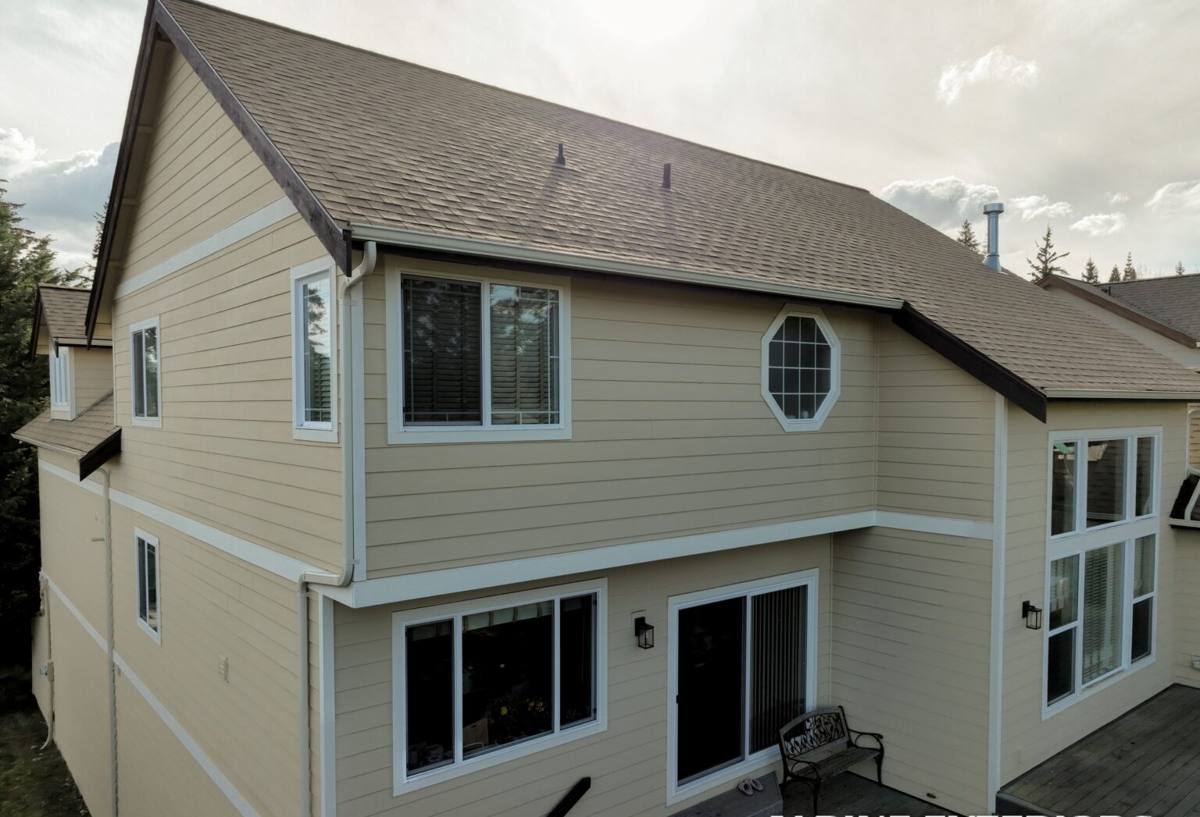
What Salt Air, Rain, and Moss Actually Do to a Window
Salt Air and Metal Components
Salt in the air accelerates corrosion on anything metal — window balances, screen frames, hinges, and especially lower-grade aluminum cladding or hardware. Once corrosion starts inside a window's moving parts, the window gets harder to open, seals stop compressing evenly, and small gaps open up that let in more moisture. It's a cycle that feeds itself.
Driving Rain and Wind-Driven Water
Semiahmoo-area storms don't just drop rain straight down — wind pushes it sideways and up under trim, sills, and poorly lapped flashing. A window that would stay dry in a calm rain can still leak in a Whatcom County windstorm if the flashing details around it weren't done correctly the first time. Most of the water damage we find in older Marietta homes traces back to flashing and sealant failure, not the window unit itself.
Moss, Shade, and Sustained Moisture
Homes tucked under trees or on north- and west-facing walls hold moisture longer between rain events. That constant dampness feeds moss and algae growth on sills and trim, and it keeps wood components wet longer than they're designed to tolerate. Over years, that moisture cycle is what rots sills, delaminates old wood-clad frames, and stains the wall below a window even when the window itself still looks fine from a few feet away.
Signs a Marietta Home Needs Window Replacement
- Visible fogging or moisture between panes — the seal has failed and the insulating gas is gone
- Soft or spongy wood at the sill, jamb, or trim when pressed with a thumb
- Windows that are difficult to open, close, or lock, especially after damp weather
- Cold drafts near the frame even when the window is fully closed and latched
- Visible gaps, cracked caulk, or peeling paint concentrated around the window opening
- Rising heating bills without other explanation, especially in rooms with older windows
- Staining or discoloration on interior drywall below or beside a window
- Moss or dark streaking on exterior trim that keeps coming back after cleaning
Any one of these on its own might be minor. Two or three together, especially on the weather-exposed side of the house, usually means the window and its surrounding flashing need attention before the next wet season.
Choosing Materials That Actually Hold Up Here
Not every window product sold in the Pacific Northwest is a good fit for a coastal Whatcom County location. Our standard for Marietta homes leans toward vinyl and fiberglass frames with factory-sealed, argon-filled insulated glass units, and we're selective about hardware finishes given the corrosion risk from salt air. Solid wood frames without cladding are something we steer clients away from on exposed elevations — not because wood windows are bad products, but because unclad wood in this specific climate demands a maintenance schedule most homeowners can't realistically keep up with, and the moisture callback rate is higher.
| Frame Material | Coastal/Salt-Air Performance | Maintenance Burden | Typical Fit for Marietta |
|---|---|---|---|
| Vinyl | Good — won't corrode or rot, stable in moisture | Low — occasional cleaning | Strong default choice |
| Fiberglass | Very good — dimensionally stable, resists warping | Low | Best for larger openings or high-exposure walls |
| Aluminum-clad wood | Fair to good if properly sealed and flashed | Moderate — depends on cladding integrity over time | Workable on sheltered elevations |
| Unclad solid wood | Poor in sustained damp/salt exposure without diligent upkeep | High — repainting, sealing, sill checks | Not recommended for exposed sides |
Glass Packages Worth Considering
Double-pane, argon-filled, low-E glass is the practical baseline for this area — it's the difference between a window that fights condensation and one that fogs up every damp morning. For rooms facing prevailing wind and rain, we'll often talk through upgraded weatherstripping and a heavier-duty sash lock, since those are the parts that take the most direct abuse from being opened and closed in salty, humid air.
What a Correct Installation Actually Involves
The window unit itself is maybe half the job. The other half — the part that determines whether you get ten years or thirty out of the install — is everything around the opening.
Removal and Opening Inspection
Once the old window is out, we inspect the rough opening for rot, soft framing, or existing water intrusion before anything new goes in. This is often where hidden moss-season damage shows up — damage that was invisible from outside.
Flashing and Weather Barrier Integration
Proper flashing is layered so water is always directed outward and downward, shingle-style, tying into the existing weather-resistive barrier rather than just caulked over it. This is the single most common point of failure we find in older installs around Marietta, and it's the step that matters most against wind-driven rain.
Sealing and Insulation
Low-expansion foam or backer rod and sealant around the frame closes air gaps without bowing the frame out of square. We use exterior-grade sealants rated for the temperature swings and UV exposure this area actually sees, not a generic caulk.
Final Sill and Trim Detail
The sill is sloped to shed water away from the house, and trim is sealed at every joint where two materials meet — the spots moss and algae tend to colonize first if they're left with a hairline gap.
Our Process, Start to Finish
- Free on-site assessment — we look at every window being considered, check the surrounding wall and trim condition, and note anything unusual about that elevation's sun, wind, or moisture exposure.
- Straight recommendation — which windows genuinely need replacement now, which can wait, and which material and glass package fits your budget and that wall's exposure.
- Written estimate — itemized, with the material grade and installation scope spelled out so you know exactly what you're paying for.
- Scheduling around the weather — we plan installs to minimize how long any opening sits exposed, which matters more here than in drier climates.
- Installation — proper flashing, sealing, and finish work as described above, one opening fully closed up before moving to the next.
- Walkthrough and cleanup — we test operation on every new window with you before we consider the job done, and we clean up debris and old units.
Working Around Wet-Season Scheduling
We won't leave a wall opened up overnight in a rainstorm. If forecasted weather doesn't cooperate with a planned install date, we reschedule rather than rush a step that affects how well the window seals for the next twenty years.
What Affects the Cost
Every Marietta home is different, so we won't quote a number without seeing the job — but these are the factors that move the price up or down, in rough order of impact.
| Cost Factor | Why It Matters |
|---|---|
| Frame material (vinyl vs. fiberglass vs. clad wood) | Fiberglass and clad wood cost more upfront but perform differently against sun and salt exposure |
| Window size and opening type (single-hung, casement, slider) | Larger openings and operable hardware cost more than fixed panes |
| Existing rot or hidden water damage | Framing repair adds labor and material before the new window can even go in |
| Number of windows replaced at once | Doing several openings in one visit spreads setup and labor costs |
| Elevation exposure | Walls facing prevailing wind and rain sometimes call for upgraded flashing detail |
| Trim and interior finish work | Matching existing trim profiles or repainting adds finish labor |
As a general guide, homeowners in this area typically see per-window costs ranging from the low hundreds for a straightforward, smaller vinyl replacement up to several thousand dollars for larger openings, premium materials, or openings with hidden structural repair needed. We'll always tell you upfront if we find something during the assessment that changes the number.
What to Ask Before You Hire Anyone for This Job
- Do you carry current liability insurance and, if required, bonding for work in Whatcom County?
- Will you inspect the rough opening for rot before installing, and what happens if you find some?
- What flashing method do you use, and how does it tie into the existing weather barrier?
- What's the warranty on both the window product and your labor, separately?
- Have you worked on homes in Marietta or similarly exposed coastal areas before?
- Can I see the manufacturer specs for the glass package and frame material you're proposing?
- Will the same crew that gives the estimate be doing the installation?
Why Local Experience on This Specific Job Matters
A window contractor who mostly works inland doesn't run into salt-accelerated hardware corrosion or moss-season sill rot often enough to build habits around preventing it. We work Marietta and the surrounding Whatcom County coastline regularly, so the flashing details, sealant choices, and hardware recommendations above aren't theoretical — they're what we've found actually holds up here versus what fails early. That local pattern recognition is worth more than a lower bid from a crew that's guessing at what this climate will do to their work over the next decade.
If your Marietta home has windows showing any of the wear signs above, or you're just planning ahead before the next wet season sets in, we're happy to take a look. Reach out for a free, no-pressure estimate using the form below — we'll walk the exterior with you, give you a straight read on what each window needs, and let you decide from there.