 Semiahmoo
 Why Storm Damage Looks Different in Sumas
Whatcom County sits in a corridor where Pacific storm systems, cold air draining down from the Fraser Valley, and long stretches of low-pressure rain all meet. Homes in and around Sumas take on a mix of conditions most roofers outside the region don't deal with every week: salt-laden air moving in off the regional waters, wind-driven rain that gets pushed sideways instead of falling straight down, and a moss season that can run eight months or longer in a wet year. None of that shows up on a roof as one dramatic event most of the time. It shows up as a slow accumulation of small failures that a storm then finds and exploits.
That's the pattern we see over and over: a windstorm doesn't usually damage a roof that was in good shape. It finds the flashing seam that was already working loose, the shingle tab that moss had already lifted, the valley where granules had already worn thin. Storm damage repair in this area is really about two things at once — fixing what the wind and rain just did, and correcting the underlying weak point so the next storm doesn't just repeat the cycle.
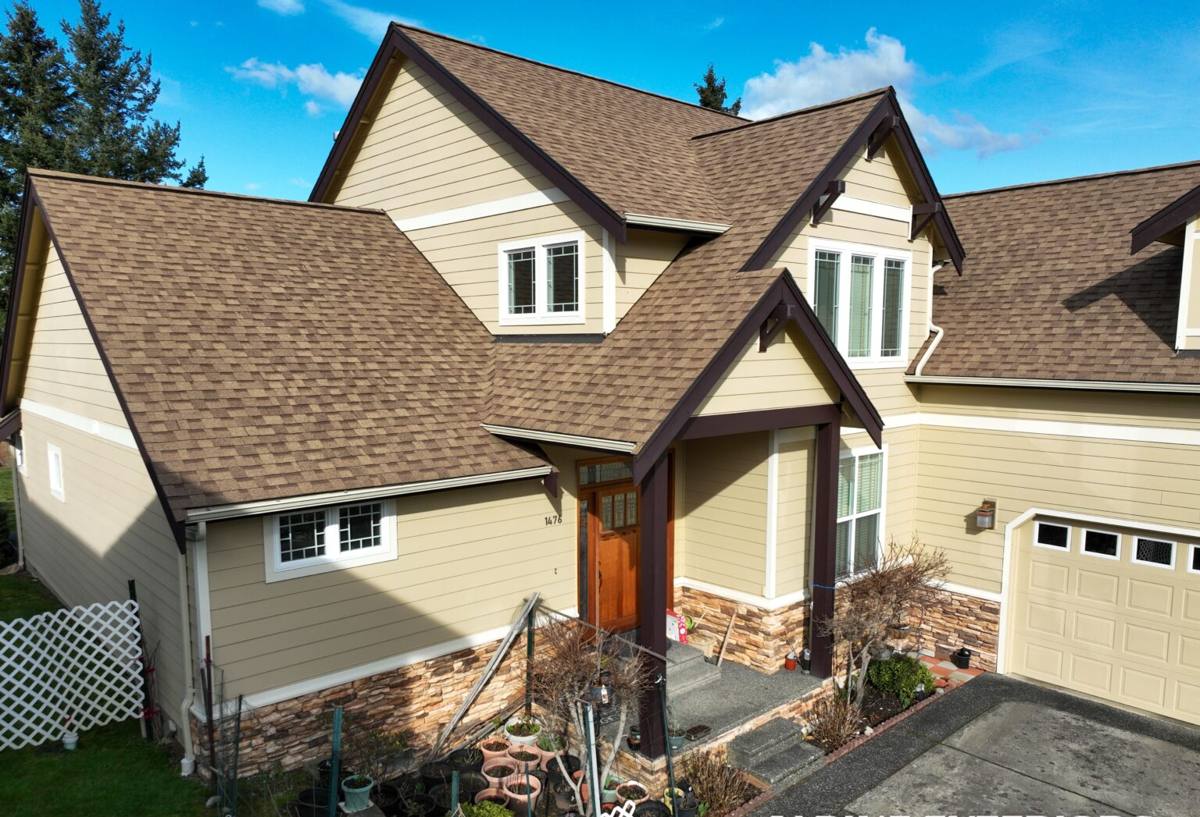
What Actually Counts as Storm Damage
Homeowners often assume storm damage means a hole in the roof or missing shingles you can see from the driveway. In practice, most of what we get called out for after a wind event in Whatcom County is quieter than that.
- Lifted or creased shingle tabs — wind gets under the tab edge, breaks the seal, and the shingle doesn't lie flat again even after the storm passes.
- Torn or missing shingles — usually along ridges, hips, and roof edges where uplift forces are strongest.
- Flashing displacement — around chimneys, skylights, and roof-to-wall transitions, where wind and repeated wet-dry cycling work fasteners loose over time.
- Fascia and soffit damage from branches or debris carried by wind gusts.
- Granule loss from wind-driven rain hitting the shingle surface at an angle, which accelerates aging even without visible damage.
- Gutter separation from ice, saturated debris, or wind load pulling fasteners out of the fascia.
Some of this is obvious from the ground. Much of it isn't, which is why a proper storm damage inspection means getting on the roof, not just looking up at it.
The Hidden Damage Homeowners Miss
Moss and Its Timing
Moss doesn't cause storm damage directly, but it sets the stage for it. A shingle mat that's been holding moisture under a moss colony all winter is weaker and more brittle than a clean one — it tears instead of flexing when wind gets under it. In Whatcom County's moss season, roofs that go two or three years without a moss treatment or gentle cleaning are noticeably more likely to show real damage after the same storm that a well-maintained neighboring roof shrugs off.
Flashing You Can't See From the Ground
Step flashing, counter-flashing, and valley metal do their job silently until they don't. A storm that bends or lifts a flashing edge even slightly creates a path for wind-driven rain to get behind it — and because the leak point and the water stain inside the house are rarely in the same spot, this kind of damage often gets missed in a quick visual check.
Deck-Level Moisture
If wind-driven rain has been getting past a compromised seal for more than one storm cycle, the roof deck itself can start absorbing moisture. This won't always show up as a visible sag, but it changes how well the deck holds fasteners for the repair — which is why we check deck condition as part of every storm damage estimate, not just the shingles on top of it.
Our Storm Damage Repair Process
- Inspection. We get on the roof (not just a ground-level look) and check shingles, flashing, ridge and hip lines, valleys, penetrations, and the interior attic space if accessible, for moisture staining or daylight.
- Documentation. We photograph and note every point of damage, which matters both for our repair plan and for any insurance claim you file.
- Temporary protection, if needed. If there's an active leak path or exposed deck, we get it covered before it rains again — this isn't optional in this climate.
- Repair scope and estimate. We explain what needs fixing now, what's borderline and worth watching, and what can wait. Not every storm-related issue needs immediate replacement.
- Matching materials. We match shingle type, color, and where possible manufacturing lot as closely as the market allows, so repairs don't stand out.
- Repair execution. Damaged shingles, flashing, and deck sections are replaced to code and to manufacturer installation specs — not just patched over.
- Final walk-through. We confirm the repair with you before we consider the job closed.
Repair or Replace: How We Make That Call
Not every storm event means a new roof, and we don't push a full replacement when a targeted repair will hold. The decision comes down to a few honest factors:
| Factor | Leans Toward Repair | Leans Toward Replacement |
|---|---|---|
| Roof age | Under 10-12 years, otherwise healthy | Near or past expected shingle lifespan |
| Extent of damage | Isolated to one slope or section | Spread across multiple slopes |
| Granule loss | Localized, edges intact | Widespread, bald patches visible |
| Deck condition | Dry, solid under damaged area | Soft spots or moisture found in multiple areas |
| Prior repair history | First real storm event | Repeated patchwork over several years |
| Material availability | Shingle line still in production, matchable | Discontinued line, visible mismatch unavoidable |
We'll walk you through where your roof falls on each of these before recommending either path — the goal is a roof that holds up through the next storm season, not the biggest job we can sell.
Materials and Installation Standards We Hold To
What goes into a storm damage repair matters as much as the labor. In a climate with this much wind-driven rain and moss exposure, we hold to a few standards on every repair job:
- Self-adhering underlayment at valleys, eaves, and any repaired section prone to wind-driven rain intrusion — not standard felt alone.
- Correctly lapped and sequenced flashing at every wall, chimney, and penetration we touch, rather than caulk-and-cover shortcuts.
- Matching fastener patterns and nail placement to manufacturer spec, since under- or mis-nailed shingles are one of the most common causes of repeat wind damage.
- Ridge and hip cap sized and sealed to the wind-exposure realities of the site, not just the minimum code requirement.
We don't install every product on the market, and that's a deliberate choice. Some lower-tier shingle lines and generic flashing materials save money up front but behave poorly under repeated wet-dry cycling and salt-influenced air — they granule-shed faster, seal inconsistently in cooler temperatures, and make future repairs harder to blend in. We'd rather spec a product that installs predictably and holds its warranty in this specific climate than chase the lowest material cost on a repair that's supposed to last.
Working With Your Insurance Company
Most storm damage repair work in this area involves an insurance claim at some point. A few things make that process smoother:
| Step | What It Involves |
|---|---|
| Document before repair | Photos and a written damage report, dated to the storm event |
| Get an independent estimate | A contractor estimate separate from the adjuster's initial number, so you can compare scope |
| Understand your policy's roof clause | Actual cash value vs. replacement cost coverage changes what you're owed |
| Keep records of prior maintenance | Moss treatment and inspection history can matter if an insurer questions pre-existing wear |
We're happy to provide documentation and meet an adjuster on-site if that helps move your claim along, but we work for you, not the insurance company — our job is an honest scope of damage, not a number designed to match anyone's expectations.
Why a Crew That Already Works Sumas Matters
Storm damage repair rewards local knowledge in ways new construction doesn't. A crew that's already worked roofs across Whatcom County knows how the wind tends to load a given roof orientation relative to the prevailing storm direction, how long moss actually takes to re-establish on a given slope pitch and shade pattern, and which flashing details tend to fail first in homes built during a particular era of local construction. That's not something you get from a national storm-chasing outfit that shows up after a big weather event and leaves once the work is booked. We're still here for the follow-up call if something needs a second look, and we're not guessing at what "normal" looks like for a roof in this climate.
What to Do Right After a Storm
Before you call anyone, a quick and safe check from ground level can help you describe the situation accurately and decide how urgent the repair is:
- Look for shingles or shingle pieces in the yard or gutters — a sign of active wind damage.
- Check gutters and downspouts for separation or sagging sections.
- From inside, check the attic (if accessible) and ceilings for new water staining, especially after a wind-driven rain event.
- Note the date and general conditions of the storm — wind speed if you know it, duration of heavy rain — for your own records.
- Avoid getting on the roof yourself, especially on wet or mossy surfaces — that's exactly when falls happen.
- Cover any obvious interior leak point with a bucket or tarp to limit damage while you arrange an inspection.
Preventing the Next Repair
A storm damage repair is a good moment to also address what made the roof vulnerable in the first place. In this climate, that usually means a moss treatment and gentle cleaning on a regular cycle, keeping gutters clear so wind-driven rain has somewhere to go besides under the shingle edge, and an annual or post-storm-season flashing check rather than waiting for a leak to announce the problem. None of that is expensive compared to a repeat repair, and it's the difference between a roof that handles the next windstorm quietly and one that calls us back every year.
If you've had storm damage — or you're not sure whether what you're seeing after the last windstorm needs attention — we're glad to take a look. The estimate is free, there's no pressure, and you'll get a straight answer about what actually needs fixing.