 Semiahmoo
 Why Semiahmoo Resort Homes Are a Different Roofing Job
Semiahmoo Resort sits right up against the water, and that changes what a roof has to deal with day to day. Salt-laden air moves off the bay and settles on every exposed surface, wind-driven rain finds its way under anything that isn't properly lapped and sealed, and the tree cover combined with damp, shaded conditions keeps moss and algae active for most of the year. A roof here isn't just shedding water — it's fighting corrosion, wind uplift, and biological growth at the same time. Metal roofing handles all three of those better than most other roof coverings, but only when the metal, fasteners, and detailing are chosen and installed with this exact environment in mind.
We work on homes throughout Whatcom County, and Semiahmoo Resort properties get a specific approach from us. It's not a different product line so much as different decisions at every step — coating type, fastener grade, underlayment, and how we handle the transitions where most coastal roof failures actually start.
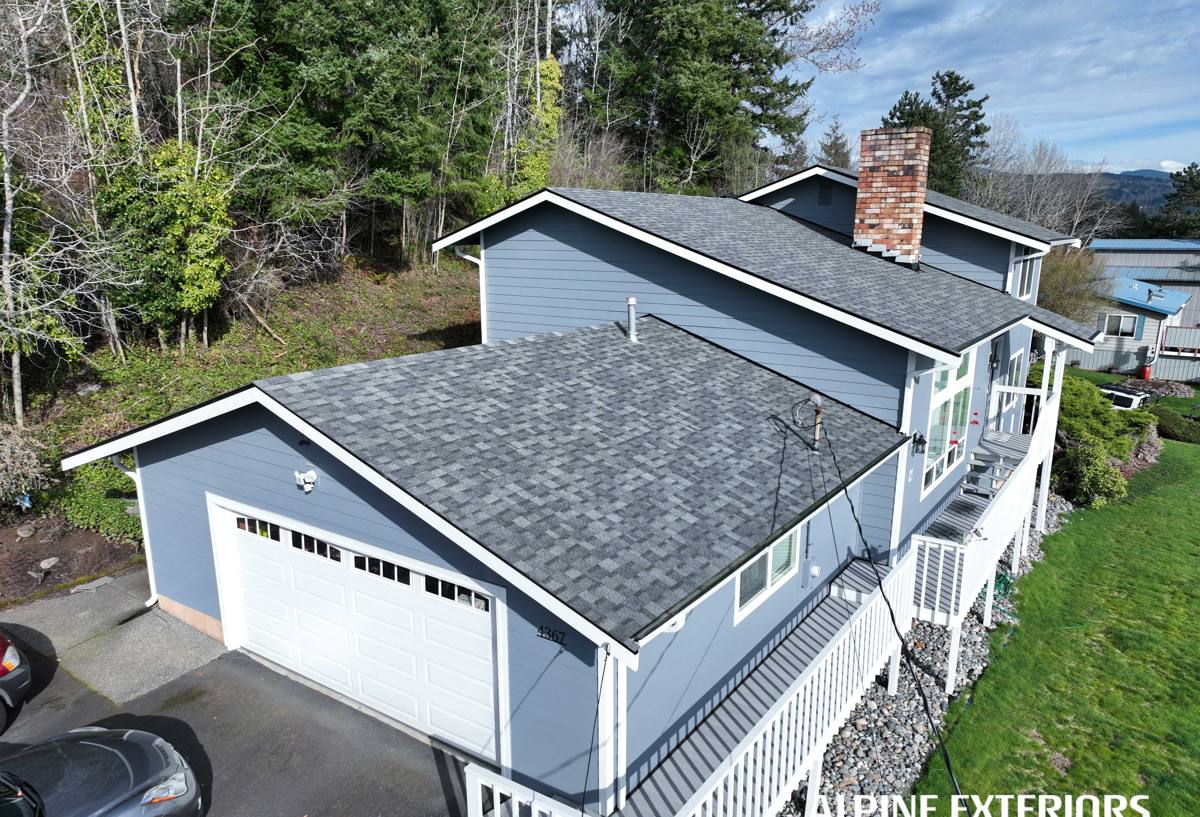
What Salt Air Actually Does to a Roof
Salt air isn't just a nuisance — it's a chemical process. Airborne salt is hygroscopic, meaning it pulls moisture out of the air and holds it against metal surfaces, keeping them wet longer than plain rain would. That constant damp-salt cycle accelerates corrosion at cut edges, fastener heads, and anywhere the protective coating has been scratched or worn thin. On a roof close to the shoreline, this process runs faster than most manufacturers' general warranty language assumes, which is why coating choice matters more here than it would on a roof twenty miles inland.
Where Corrosion Starts
- Cut edges and field-trimmed panel ends left unsealed
- Exposed fastener heads with worn or missing washers
- Dissimilar metals in contact (steel flashing against copper, for example)
- Scratches from foot traffic or debris during or after installation
- Standing water or trapped debris in valleys and behind chimneys
None of these are flaws in metal roofing as a material — they're installation and maintenance details. Get them right and a metal roof in this setting can genuinely outperform every other common roofing option.
Choosing the Right Metal System for a Coastal Setting
Not every "metal roof" is built the same, and the differences matter more near the water. We generally steer coastal clients toward standing seam systems with concealed fasteners, paired with a coating rated for marine or coastal exposure. The concealed fastener detail matters because it removes hundreds of penetration points that would otherwise need individual seals — each one is a future maintenance item and a potential leak path.
| Factor | Standing Seam (Concealed Fastener) | Exposed-Fastener Panel |
|---|---|---|
| Fastener exposure | None — fasteners hidden in raised seams | Fasteners penetrate the panel face directly |
| Coastal corrosion risk | Lower — fewer exposed metal-on-metal contact points | Higher — washers and fastener heads degrade over time |
| Long-term maintenance | Minimal, mainly sealant checks at penetrations | Periodic fastener/washer inspection and replacement |
| Upfront cost | Higher material and labor cost | Lower upfront cost |
| Typical best fit | Waterfront and salt-exposed homes meant to last decades | Detached garages, outbuildings, budget-driven projects |
We'll install either system depending on the building and the budget, but for a primary Semiahmoo Resort home we'll always walk you through this trade-off honestly rather than defaulting to the cheaper option and letting you find out later why it needed more attention.
Moss, Algae, and the Shade Problem
This part of Whatcom County holds moisture in the air for long stretches of the year, and shaded, north-facing roof sections stay damp far longer than sections that get regular sun. Moss and algae don't just look bad — moss in particular holds water against the roof surface and can work its way under panel laps and around fasteners if it's allowed to build up. Metal roofing resists this better than composite shingles because there's no granulated surface for spores to root into, but a smooth metal panel with poor slope, clogged valleys, or debris buildup in a low-sun spot can still grow moss over time.
What Actually Reduces Moss Buildup on Metal
- Proper slope and panel overlap so water sheds instead of sitting
- Keeping valleys and gutters clear of needles and leaf litter
- Trimming back overhanging branches that shade and shed debris onto the roof
- A factory finish that sheds water cleanly rather than holding a film
- Periodic rinsing in shaded, persistently damp sections
We factor tree cover and shading into the layout and detailing on every Semiahmoo Resort quote — it changes where we pay extra attention, not just what material we recommend.
What a Correct Installation Looks Like Here
The metal panel itself is usually the least of the problems on a coastal roof — the underlayment, flashing, and edge details are where failures happen. For Semiahmoo Resort jobs, our baseline approach includes a few non-negotiables:
- A high-quality synthetic or self-adhered underlayment rated for wind-driven rain, not just standard felt
- Stainless steel or coated fasteners matched to the panel material to avoid galvanic corrosion
- Properly lapped and sealed valley, ridge, and penetration flashing — the details that fail first in driving rain
- Closed or vented ridge caps appropriate to the attic ventilation setup
- Sealed, factory-matched trim at eaves, rakes, and wall transitions instead of field-improvised bends
Driving rain along the water doesn't behave like rain further inland — wind pushes it sideways and up under laps that would be fine in calmer conditions. That's why underlayment quality and lap details get extra attention on every waterfront job we take on, not just the panel selection.
Our Process for a Semiahmoo Resort Metal Roof
1. On-Site Assessment
We look at slope, shading, existing decking condition, and how the current roof has held up against salt air and moisture — that tells us a lot about what the new system needs to do differently.
2. System and Coating Selection
We walk through panel profile, coating grade, and fastener type with you directly, including the honest cost difference between standing seam and exposed-fastener systems for your specific building.
3. Tear-Off and Deck Inspection
Existing decking gets inspected for rot or moisture damage before anything new goes down — a metal roof installed over a compromised deck will fail regardless of the panel quality.
4. Underlayment and Flashing First
We install and seal the underlayment and flashing details before panels go on, since these are the layers actually responsible for keeping wind-driven rain out.
5. Panel Installation and Final Detailing
Panels, trim, and ridge details are installed to manufacturer spec, with extra attention to valley and wall-transition sealing given the exposure here.
6. Walkthrough
We go over the finished roof with you, including what routine maintenance (if any) it will need given its specific sun and shade exposure.
Cost Factors Specific to This Area
Metal roofing costs vary by panel type, coating, roof complexity, and access — but a few factors specific to Semiahmoo Resort properties tend to move the number more than they would elsewhere:
| Factor | Why It Matters Here |
|---|---|
| Coating and fastener grade | Marine-rated coatings and stainless fasteners cost more but resist salt-air corrosion significantly longer |
| Roof complexity | Valleys, dormers, and multiple planes each add flashing detail that matters more under driving rain |
| Tree cover and access | Waterfront lots with mature trees can mean more careful staging and cleanup |
| Existing deck condition | Moisture-damaged decking discovered during tear-off adds repair cost before panels go on |
| Ventilation upgrades | Older homes sometimes need ridge or soffit ventilation improvements to control moisture buildup |
We give straightforward, itemized quotes so you can see exactly what's driving the number, rather than a single lump figure.
Maintenance That Actually Extends the Roof's Life
A well-installed metal roof in this setting is genuinely low-maintenance, but "low" isn't "none." A short annual routine goes a long way:
- Clear gutters and valleys of needles, leaves, and debris, especially after fall storms
- Rinse shaded or north-facing sections if moss or algae staining starts to appear
- Check fastener heads and washers on exposed-fastener systems every few years
- Look at flashing around chimneys, vents, and wall transitions for any sealant wear
- Trim back branches that overhang the roof to reduce shading and debris
None of this requires a specialist visit every year — most of it is a homeowner with a ladder and twenty minutes, done at the right time of year.
Why Local Experience on This Roof Type Matters
Anyone can install a metal panel on a dry, calm day. The difference shows up years later, in how the flashing holds up to a sideways rainstorm, whether the fasteners are still tight after a few salt-air winters, and whether moss has started creeping under a poorly lapped valley. We've worked enough roofs along this stretch of Whatcom County to know which details get skipped on a rushed job and which ones actually determine how long a roof lasts here. That's the difference we bring to a Semiahmoo Resort project — not a different product, but a crew that already knows what this specific coastline does to a roof over time.
If you're weighing a metal roof for a Semiahmoo Resort home, we're happy to take a look and walk you through the options honestly. Reach out for a free, no-pressure estimate using the form below.