 Semiahmoo
 Why Ferndale Roofs Wear Differently Than Roofs Inland
Ferndale sits close enough to the water that homes here deal with a combination most inland Washington towns don't: salt-laden air off the Strait, near-constant winter rain, and long stretches of shade and dampness that keep roof surfaces wet for days at a time. None of these factors is dramatic on its own, but together they shorten the useful life of a roof that wasn't installed with this specific climate in mind. A roofing system that would hold up fine in a drier part of the state can fail early here — not because the materials are bad, but because the installation didn't account for moisture that lingers instead of drying off.
That's the core difference between a generic new roof installation and one done right for Ferndale: the materials matter, but the details underneath them — ventilation, underlayment, flashing, and fastening — matter more. We've installed and repaired roofs across Whatcom County long enough to know which corners get cut on cheaper jobs and where those shortcuts show up first, usually in the form of moss colonies, soft decking, or leaks around valleys and chimneys within a few years instead of a few decades.
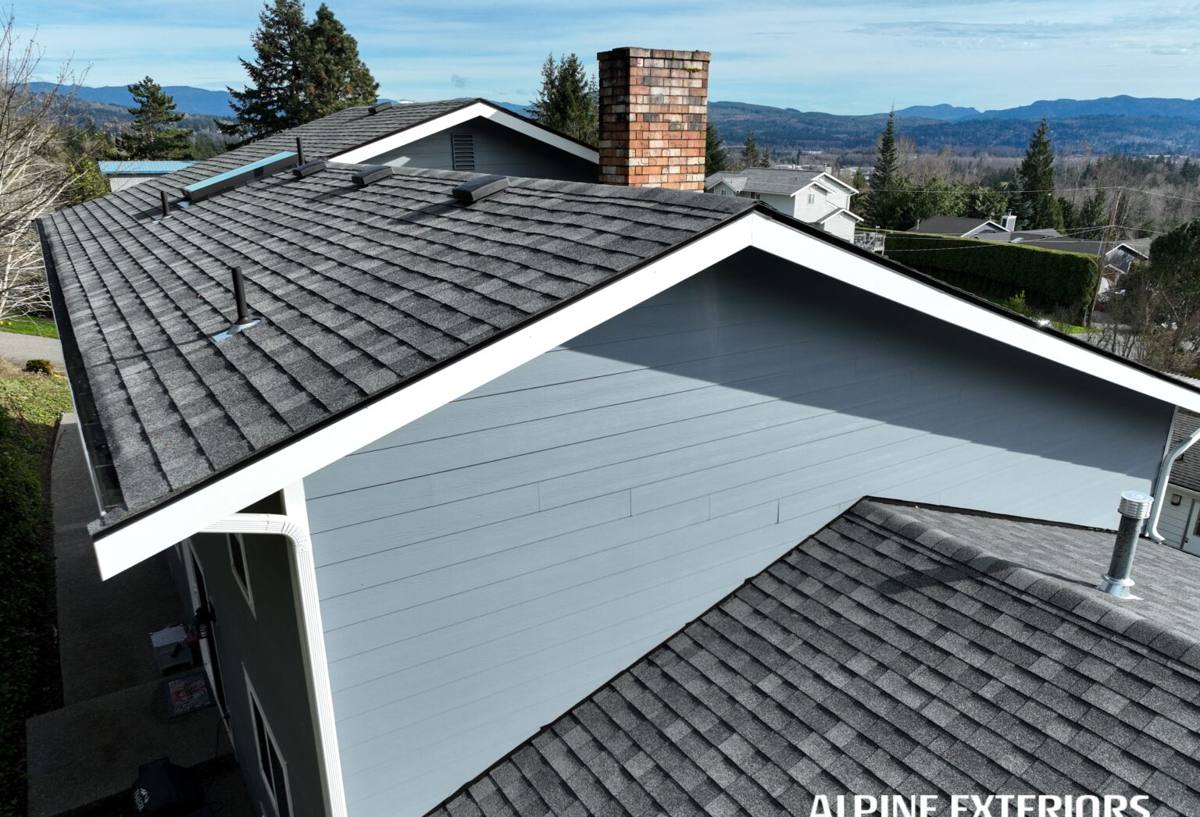
Signs a Ferndale Home Needs Replacement, Not Another Repair
Homeowners often ask us to patch a leak, and sometimes that's the right call. But patching an aging roof past a certain point just delays a bigger bill and risks water damage to decking, insulation, and interior finishes in the meantime. A few signs point toward full replacement rather than another repair:
- Shingles that are cupping, curling, or losing granules in patches rather than just at the edges
- Moss that keeps returning within a year or two of cleaning, especially on north-facing slopes
- Soft or spongy spots underfoot on the roof deck, or sagging visible from the ground
- Daylight visible through the attic roof boards, or damp insulation after a storm
- A roof that's 20+ years old with granule buildup in gutters and downspouts
- Multiple past repairs to the same area — flashing that keeps failing, valleys that keep leaking
If you're seeing two or more of these, it's worth getting a straight answer on whether repair still makes sense before spending money on a fix that won't hold.
What a Correct New Roof Installation Actually Involves
Full Tear-Off, Not a Layover
We remove the existing roofing down to the deck rather than installing new shingles over old ones. Layering over an existing roof hides the condition of the decking underneath, traps moisture between layers, and voids most manufacturer warranties. It's tempting to skip this step to save a day of labor, but on a coastal-influenced climate like ours it's the step that determines whether the roof underneath is actually sound.
Deck Inspection and Repair
Once the old roofing is off, we inspect the plywood or plank decking for rot, delamination, and soft spots — problems that are invisible from above or from inside the attic. Any compromised sections get replaced before anything new goes down. Skipping this step is one of the most common ways a "new roof" ends up leaking within a couple of years.
Underlayment and Ice/Water Protection
Given how much rain this area sees, we use synthetic underlayment across the full roof and self-adhering ice-and-water membrane at the vulnerable points — eaves, valleys, and around penetrations like vents and chimneys. These are the spots where wind-driven rain most often finds a way in, and they're worth the extra material cost every time.
Flashing Done Properly
Flashing around chimneys, skylights, dormers, and roof-to-wall transitions is where most leaks actually originate, not in the field of the roof itself. We install new flashing rather than reusing old pieces, and we detail it to shed water rather than just cover the gap.
Ventilation That Matches the Attic
A roof needs balanced intake and exhaust ventilation to let moisture escape from the attic space. Without it, humid indoor air condenses on the underside of the deck, which rots wood from the inside and feeds moss and algae growth on the surface from below the shingles outward. We size and place vents based on the attic's actual square footage and existing intake, not a one-size-fits-all default.
Choosing the Right Material for a Ferndale Home
There's no single "best" roofing material — the right choice depends on your home's exposure, roof pitch, budget, and how much long-term maintenance you're willing to keep up with. Here's how the common options stack up for this specific climate:
| Material | Typical Lifespan Here | Moss & Moisture Behavior | Relative Cost | Best Fit |
|---|---|---|---|---|
| Architectural (laminate) asphalt shingle | 25–30 years | Good with proper ventilation and periodic moss treatment | Moderate | Most Ferndale homes; best balance of cost and durability |
| 3-tab asphalt shingle | 15–20 years | More prone to early moss and granule loss in shaded areas | Lowest | Budget-driven projects, secondary structures |
| Standing seam metal | 40–50+ years | Sheds moisture fast; very moss-resistant on steep pitches | Highest | Homeowners planning to stay long-term or wanting minimal upkeep |
| Cedar shake | 20–30 years with upkeep | Attractive but needs regular treatment to resist moss and rot in wet, shaded conditions | High | Homeowners committed to ongoing maintenance for the look |
For most Ferndale properties, we recommend architectural shingle from an established manufacturer — brands like GAF, Owens Corning, or CertainTeed all make product lines rated for this region's wind and moisture exposure. We don't push cedar shake as a default here; it can look great, but its maintenance burden in a climate with this much sustained dampness is a real, ongoing cost that a lot of homeowners underestimate up front. That's a trade-off we'll walk through honestly rather than sell around.
Moss and Moisture: The Long Game
Whatcom County's moss season runs long — shaded, north-facing, and low-slope roofs can stay damp for weeks at a stretch during fall and winter. Moss isn't just cosmetic. Its root structure lifts shingle edges, holds water against the surface, and accelerates granule loss. A new roof installation should reduce this risk from day one:
- Zinc or copper strips installed near the ridge on shaded slopes to inhibit moss regrowth
- Adequate ridge and soffit ventilation so the underside of the deck dries out between rain events
- Shingle selection with algae-resistant granules where the roof gets significant shade
- Correct slope-appropriate installation so water doesn't pool at valleys or low spots
None of these eliminate the need for periodic moss removal, but they buy you years between treatments instead of months.
Our Installation Process
- On-site assessment — we walk the roof and attic, check decking condition where visible, and measure for material and ventilation needs.
- Written estimate — a clear scope of work and price, with material options laid out rather than a single take-it-or-leave-it number.
- Permitting — we handle the permit application with Whatcom County or the City of Ferndale as required for the job.
- Tear-off and disposal — old roofing removed and hauled off; deck inspected and repaired as needed.
- Installation — underlayment, flashing, ventilation, and roofing material installed in that order, to manufacturer specification.
- Final walkthrough and cleanup — magnetic sweep for stray fasteners, gutter check, and a review of the finished work with you before we consider the job done.
What Affects Your Final Cost
Every roof is priced individually, but the same handful of factors move the number up or down on almost every project:
| Factor | Why It Matters |
|---|---|
| Roof size and number of planes | More square footage and complexity means more material and labor time |
| Pitch and accessibility | Steep or hard-to-access roofs take longer and require more safety setup |
| Deck condition | Rotted or soft decking found during tear-off adds material and labor to repair |
| Material choice | Asphalt, metal, and cedar carry very different material costs, as shown above |
| Layers to remove | Multiple existing layers add disposal weight and tear-off time |
Most full replacements on a typical single-family Ferndale home land somewhere between the mid-thousands and the mid-teens in dollars, depending heavily on the factors above — we'll never give you a real number until we've actually looked at your roof.
Why a Crew That Already Works Ferndale Is Worth Choosing
A roofing crew that's worked this specific corner of Whatcom County knows which slopes tend to hold moss longest, which local permitting steps to expect, and how wind off the water behaves against different roof orientations. That familiarity shows up in small decisions — where to add an extra course of ice-and-water membrane, how to detail a valley on a low-pitch addition, which vent placement actually performs in a shaded backyard — that a crew unfamiliar with the area might not think to make. It also means we're a known, findable quantity if a warranty question comes up years down the line, not a company that did one job and moved on.
After Installation: Keeping It Right
A correctly installed roof still benefits from basic upkeep, especially in a climate that stays wet this much of the year:
- Clear gutters and downspouts at least twice a year so water isn't backing up under the eaves
- Have moss treated or removed before it establishes rather than after it's visibly thick
- Check attic ventilation isn't blocked by insulation or storage after any attic work
- Have flashing and valleys visually checked after major windstorms
- Schedule a professional inspection every few years, even without an obvious problem
We're happy to do a quick check on any roof we've installed if you're ever unsure whether something needs attention — catching a small issue early is a lot cheaper than catching it late.
If your Ferndale roof is showing its age or you just want an honest opinion on whether repair or replacement makes more sense, we'll come take a look and give you a straight answer. Fill out the form below for a free, no-pressure estimate.