 Semiahmoo
 Building Decks for the Peace Arch Climate, Not a Catalog Photo
A deck built from a big-box plan set looks fine for the first year almost anywhere. What separates a deck that lasts fifteen-plus years from one that's rotting at the ledger board by year six is whether it was actually designed for the site it sits on. Homes near Peace Arch and the broader Semiahmoo area sit close to the water, which means salt-laden air, driving rain that comes in sideways off the Strait, and a moss season that can run eight months out of the year. None of that is exotic — it's just Whatcom County weather — but it changes almost every decision in a deck build, from the fasteners to the board spacing to how the ledger connects to the house.
This page covers what a correctly built custom deck looks like specifically for Peace Arch properties, and how we approach the job differently than a crew that's used to building in a drier inland climate.
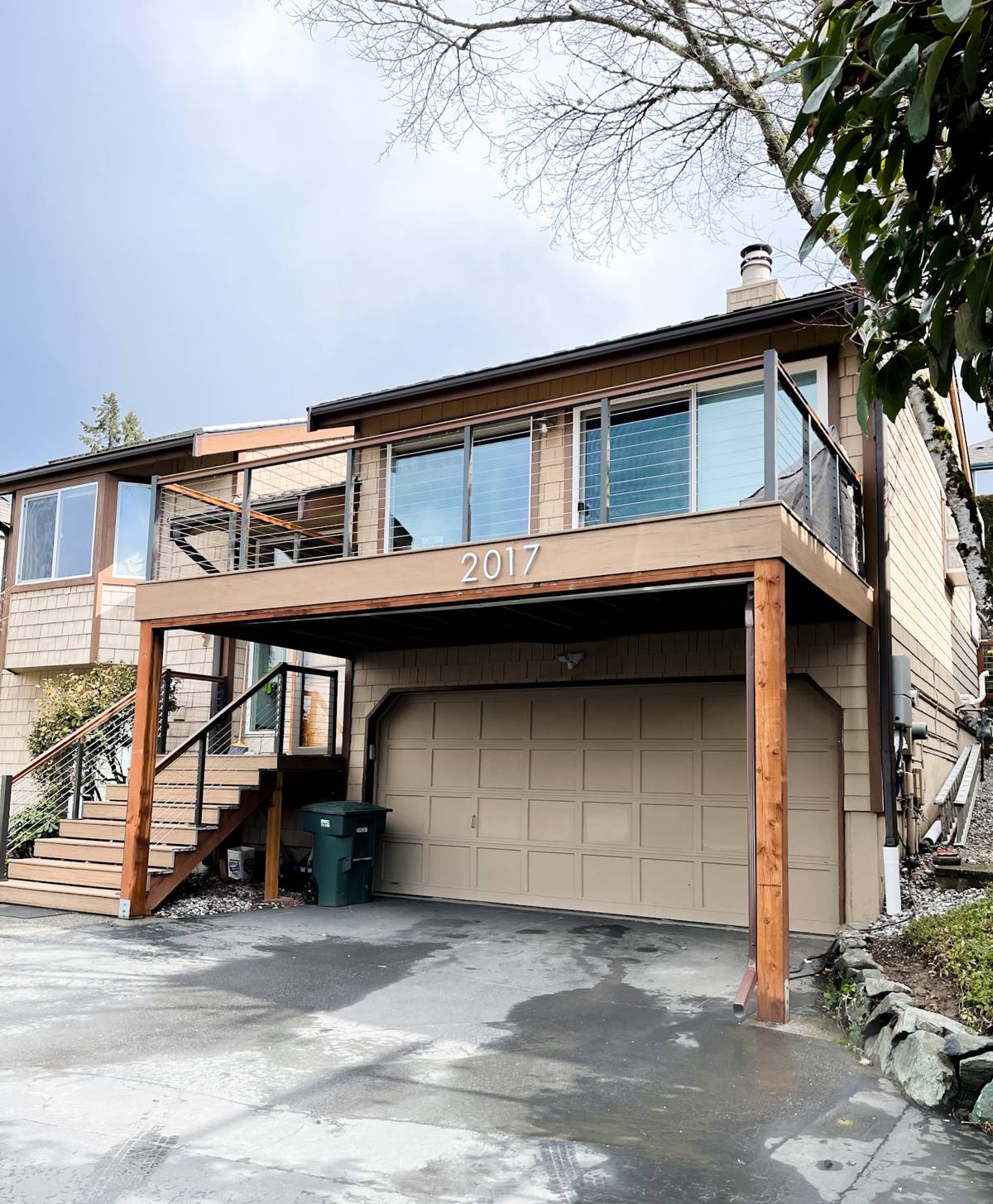
What Salt Air and Driving Rain Actually Do to a Deck
It's worth being specific about the failure modes we're designing around, because "coastal climate" is vague and homeowners deserve a real answer.
Salt air accelerates corrosion
Airborne salt from the Strait of Georgia and Semiahmoo Bay settles on exposed metal and speeds up oxidation. Standard electro-galvanized screws and joist hangers that would last for years inland can start rusting, staining the wood around them, and losing holding strength within a few seasons this close to the water. The fasteners you can't see are usually the first thing to fail on a poorly specified coastal deck.
Driving rain finds every gap
Wind off the water pushes rain sideways and upward, not just straight down. That means flashing details that would keep water out on a calmer inland lot — a simple lap here, a bead of caulk there — aren't enough. Water gets driven up under ledger flashing, behind rim joists, and into end grain that isn't sealed. Once moisture is trapped against untreated wood, rot follows even if the surface looks dry most of the year.
A long moss season changes the surface, not just the structure
Whatcom County's wet stretch runs long, and shaded or north-facing decks near mature trees can stay damp for weeks at a time. Moss and algae take hold on any decking surface that doesn't shed water and dry quickly, and a mossy deck isn't just unattractive — it's a slip hazard on stairs and landings, which matters most exactly when it's raining.
Decking Material: What Actually Holds Up Here
There's no single "best" decking material — there's a best material for this site, this budget, and how much upkeep the homeowner actually wants to do. Here's how the common options perform specifically under salt air, driving rain, and heavy moss pressure:
| Material | Moisture & Moss Behavior | Maintenance | Typical Lifespan Here |
|---|---|---|---|
| Cedar | Naturally rot-resistant heartwood, but needs sealing to keep salt air and rain from graying and checking it | Annual clean and reseal recommended | 15-20 years with upkeep |
| Pressure-treated fir/hem-fir | Treated for rot but end cuts and fastener holes need field-sealing or they become entry points | Periodic sealing, moss removal on shaded sections | 10-15 years |
| Capped composite | Sheds water well, resists staining, but low-end uncapped composite can absorb moisture at cut edges | Occasional wash, no sealing | 25+ years, capped products |
| PVC/cellular decking | Doesn't absorb moisture at all, best moss resistance of the group | Wash to remove surface algae | 25-30+ years |
We don't push one product on every job. A shaded, close-to-the-water lot with heavy tree cover is a different conversation than a sunny, exposed site — the moss and moisture pressure just isn't the same, and the right material follows from that, not from what's cheapest to install.
Fasteners and Hardware: The Detail Most Decks Get Wrong Here
This is the single biggest difference between a deck built for Peace Arch and one built with standard inland hardware. Our baseline for coastal builds is stainless steel or heavy hot-dip galvanized fasteners and structural connectors — not the coated screws that are perfectly fine forty miles inland. It costs more up front. It's also the difference between hardware that's still solid in fifteen years and hardware that's bleeding rust stains into the decking by year five.
We also pay close attention to fastener placement relative to end grain and cut edges, since that's where salt-driven moisture gets in fastest. Every field cut on treated lumber or capped composite gets sealed before it's installed, not after someone notices a problem.
Drainage and Flashing: Where Rot Actually Starts
Almost every rotted deck we've been called to look at fails at the same three points, and all three are drainage details rather than the decking itself:
- The ledger board connection — where the deck attaches to the house needs proper flashing that sheds water away from the rim joist, not just caulk covering a gap.
- Joist tops — unprotected joist tops trap standing water under the decking boards; joist tape or a proper cap detail keeps rain from soaking into end grain over and over.
- Post bases — posts set directly in concrete or sitting in standing water at grade rot from the bottom up; a post base that keeps wood elevated and draining matters more here than in a drier climate.
We also grade and slope decking away from the house whenever the structure allows it, so water actively moves off the deck instead of pooling on it during a long driving rain.
Slip Resistance and Moss Management by Design
You can't eliminate moss pressure on a shaded Whatcom County lot, but you can design a deck that resists it instead of feeding it. That means board spacing that allows real airflow and drainage underneath, decking profiles with texture or grooving that hold up better underfoot when wet, and layout choices that avoid trapping moisture in tight corners or under low structures where sun and air never reach. Stairs and landings get extra attention, since that's where a slick surface actually causes a fall, not just an eyesore.
Our Process for a Custom Deck Build
Every Peace Arch deck we build follows the same sequence, adjusted for the specific site conditions:
- Site walk and assessment — sun exposure, tree cover, wind exposure off the water, and existing drainage patterns all factor into material and layout recommendations.
- Design and material selection — we walk through the honest trade-offs on materials rather than defaulting to whatever's easiest to install.
- Permitting — deck permits and setback requirements are handled through Whatcom County as required for the project.
- Structural build — footings, framing, ledger flashing, and hardware are installed to the coastal-grade standard described above, not a generic inland spec.
- Decking, railing, and finish work — surfaces are installed with drainage and slip resistance in mind, and all cut edges are sealed before closing up the job.
- Walkthrough — we go over what maintenance the specific materials on your deck actually need, since that varies by product.
Maintenance a Peace Arch Deck Actually Needs
What a deck needs to stay solid here is different from what a homeowner's guide written for a dry climate will tell you. A realistic seasonal checklist:
- Sweep debris off the deck surface regularly through fall — trapped leaves hold moisture against the decking and accelerate moss growth.
- Wash the surface at least once a year, more often on shaded sections, to remove algae before it gets a foothold.
- Check fastener heads and hardware annually for early rust staining — it's cheaper to address a single corroding screw than to wait for it to fail.
- Inspect ledger flashing and any visible gaps at the house connection after major windstorms.
- Reseal cedar or uncapped wood decking on the schedule the product actually requires — skipping a season here shows up fast in this climate.
- Keep gutters and downspouts near the deck clear so roof runoff isn't adding extra water load onto the structure.
Why Local Experience on This Specific Coastline Matters
A contractor who mostly builds decks inland isn't wrong about deck-building — they're just calibrated to a different set of conditions. Salt air corrosion, wind-driven rain, and a long moss season aren't things you compensate for after the fact; they have to be built into the material choices and structural details from the start. A crew that's already worked on homes in and around Semiahmoo has seen which details actually fail on this stretch of coastline and which ones are just theoretical. That's not a marketing point — it shows up directly in how long the hardware lasts and whether you're dealing with a moss-slicked staircase every winter.
If you're planning a new deck or replacing one that's showing its age near Peace Arch, we're happy to walk the site and give you a straight assessment of what it needs. Request a free, no-pressure estimate using the form below.