 Semiahmoo
 Windows Built for the Peace Arch Corner of Semiahmoo
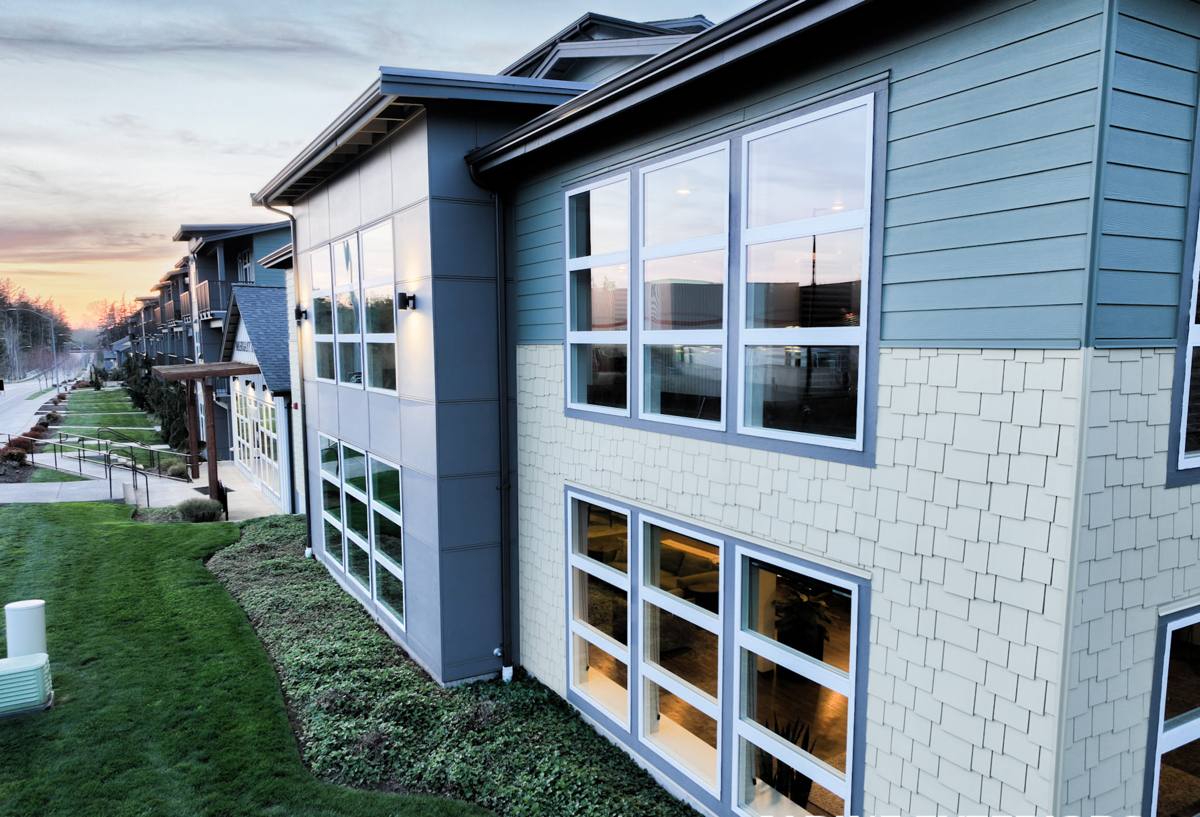
The Peace Arch area sits about as close to the water and the border as a Whatcom County neighborhood gets, and that location shapes what a window has to survive here. Homes in this corner of Semiahmoo take a steady mix of salt-laden air off the bay, wind-driven rain that doesn't just fall but pushes sideways into siding and trim, and a moss season that can stretch from October well into spring. A window that's rated fine for a dry inland climate can still underperform here, not because the glass is bad, but because the install, the frame material, or the flashing detail wasn't matched to what this specific stretch of coastline throws at it.
We install and replace windows across Semiahmoo and the surrounding Blaine area regularly, which means we're not guessing at how a given frame or sealant will hold up two winters from now — we've already seen it. This page covers what actually matters for an energy-efficient window job in Peace Arch: what the climate demands, what a correct install looks like, and how to tell a good bid from a corner-cutting one.
What the Climate Does to Windows Here
Salt Air and Corrosion
Proximity to Semiahmoo Bay means airborne salt settles on everything, including window hardware, screen frames, and exposed fasteners. Cheaper hinges, cranks, and locks corrode faster in this environment than they would ten or twenty miles inland. It's not dramatic — it's slow pitting and stiffness that shows up as a window that used to open smoothly and now doesn't.
Driving Rain
Rain here rarely just falls straight down. Wind off the water pushes it at an angle, which puts real pressure on window flashing, sill pans, and the seal between the frame and the rough opening. A window that's watertight in a calm rain test can still leak during a wind-driven storm if the flashing wasn't lapped correctly during install. This is one of the most common causes of hidden water damage we find around window openings in coastal Whatcom County homes.
The Long Moss Season
Persistent damp, shaded exposures, and mild temperatures give moss and mildew a long runway to establish themselves on wood trim, sills, and anywhere water sits instead of draining. Wood-frame windows without a durable exterior cladding are especially exposed to this over time. Vinyl and properly clad frames don't feed moss growth the way bare or under-maintained wood does, which matters a lot for a low-maintenance replacement.
Temperature Swings and Condensation
Semiahmoo doesn't see extreme cold, but the combination of high humidity and cool nights creates real condensation potential on interior glass, especially with older single-pane or poorly sealed double-pane units. That moisture, if it sits on sills and frames repeatedly, is its own slow path to rot and mold.
What "Energy-Efficient" Actually Means in a Window
The term gets used loosely, so it's worth breaking down what actually drives performance, because these are the specs that determine how a window handles this climate — not just the marketing sticker.
- Low-E coating: A microscopically thin metallic layer on the glass that reflects heat while letting visible light through. It reduces heat loss in winter and heat gain in summer.
- Gas fill: Argon or krypton between panes insulates better than plain air and slows heat transfer through the glass unit.
- Warm-edge spacers: The material separating the panes at the edge of the glass. Non-metal or hybrid spacers reduce the cold spot that causes condensation and edge-of-glass heat loss — a real factor in a humid marine climate.
- Frame material and construction: The frame is often the weakest thermal link in a window. Multi-chamber vinyl or fiberglass frames insulate far better than older aluminum frames, which conduct cold straight through.
- U-factor and SHGC: U-factor measures heat loss (lower is better); Solar Heat Gain Coefficient measures how much solar heat passes through. For a home with strong bay exposure, both numbers matter for comfort year-round, not just the heating bill.
All four of these have to work together. A high-end glass package in a poorly sealed frame, or a great frame with a weak install, both end up underperforming their rating.
Signs Your Current Windows Are Costing You Money
- Visible condensation or fogging between the panes — the seal has failed and the gas fill is gone
- Cold drafts near the frame even with the window fully latched
- Difficulty opening, closing, or locking — often a sign of frame warping or corroded hardware
- Soft or discolored trim and sill wood, especially on the side facing the water or prevailing wind
- Visible daylight or a rattle around the frame during windy weather
- Noticeably higher heating costs in a room with older windows compared to the rest of the house
- Moss or persistent green staining on exterior sills or trim
Frame Material: What Holds Up Here
| Frame Type | Coastal Durability | Maintenance | Notes for Semiahmoo |
|---|---|---|---|
| Vinyl (multi-chamber) | Very good | Low | Won't rot or corrode; good value; solid thermal performance for the cost |
| Fiberglass | Excellent | Low | Very stable in temperature swings, strong against wind pressure, higher upfront cost |
| Wood-clad | Good if maintained | Higher | Interior wood look with an exterior cladding shell; the cladding still needs inspection at seams |
| Aluminum | Fair | Moderate | Strong but conducts heat and cold poorly; thermal-break versions perform better but still lag vinyl and fiberglass |
For most homes in this area, we lean toward vinyl or fiberglass because neither one gives salt air or moisture a foothold, and both hold their seals and finish with minimal upkeep. That's our standard recommendation for a coastal exposure like Peace Arch — not because other materials can't work, but because they ask more of the homeowner in ongoing maintenance to perform the same over twenty years.
Why the Install Matters More Than the Window Itself
A high-performance window installed poorly will underperform a mid-grade window installed correctly. This is the part of the job that's invisible once the trim goes back on, which is exactly why it's where corners get cut.
What a Correct Install Includes
- Sill pan flashing so any water that gets past the window has a sloped path back outside instead of into the wall cavity
- Properly lapped flashing tape at the sides and head, integrated with the home's existing weather-resistive barrier — sequenced so water always sheds down and out
- Backer rod and compatible sealant at the frame perimeter, sized and installed to move with the building without failing
- Shimming and squaring so the sash operates smoothly and the seal compresses evenly all the way around
- Insulation of the gap between the frame and rough opening with a low-expansion foam or backer material, not left hollow
- Interior and exterior trim sealed and finished to shed water and match existing siding details
Skipping the sill pan or rushing the flashing lap are the two most common shortcuts that lead to hidden leaks — and in a driving-rain climate like this one, they surface faster than they would somewhere drier.
Our Process for a Peace Arch Window Replacement
We walk the job the same way every time, because consistency is what keeps callbacks rare:
- On-site assessment of each opening — checking for existing rot, out-of-square framing, and prevailing wind/rain exposure on that specific wall
- Frame and glass package recommendation based on that opening's exposure, not a one-size answer for the whole house
- Removal of the old unit with inspection of the sheathing and framing underneath before anything new goes in
- Full flashing and sill pan install per the sequence above
- Precise shimming, fastening, and insulation of the perimeter gap
- Exterior sealing and trim finish matched to the home
- Final operation check — smooth open/close, secure lock engagement, and a visual seal check
Cost Factors to Expect
| Factor | Why It Moves the Price |
|---|---|
| Frame material | Vinyl is generally the most economical; fiberglass and wood-clad cost more upfront |
| Number and size of openings | More or larger windows mean more material and labor |
| Existing rot or framing damage | Repair work discovered during removal adds cost but shouldn't be skipped |
| Glass package | Upgraded Low-E coatings and gas fills add a modest premium for a real efficiency gain |
| New-construction vs. retrofit frames | Retrofit inserts into an existing frame cost less but may not address underlying flashing issues; full-frame replacement costs more but resets the whole opening |
| Access and site conditions | Second-story openings, tight setbacks, or difficult access add labor time |
We give a broad range up front and firm numbers after the on-site assessment, since the honest cost driver on most window jobs is what's found once the old unit comes out — not the window itself.
Why a Crew That Already Works Semiahmoo Matters
A contractor who's replaced windows across Peace Arch and the rest of Semiahmoo already knows which exposures take the worst wind-driven rain, which older homes in the area tend to have outdated aluminum-frame originals, and how local permitting and inspection expectations work in Whatcom County. That local pattern recognition shortens the assessment, avoids re-learning the same lessons on your house, and means the flashing detail and frame recommendation are based on what actually holds up two winters from now on this coastline — not a generic national spec sheet.
If your windows are drafty, fogged, hard to operate, or just older than the rest of the house's exterior work, we're happy to take a look. Reach out for a free, no-pressure estimate — we'll walk your openings, tell you honestly what's worth replacing now versus later, and give you a straight number using the form below.