 Semiahmoo
 Why Peace Arch Siding Takes More Punishment Than Inland Homes
Peace Arch sits about as close to the water and the weather as a Whatcom County neighborhood gets. Storm systems moving off the Salish Sea and Boundary Bay reach homes here first, and that proximity shows up on siding in three specific ways: salt-laden air that speeds up corrosion on anything exposed and unprotected, wind-driven rain that hits walls sideways instead of just running down them, and a moss and algae season that runs long because shaded, damp elevations rarely get a chance to fully dry out between storms.
None of that is unique to Peace Arch in the abstract — most of the Pacific Northwest coast deals with some version of it. But homes closer to open water and exposed to prevailing wind take a heavier, more constant version of it than siding a few miles inland. A siding job that would hold up fine in a more sheltered part of Whatcom County can fail early here if it wasn't built for this specific exposure.
What This Actually Does to a Home Over Time
Salt air corrodes exposed metal — uncoated fasteners, cheap trim flashing, staples — well before it would inland, and that corrosion often shows up as rust streaking down the face of the siding long before there's a structural problem. Wind-driven rain finds its way past laps and seams that would shed a straight vertical rain just fine, which means flashing details and drainage planes matter more here than in calmer climates. And constant shade plus damp air feeds moss and algae on north-facing and tree-shaded walls almost year-round, holding moisture against the siding surface and, on lower-quality materials, contributing to paint failure, staining, and eventually rot.
Why We Only Install James Hardie Siding in This Climate
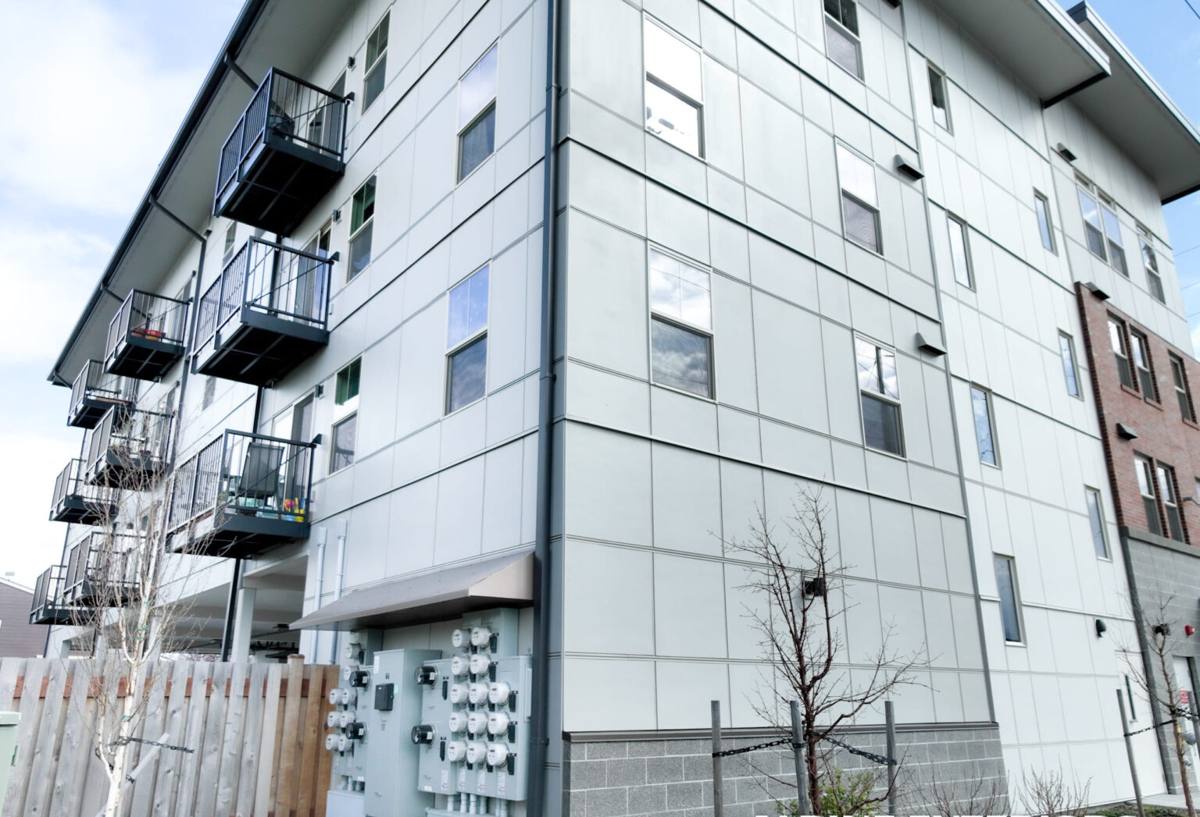
James Hardie fiber cement is cement, sand, and cellulose fiber — not wood, and not vinyl. That composition matters directly for a Peace Arch home: it's non-combustible, it doesn't absorb and swell with moisture the way wood substrates do, and it doesn't soften, warp, or become brittle the way some other siding materials can under sustained damp-cold cycling. James Hardie also engineers its products by climate zone through its HardieZone system, with an HZ5 formulation built for regions — like ours — that see a mix of freeze-thaw cycling and persistently damp, salt-influenced air, rather than a one-size-fits-all product sold nationwide.
The other piece is the finish. Hardie's ColorPlus finish is baked on and cured at the factory under controlled conditions, then backed by a separate finish warranty. Field-applied paint, by contrast, has to cure outdoors in whatever weather Peace Arch happens to be having that week — which in a marine climate with frequent damp and cool stretches is rarely ideal curing weather. A factory finish holds its color and resists chalking from salt exposure noticeably better over time than paint that had to dry in the elements.
This is why we don't install LP SmartSide, vinyl, or other fiber cement brands alongside Hardie. We standardized on one product system so every job we do gets the same climate-matched material, the same factory finish, and the same manufacturer warranty backing it — not a mix of products with different moisture behavior and different long-term track records.
What a Correct Installation Actually Involves
Fiber cement siding is only as good as the assembly behind it. Most siding failures we get called out to inspect — regardless of brand — trace back to what's under the panel, not the panel itself.
Behind the Panel: The Part Nobody Sees
In a climate like this, a drained and vented rainscreen gap behind the siding isn't optional — it's what lets any water that does get past the cladding actually escape instead of sitting against the sheathing. Combined with a properly lapped weather-resistive barrier, correctly integrated flashing at every window, door, and roofline penetration, and kick-out flashing wherever a roof edge meets a wall, this is what keeps wind-driven rain from becoming a hidden moisture problem three or five years down the road.
What We Check For On Every Job
- Rainscreen gap installed behind the siding, not tight to the sheathing
- Weather-resistive barrier lapped shingle-style and fully sealed at seams and penetrations
- Correct minimum clearance from grade, roofline, and decks per manufacturer specs
- All field-cut panel edges primed or sealed before installation
- Corrosion-resistant, manufacturer-approved fasteners set to proper depth and spacing
- Flashing and kick-out flashing at every roof-to-wall intersection and penetration
- Expansion gaps and color-matched sealant at joints, installed to Hardie's written specifications
Skip any one of these and the siding itself can be perfectly good material doing a bad job — which is why installation quality matters as much as the product choice.
How Siding Materials Hold Up in a Salt-Air, High-Moisture Climate
Every siding material has trade-offs. Here's an honest look at how the main options typically perform under the conditions Peace Arch homes actually deal with.
| Material | Moisture & Rot Resistance | Salt-Air Behavior | Moss/Algae Growth | Typical Maintenance |
|---|---|---|---|---|
| Vinyl siding | Doesn't rot, but seams and J-channels can trap moisture behind the panel | Can become brittle over time; fasteners behind it still corrode | Grows readily on shaded, damp surfaces | Low, but panels crack and fade under long-term UV/salt exposure |
| Untreated or primed wood/cedar | Absorbs moisture directly; prone to rot without diligent upkeep | Salt accelerates finish breakdown and grain checking | High — organic surface, holds moisture | High — repainting/staining on a recurring cycle |
| James Hardie fiber cement | Non-combustible cement composition; doesn't absorb and swell like wood | Factory ColorPlus finish resists salt-driven fading and chalking | Low compared to organic siding materials | Low — periodic rinsing and caulk checks |
Our Process for a Peace Arch Hardie Siding Project
- Inspection and moisture check. We look at the existing siding, trim, and any visible staining or soft spots, and check for moisture behind the current cladding before quoting anything.
- Tear-off and sheathing review. Once the old siding is off, we inspect the sheathing itself — this is when hidden rot or damage from past water intrusion actually gets found and dealt with, not covered up.
- Weather barrier and rainscreen installation. A new weather-resistive barrier goes on lapped correctly, followed by a drained and vented rainscreen gap.
- Hardie panel or plank installation. Installed to manufacturer spacing, fastening, and clearance specifications — not general "close enough" carpentry.
- Trim, flashing, and sealant. Every penetration, corner, and joint gets flashed or sealed with color-matched, manufacturer-approved products.
- Final walk-through. We go over the finished job with the homeowner before calling it done.
What Drives the Cost of a Peace Arch Hardie Project
Every home is different, so exact numbers depend on a site visit — but these are the factors that consistently move the price up or down.
| Factor | Why It Matters |
|---|---|
| Tear-off and disposal of existing siding | Multiple layers or hazardous old materials add labor and disposal cost |
| Sheathing or framing repair | Hidden rot found during tear-off has to be fixed before new siding goes on |
| House size, stories, and trim complexity | More linear footage, more corners and dormers, more cutting and flashing work |
| Siding profile and plank exposure chosen | Wider reveals and certain textures require different material quantities and labor |
| ColorPlus prefinished vs. field-painted | Prefinished panels skip a painting phase but the color menu and lead times differ |
Why Local Experience in Peace Arch Matters
A home a few blocks from the water deals with a wind and rain exposure pattern that's genuinely different from a home tucked further inland in Whatcom County — even within the same city limits. Crews who haven't worked this specific stretch of coastline often under-detail flashing and rainscreen gaps because they're used to less demanding conditions. We've done Hardie installations across this area enough times to know which elevations need extra attention to flashing, where moss pressure tends to concentrate, and how the salt-air exposure here compares to more sheltered Whatcom neighborhoods.
There's also the practical side: permitting requirements and inspection expectations vary by jurisdiction, and knowing what local inspectors want to see on a re-side job — correct rainscreen documentation, proper flashing details — keeps a project moving instead of stalling on a callback.
Maintenance in This Climate: What Actually Matters
Even the right siding installed correctly benefits from a small amount of upkeep in a salt-air environment. Rinsing accumulated salt spray and grime off the siding periodically helps the finish hold up over the long run. Checking caulk joints once a year for cracking or separation catches small problems before they become water intrusion. Keeping gutters and downspouts clear reduces the runoff that feeds moss growth along the lower courses of siding, and keeping vegetation trimmed back from exterior walls improves airflow and helps shaded sides dry out between storms.
None of this is intensive work — it's the kind of periodic attention that lets a properly installed James Hardie system reach its full service life instead of an early repaint or repair.
If you're planning a siding replacement in Peace Arch and want a straight answer on what your home actually needs, we're happy to take a look. Use the form below to request a free, no-pressure estimate.