 Semiahmoo
 Storm Damage Roof Repair for the Peace Arch Area
Homes in and around Peace Arch sit close to the water, right where Semiahmoo Bay and the Strait of Georgia funnel wind and rain straight at the coastline. When a storm rolls through, roofs here don't just take a beating from wind and water separately — they take both at once, along with the salt that rides in on the air. That combination is why storm damage repair in this pocket of Whatcom County needs to be handled differently than a general repair job somewhere inland.
This page covers what storm damage actually looks like on Peace Arch roofs, what a repair has to get right to hold up here, and how we approach the work when a homeowner calls us after a blow.
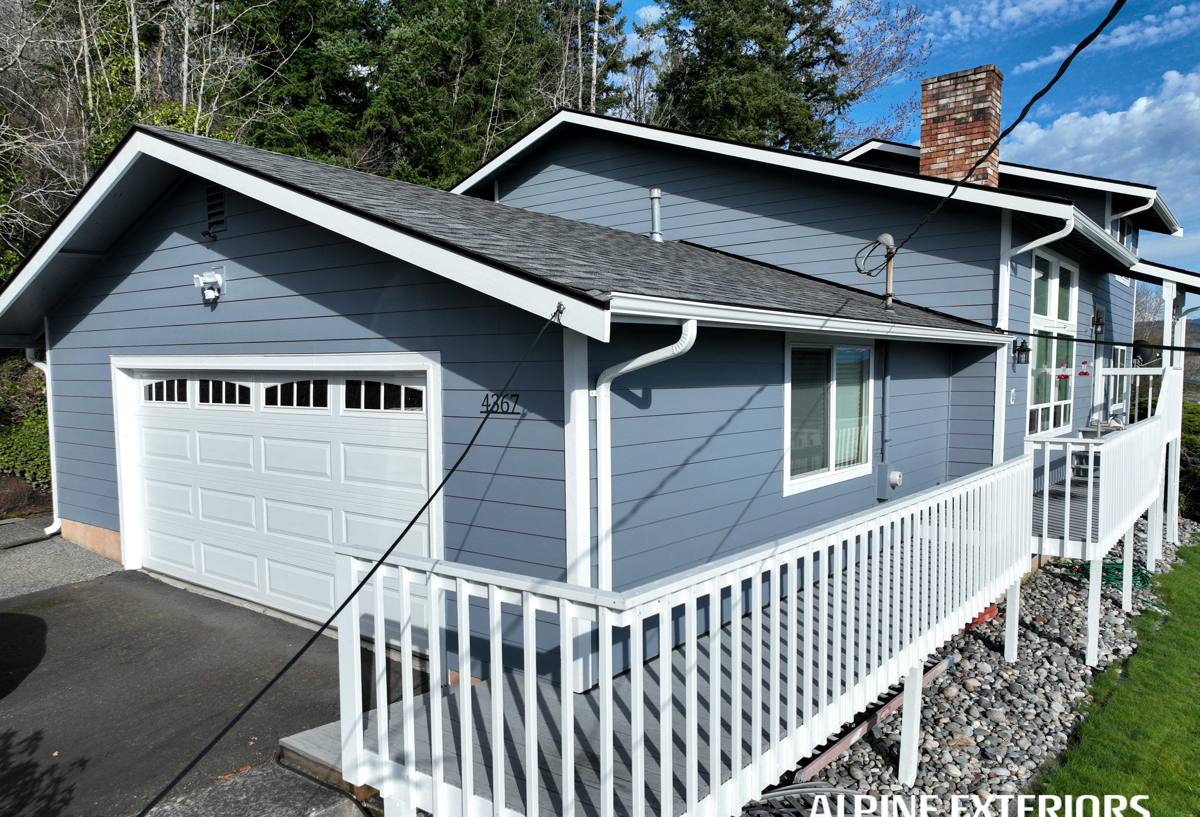
Why Peace Arch Roofs Take Extra Punishment
Salt Air
Proximity to Semiahmoo Bay means airborne salt is a constant, low-level presence — not just during storms. Salt accelerates corrosion on exposed metal: flashing, fasteners, gutter hangers, vent caps. A roof that would show minor storm damage inland can show accelerated deterioration here because the metal components were already weakened before the storm hit. Any repair that reuses corroded fasteners or unsealed metal is a repair that fails early.
Driving, Wind-Driven Rain
Storms coming off the water don't just drop rain straight down — they push it sideways under shingle tabs, around flashing edges, and into any gap that a calmer rain would never find. This is the single biggest reason storm damage on this stretch of coastline shows up as water intrusion rather than obvious missing shingles. The roof can look mostly intact from the ground and still be letting water into the attic.
A Long Moss Season
Whatcom County's damp, mild climate keeps roofs wet for long stretches of the year, which means moss and algae get a real foothold, especially on north-facing slopes and shaded areas. Moss holds moisture against the roofing material and lifts shingle edges, which turns a roof that would otherwise shed wind-driven rain fine into one with dozens of small entry points. Storm damage and moss damage often show up in the same inspection because one makes the other worse.
What Storm Damage Actually Looks Like Here
Homeowners often expect storm damage to be obvious — a missing shingle, a visible hole. On Peace Arch roofs, the damage that causes the most long-term harm is usually the kind you can't see from the driveway.
- Lifted or creased shingle tabs from wind uplift, especially along ridges, eaves, and rake edges where wind pressure is highest
- Flashing separation around chimneys, skylights, and roof-to-wall transitions, where wind-driven rain finds the smallest gap
- Fastener backout — nails or screws that have worked loose from repeated wind flex, often invisible until they cause a leak
- Granule loss on asphalt shingles from wind-blown debris, which shortens the shingle's remaining life even without a visible hole
- Gutter and downspout damage from wind load or falling branches, which redirects water back toward the fascia and roof edge instead of away from the house
- Interior staining on ceilings or attic sheathing, which shows up days or weeks after the storm as water works its way through insulation
How We Assess and Repair Storm Damage
Step 1: Full Roof and Attic Inspection
We start on the roof surface, but we don't stop there. Because wind-driven rain intrusion often shows up in the attic before it shows up on a ceiling, we check the attic side too — sheathing, insulation, and any rafter staining. This is the difference between patching a symptom and finding where water is actually getting in.
Step 2: Documentation Before Any Repair
If a homeowner plans to file an insurance claim, we photograph and document the damage before we touch anything. This matters more here than in a lot of areas, because salt-air corrosion can look similar to storm damage to an untrained eye, and adjusters need to be able to distinguish sudden storm damage from gradual wear.
Step 3: Emergency Weatherproofing, If Needed
If a storm has left a roof actively leaking or exposed, the first priority is stopping further water intrusion — tarping, temporary flashing, or sealing exposed areas — before scheduling the permanent repair. Given how much rain this area sees between storms, leaving a roof exposed for days while waiting on a full repair isn't something we recommend.
Step 4: Repair Using Materials Rated for the Local Environment
Every fastener, flashing piece, and sealant we use in a coastal repair is chosen with salt exposure in mind. Reusing corroded fasteners or standard-grade flashing in this environment is a shortcut that shows up again as a leak within a year or two — we don't do it.
Step 5: Verification, Not Just Sign-Off
After the repair, we check the surrounding area, not just the repaired spot. A storm rarely damages just one location, and a repair that ignores adjacent lifted shingles or weakened flashing is a repair that gets us both back out here within a season.
Repair or Replace? What Actually Determines the Call
Not every storm-damaged roof needs full replacement, and not every roof that "looks fine" is actually fine. The honest answer depends on a few specific factors, laid out below.
| Factor | Favors Repair | Favors Replacement |
|---|---|---|
| Roof age | Under 12–15 years, remaining material still sound | Near or past its expected service life |
| Extent of damage | Isolated to one section or slope | Spread across multiple slopes or the whole roof |
| Underlying deck condition | Sheathing dry and solid | Sheathing shows rot, soft spots, or repeated past leaks |
| Moss/algae history | Minor, surface-level growth | Long-term moss growth has already lifted shingles broadly |
| Insurance coverage | Claim covers targeted repair scope | Adjuster's scope supports full replacement |
We'll always tell you honestly which side of that table your roof falls on. A repair that's cheaper today but doesn't address the underlying cause isn't a good deal — it's a deferred replacement with extra steps.
Why a Crew That Already Works This Area Matters
Storm damage repair isn't the same job everywhere in Whatcom County, and a crew that mostly works inland neighborhoods won't automatically know to check for salt-accelerated fastener corrosion or to expect wind-driven rain intrusion at roof-to-wall transitions. Working Peace Arch and the surrounding Semiahmoo area regularly means we already know:
- Which roof orientations here take the worst of the wind off the water
- Where moss and algae tend to establish first on local roofs, and how that interacts with storm damage
- What fastener and flashing grades actually hold up against salt air over time, not just on paper
- How local permitting and inspection expectations apply to storm repair work
That local familiarity shortens the inspection, sharpens the diagnosis, and means the repair is built for the conditions your roof will actually face again next winter — not generic conditions.
After a Storm: What to Check and What to Leave to a Professional
Homeowners can safely do a quick visual check after a storm, but we'd rather you not get on a wet, sloped roof yourself. Here's a practical breakdown of what's reasonable to check from the ground versus what needs a proper inspection.
- Look for shingles or debris on the ground near the house — a sign of wind damage above
- Check gutters and downspouts for visible dents, disconnection, or sagging
- Watch ceilings and upper-floor walls over the following week or two for new staining or discoloration
- Check the attic (if safely accessible) for damp insulation, staining, or daylight coming through the roof deck
- Don't climb onto the roof yourself, especially after rain — wet shingles and moss-covered surfaces are genuinely dangerous
- Don't wait weeks to have it looked at — small entry points get larger with every additional rain event
Working With Insurance on a Storm Claim
Most storm damage repairs in this area involve an insurance claim, and the process goes more smoothly when the documentation is solid from the start. We provide photo documentation of the damage, a written scope of the repair, and we're available to walk an adjuster through what we found if that's useful. We won't inflate a scope to pad a claim, and we won't undersell damage to make a quick sale — the goal is an accurate picture so the repair actually gets covered and actually gets done right.
Get a Straightforward Look at Your Roof
If a recent storm has left you wondering whether your roof took real damage or just cosmetic wear, we're glad to come take a look. The estimate is free, there's no pressure to move forward, and if the honest answer is "this doesn't need a repair yet," we'll tell you that too. Use the form below to request a visit to your Peace Arch home.