 Semiahmoo
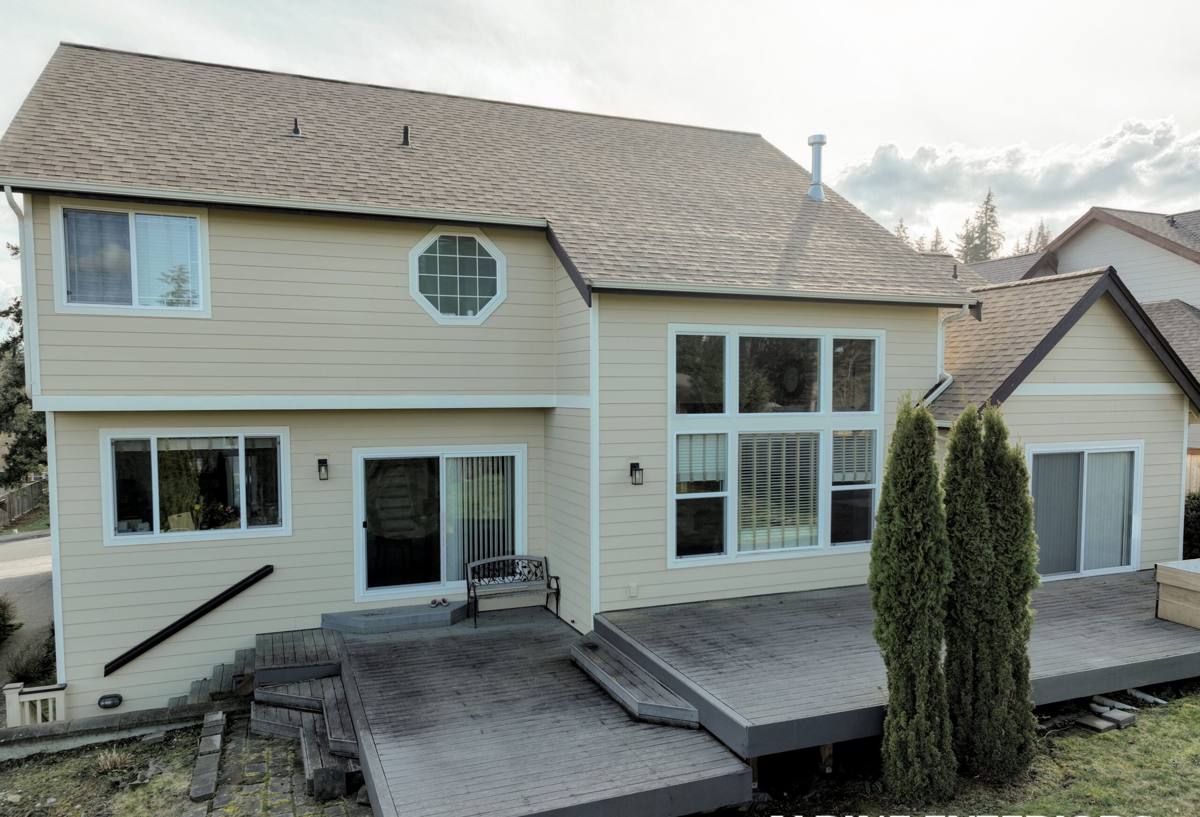
 Decks in Point Roberts Take a Different Kind of Beating
Point Roberts sits on its own small peninsula off Boundary Bay, surrounded by salt water on three sides. That location is part of what makes the area beautiful, and it's also exactly why decks here don't age the same way a deck fifty miles inland does. Salt-laden air corrodes fasteners and hardware faster than fresh inland air. Driving rain off the water finds every gap in flashing and decking. And the long, damp shoulder seasons common to Whatcom County give moss and algae months at a time to take hold on any horizontal wood surface that doesn't dry out quickly.
None of that means a deck in Point Roberts is doomed to fail early. It means the deck has to be built and replaced with those specific conditions in mind, not with a generic, one-size-fits-all approach. That's the whole point of this page: what a Point Roberts deck actually needs, what a correct replacement job involves, and why we treat it differently than a deck job in a drier, more sheltered part of the region.
Signs a Deck Needs Replacing, Not Just Patching
A lot of homeowners call us wanting a repair quote and end up learning that repair isn't the honest answer. We'll always tell you straight if a repair will actually hold up — but here are the signs that usually mean it's time for a full replacement instead of another round of patching:
- Soft or spongy spots in the decking boards, especially near the house or in low-traffic corners that stay wet longest
- Rust streaks or corroded fastener heads visible on the surface — a sign the hardware underneath is failing
- The ledger board (where the deck attaches to the house) shows staining, softness, or gaps at the flashing
- Support posts that feel loose, or visible rot at the base where posts meet footings
- Persistent moss or dark staining that comes back within weeks of cleaning, even after a wash
- The deck was built without proper flashing or joist protection — common in older builds, and a near-guarantee of early structural rot in a wet coastal climate
If you're only seeing surface graying or light moss, that's often a cleaning and maintenance issue, not a replacement issue. We'll tell you that too — a deck replacement is a real investment, and we're not going to talk you into one you don't need.
What a Correct Deck Replacement Actually Involves
It Starts Below the Boards
The decking boards you walk on are the last thing installed and the first thing people notice — but they're not where a deck's lifespan gets decided. That happens in the framing underneath: the ledger connection to the house, the joists, the flashing, and the fasteners. A replacement that just swaps old boards for new ones on the same framing is a cosmetic fix, not a real replacement, and in a climate like this it usually means paying for the same problem again in a few years.
Ledger and Flashing
The ledger board connection is the single most common failure point on decks in wet coastal climates, because it's where the deck meets the house and where water most easily gets trapped against wood. A correct replacement uses proper flashing — typically a metal drip cap paired with a self-adhering waterproof membrane behind it — so rain is directed away from the house rather than wicking into the ledger and rim joist.
Joist Protection
Untreated joist tops are one of the fastest ways a deck fails from the inside out, because water sits in the tiny gap where the decking board meets the joist and never fully dries. Capping joists with a protective tape barrier before the decking goes down is inexpensive relative to the total job and meaningfully extends the framing's life in a place that sees driving rain and long damp stretches.
Fasteners and Hardware
Salt air is hard on metal. Standard exterior screws and joist hangers can start showing corrosion well before the wood around them fails. For Point Roberts jobs we use fasteners and structural hardware rated for coastal or salt-exposure environments — it costs a bit more up front and it's the difference between hardware that lasts the life of the deck and hardware that becomes the weak link in five years.
Choosing Decking Material for a Salt-Air, High-Moisture Site
There's no single "best" decking material — there's a best material for your specific deck, budget, and how much upkeep you actually want to do. Here's how the common options hold up under Point Roberts conditions specifically:
| Material | Moisture & Salt-Air Behavior | Maintenance | Typical Lifespan Here |
|---|---|---|---|
| Pressure-treated wood | Good if properly sealed and re-coated on schedule; prone to splitting and moss growth if maintenance lapses | Annual cleaning, resealing every 1-3 years | 10-15 years |
| Cedar | Naturally rot-resistant but softer; still needs sealing to resist moss and moisture staining near the water | Cleaning plus periodic sealing/staining | 15-20 years |
| Composite decking | Doesn't absorb water or rot; resists moss better than wood but can still get slick with algae film if never cleaned | Occasional washing, no sealing or staining | 25-30 years |
| PVC/capped decking | Fully moisture-sealed surface; best resistance to salt air and standing moisture of the common options | Lowest — occasional rinse | 25-30+ years |
We install all of these. We don't push composite or PVC on every job just because they're lower-maintenance — some homeowners want the look and feel of real wood and are fine with the upkeep, and that's a legitimate choice. What we do insist on is being honest about the trade-off up front: wood decking on a Point Roberts lot near the water needs a real maintenance commitment, or moss and moisture will win.
How We Approach a Point Roberts Deck Replacement
1. On-Site Assessment
We look at the whole structure, not just the decking surface — framing, ledger, footings, and drainage underneath. This is also when we tell you honestly whether you need a full replacement or if a repair is the more sensible call.
2. Scope and Material Discussion
We walk through material options against your budget and how much maintenance you actually want to do, plus any structural upgrades the site needs (better flashing, added footings, railing code updates).
3. Permitting
Deck replacements in Whatcom County frequently require a permit, especially for anything involving structural changes, height above a certain threshold, or attachment to the house. We handle that process rather than leaving it on you to figure out.
4. Demolition and Disposal
Old decking, framing, and hardware are removed and hauled off. We inspect footings and posts once everything's stripped down, since that's often the first real look anyone's had at the structure in years.
5. Rebuild
Framing, flashing, joist protection, and fasteners go in to current best practice for a wet coastal site, followed by the decking material and railing system you chose.
6. Final Walkthrough
We walk the finished deck with you, cover basic maintenance for whatever material you chose, and make sure you know what to watch for over the first year.
Why Working With a Point Roberts–Experienced Crew Matters
Point Roberts is a peninsula with a genuinely unusual location — reaching it by land means crossing an international border, which affects scheduling, material staging, and how a job gets planned in ways that don't come up on a typical mainland Whatcom County job. A crew that already works this area on a regular basis has that logistics figured out: border crossing timing for crews and material deliveries, knowing which suppliers can actually get product to the peninsula on schedule, and not treating your project as an afterthought squeezed in around a "normal" route.
It also means we've seen how decks in this specific spot actually fail — not decks in general, but decks exposed to Boundary Bay's salt air and weather patterns specifically. That's the difference between a contractor applying textbook practices and one applying practices tuned to what actually happens to a deck twenty feet from the water here.
What Drives the Cost of a Deck Replacement
| Factor | Why It Matters |
|---|---|
| Deck size and shape | Square footage and the number of angles, stairs, or level changes directly drive labor and material cost |
| Decking material | Pressure-treated wood costs less upfront than composite or PVC, but composite/PVC cost less over the deck's lifetime in maintenance |
| Framing condition | If posts, footings, or the ledger connection need structural work, that adds cost but isn't optional if the deck is going to last |
| Railing system | Cable, glass, and composite rail systems cost more than standard wood or metal baluster railing |
| Permit requirements | Structural changes or height thresholds can require engineering review, which adds time and cost to the permit phase |
| Site access | Peninsula logistics and site accessibility can affect material delivery and staging time |
We give straightforward, itemized estimates so you can see exactly what you're paying for and where — not a single lump number with no explanation behind it.
Protecting Your New Deck After Installation
A correctly built deck still needs some seasonal attention in this climate, especially during the wetter months. A short annual routine keeps moss from establishing and catches small issues before they become structural ones:
- Sweep debris and leaves off the deck regularly — trapped organic material holds moisture and feeds moss growth
- Rinse or wash the surface at least once a year to remove algae film before it becomes established moss
- Check railing connections and stair stringers annually for looseness
- For wood decking, reseal or restain on the schedule recommended for your specific product — skipping a cycle in this climate shortens lifespan noticeably
- Keep gutters and downspouts near the deck clear so runoff isn't draining directly onto or under the decking
- Watch the ledger board area against the house each fall — it's the first place a flashing problem will show up
Let's Take a Look at Your Deck
If your deck is showing soft spots, rust streaks, persistent moss, or you're just not sure whether repair or replacement is the right call, we're happy to come take an honest look. There's no pressure and no obligation — just a straight assessment from a crew that already knows what Point Roberts weather does to a deck. Use the form below to request a free estimate.