 Semiahmoo
 Why Point Roberts Roofs Age Differently
Point Roberts sits on a small peninsula surrounded by saltwater on three sides, which puts every roof here under a different kind of stress than a roof twenty miles inland. Salt-laden air corrodes exposed metal faster, driving rain off the Strait of Georgia finds every weak seam, and the long, damp Whatcom County shoulder seasons keep roof surfaces wet enough, long enough, for moss and algae to take hold. None of that is exotic or unusual for this part of Washington — it's just the baseline a roof has to be built for, not an afterthought bolted on later.
A roof designed for a drier climate, or installed by a crew used to inland conditions, tends to show its age here early: fastener corrosion, soft or spongy decking under moss mats, and granule loss where wind-driven rain hits a wall or valley at an angle instead of straight down. A roof designed for this specific coastline holds up the way it's supposed to.
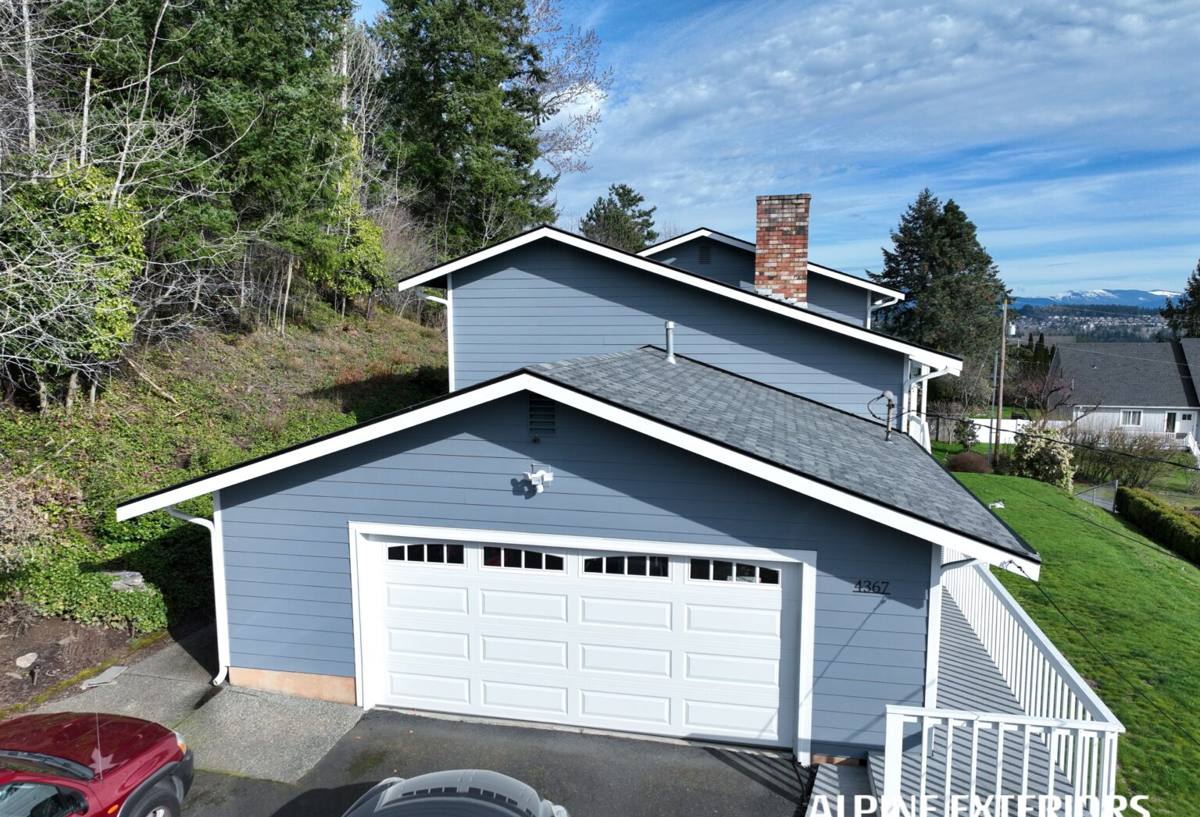
What Salt Air and Driving Rain Actually Do to a Roof
Salt Air
Salt in the air settles on every exposed surface, including fasteners, flashing, and any exposed metal edges. Over years, uncoated or lower-grade fasteners can corrode faster than they would inland, which is why fastener selection matters more here than it does thirty miles east. This isn't a defect in ordinary roofing hardware — it's a mismatch between hardware rated for general use and hardware rated for coastal exposure.
Driving Rain
Rain that comes in sideways off the water doesn't behave like rain falling straight down. It tests every lap, every nail line, and every transition — valleys, wall-to-roof intersections, chimneys, vent boots — far harder than a calm rain event does. A roof system built for driving rain uses more underlayment coverage, tighter flashing details, and more conservative nailing patterns than the minimum a manufacturer's spec sheet allows for a low-wind-exposure installation.
Moss Season
Whatcom County's wet stretch runs long, and shaded, north-facing, or low-slope sections of roof can stay damp for weeks at a time. Moss doesn't just sit on top of shingles — its root structure lifts shingle edges and holds moisture against the roofing surface, which accelerates wear underneath the moss itself. A roof that's been neglected through a few moss seasons often looks fine from the ground and is quietly deteriorating underneath.
What a Correct New Roof Installation Involves Here
A new roof is more than shingles nailed to a deck. For a Point Roberts home, a correct installation includes:
- Deck inspection and repair — any soft, delaminated, or water-damaged sheathing gets replaced before anything new goes down, not covered over.
- Ice and water shield at vulnerable zones — valleys, eaves, and any low-slope transitions get a self-adhering waterproof membrane, not just felt or synthetic underlayment.
- Full synthetic underlayment — a continuous secondary water barrier under the entire roof, so wind-driven rain that gets past the primary surface still has somewhere to go besides your attic.
- Corrosion-resistant fasteners and flashing — hardware rated for coastal or marine-adjacent exposure, used consistently, not just at the areas most visible from the ground.
- Proper attic ventilation — balanced intake and exhaust so moisture from inside the home doesn't condense against the underside of the new deck.
- Tight, correctly lapped flashing details at every wall, chimney, skylight, and vent penetration — this is where the vast majority of roof leaks actually start.
Skip any one of these and the roof might still look right for a season or two. It's what's underneath that determines whether it's still performing in ten or twenty years.
Choosing the Right Material for a Coastal Whatcom County Home
There's no single "best" roofing material — the right choice depends on your budget, your roof's pitch and exposure, and how much long-term maintenance you're willing to take on. Here's how the common options compare for a home in this specific climate:
| Material | Salt Air Performance | Moss Resistance | Typical Lifespan | Maintenance Burden |
|---|---|---|---|---|
| Architectural asphalt shingle | Good, with corrosion-resistant fasteners and flashing | Moderate — benefits from periodic cleaning and, optionally, zinc/copper strips | 20-30 years | Low to moderate |
| Standing seam metal | Very good with marine-grade coatings and fasteners | High — moss struggles to hold on a smooth metal surface | 40-60 years | Low |
| Cedar shake | Fair — needs careful detailing and upkeep near salt exposure | Low — natural wood grain holds moisture and moss readily | 20-30 years with upkeep | High |
| Synthetic/composite shingle | Good | Moderate to high, depending on product | 30-50 years | Low |
We'll walk you through these trade-offs honestly rather than steering you toward whatever happens to be easiest for us to install. Cedar, for example, can look great on the right home, but in a moss-prone, salt-exposed setting it typically asks for more upkeep than most homeowners realize going in — that's a maintenance conversation we'll have up front, not a surprise a few years later.
Our Installation Process
- On-site inspection — we assess the existing roof, deck condition, ventilation, and any problem areas like valleys or wall intersections before quoting anything.
- Written estimate — a clear scope of work and material selection, so you know exactly what's being installed and why.
- Tear-off — complete removal of the old roofing down to the deck, with the deck inspected as it's exposed.
- Deck repair — any damaged sheathing is replaced before underlayment goes down.
- Underlayment and waterproofing — ice and water shield at vulnerable areas, full synthetic underlayment across the field.
- Flashing and ventilation — new flashing at all penetrations and transitions, ventilation components installed or upgraded as needed.
- Roofing material installation — installed to manufacturer spec plus our own coastal-exposure standards for fastening and lap coverage.
- Cleanup and magnetic sweep — job site and yard cleared of debris and stray fasteners.
- Final walkthrough — we go over the finished roof with you before calling the job done.
Working Around Point Roberts' Geography
Point Roberts is a bit of a geographic outlier — it's physically separated from the rest of Washington State and reached by crossing through Canada. That's not a problem for the finished roof, but it does mean material deliveries, crew scheduling, and permitting timelines can move a little differently than they would for a job in Blaine or elsewhere in Whatcom County. A crew that already works this area regularly plans around that instead of discovering it mid-project — staging materials ahead of time, scheduling around border crossing windows, and building a realistic timeline into the estimate from day one instead of after delays show up.
Permits and Local Code
Roof replacements in Whatcom County typically require a building permit, and the requirements can vary depending on scope of work, structural changes, or whether the job involves multiple layers of existing roofing. We handle the permit process as part of the job rather than leaving it for the homeowner to sort out, and we build code-compliant ventilation and ice/water shield coverage into the installation regardless of what the bare minimum requires.
Signs Your Roof Needs Replacing, Not Just Repairing
Not every roof problem means a full replacement — but here's a practical checklist for when replacement is the more honest answer than another round of patching:
- Granule loss heavy enough that shingles look bald or patchy in sunlight
- Moss growth that returns quickly after cleaning, especially on north-facing slopes
- Soft spots, sagging, or spongy areas when walked on
- Daylight visible through the roof deck from inside the attic
- Multiple active leaks in different areas rather than one isolated spot
- Shingles curling, cracking, or losing their seal at the edges
- The roof is approaching or past its material's expected lifespan and repairs are becoming frequent
If you're only seeing one or two of these, a repair may still make sense. If you're seeing several at once, a repair is often just delaying the same conversation.
Why Local Experience Matters for This Job
Anyone can install shingles on a dry day. What separates a roof that lasts from one that doesn't is what happens at the details — the valley that sees driving rain every winter, the fastener choice that either corrodes in five years or holds for thirty, the ventilation that either keeps moisture out of your attic or slowly rots the deck from underneath. A crew that already works Point Roberts and the surrounding Semiahmoo area day in and day out has already seen how roofs here actually fail, not just how they're supposed to perform on paper. That experience shows up in the small decisions made throughout the install, not just in the finished look.
If your roof is showing its age, or you'd simply like an honest read on where it stands, we're glad to take a look. Fill out the form below for a free, no-pressure estimate.