 Semiahmoo
 Roof Repair Built for a Peninsula, Not a Generic Forecast
Point Roberts sits on its own small peninsula south of the Canadian border, surrounded on three sides by the water of Boundary Bay and the Salish Sea. That location is part of what makes the community special, and it's also exactly why roofs here fail in different ways than roofs ten miles inland. Salt-laden air, wind-driven rain off the water, and a moss season that runs most of the year all put specific, predictable stress on a roof. Repairing a Point Roberts roof correctly means understanding those forces, not just patching whatever looks bad from the ladder.
This page is about one thing: roof repair for homes in Point Roberts, in the context of Whatcom County's marine climate. We're not going to walk through a generic list of roofing services — just what actually needs attention here, what a correct repair looks like, and how we handle the job from first call to final cleanup.
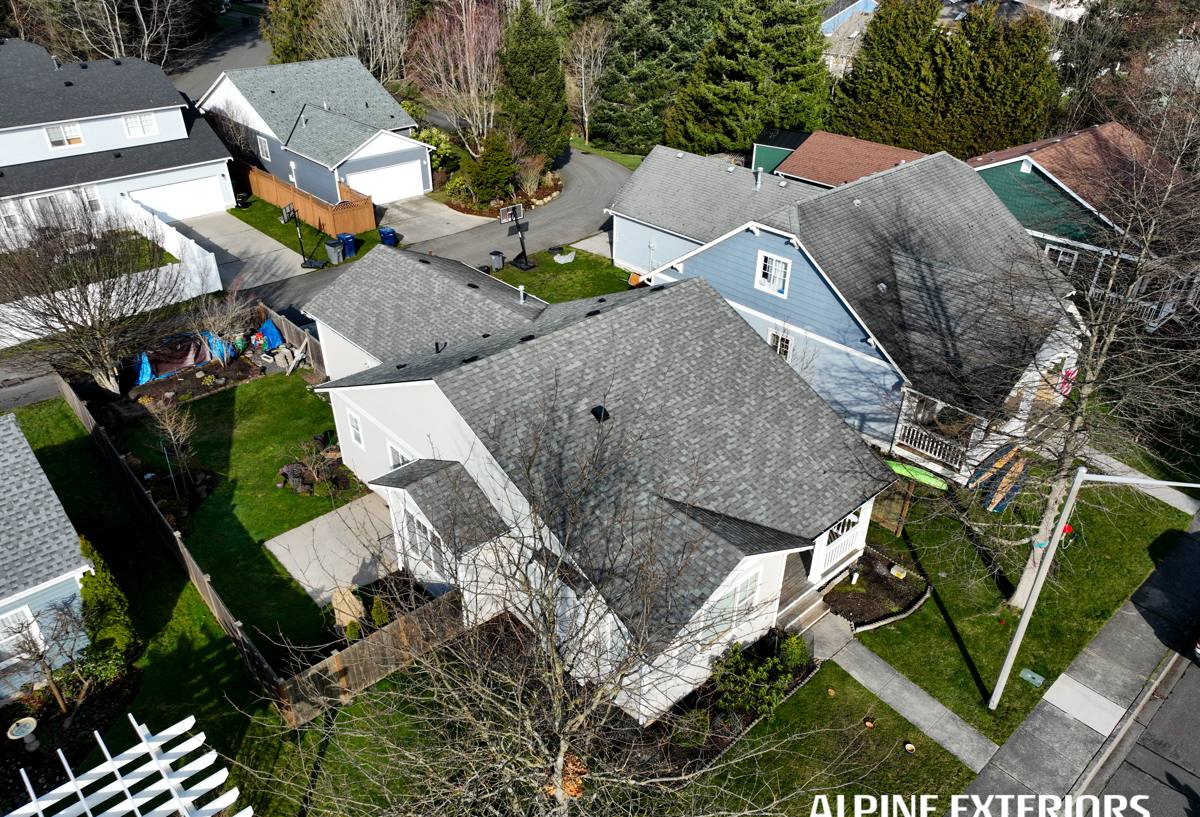
Why Roofs Here Take a Different Kind of Beating
Salt Air and Metal Fatigue
Any exposed metal on a roof — flashing, vent caps, fasteners, gutter hardware — is in a slow fight with salt air. Salt accelerates corrosion far faster than plain rain does, and once a fastener or a flashing seam starts to rust, it stops sealing the way it should. Small leaks around chimneys, skylights, and roof-to-wall transitions are almost always a flashing problem before they're a shingle problem, and on a coastal property that flashing has usually been working harder, and rusting faster, than the shingles around it.
Wind-Driven Rain and Underlayment Failure
Rain that falls straight down is a solved problem for almost any roof. Rain that comes in sideways off the water is a different challenge — it can work its way under shingle edges, up under ridge caps, and into laps that were never designed to handle that kind of pressure. When that happens repeatedly over years, the underlayment beneath the shingles is often what fails first, quietly, long before there's an obvious leak inside the house.
The Long Moss Season
Point Roberts gets enough shade, humidity, and mild temperatures for moss and algae to establish themselves on a roof and stay there for most of the year. Moss isn't just cosmetic. It holds moisture against the shingle surface, lifts shingle edges as it grows, and traps organic debris that keeps that moisture in place even longer. A roof that looks "mossy but fine" from the ground is very often a roof where moisture has already started working its way into the layers underneath.
Signs Your Roof Needs Repair — Not Just a Look
Most roof problems in this area show up as small, specific signs long before there's an active leak. Catching them early is the difference between a repair and a much bigger job.
- Moss or dark streaking concentrated along ridges, valleys, and north-facing slopes
- Granules collecting in gutters or at the base of downspouts
- Shingle edges that have started to curl, lift, or crack
- Rust staining or visible corrosion around flashing, vent boots, or exposed fasteners
- Soft or spongy spots when walking the roof, especially near valleys and penetrations
- Water stains on interior ceilings, especially after a windy storm rather than steady rain
- Sagging along the ridge line or between rafters, visible from the ground or attic
- Daylight visible through the roof deck from inside the attic
Any one of these on its own might be minor. Two or three together, especially near the same section of roof, usually means it's worth a closer look before the next stretch of wet weather.
What a Correct Repair Actually Involves
Diagnosing the Real Cause
The most common mistake in roof repair isn't bad workmanship — it's fixing the visible symptom instead of the actual source. A stain on a bedroom ceiling might trace back to a roof penetration ten feet away, following a rafter or sheathing seam before it ever shows up indoors. A correct repair starts with tracing water back to where it's actually entering, which sometimes means opening up more of the roof than the homeowner expected, and sometimes means the fix is smaller than feared.
Matching Materials and Techniques
Repairs need to match the existing roof, not just in shingle color but in how the layers go together. Mixing incompatible underlayment, using the wrong flashing profile, or fastening into rotted decking will all cause the repair to fail faster than the roof around it. On an older roof, that sometimes means sourcing a close match rather than an exact one, and being upfront with the homeowner about that trade-off.
Flashing, Underlayment, and the Details That Get Skipped
Given how much of the damage in this climate starts at flashing and underlayment rather than the shingles themselves, a repair that only replaces surface shingles without addressing the flashing and underlayment underneath is often just delaying the same failure. Chimney counter-flashing, valley metal, and step flashing along roof-to-wall intersections deserve the same attention as the shingles — they're usually the actual point of failure.
Repair or Replace? Weighing the Real Cost Factors
Not every roof problem calls for a full replacement, and not every leak can be permanently solved with a patch. The right call depends on a handful of concrete factors, not just the age of the roof.
| Factor | Favors Repair | Favors Full Replacement |
|---|---|---|
| Roof age | Under roughly two-thirds of expected shingle lifespan | Near or past the manufacturer's expected service life |
| Extent of damage | Localized — one slope, valley, or penetration | Widespread granule loss, curling, or moss across most slopes |
| Decking condition | Solid, dry sheathing under the affected area | Soft, delaminating, or rotted decking found during inspection |
| Leak history | First occurrence, clear single cause | Repeated leaks in different spots over recent years |
| Material availability | Reasonably close shingle match still available | Discontinued profile or color, mismatch would be obvious |
We'll walk through where your roof lands on each of these during the inspection, and give you a straight answer about which option actually makes sense — not the one that's more profitable for us.
Our Point Roberts Roof Repair Process
- Inspection. We walk the roof and the attic when accessible, tracing any interior stains back to their likely source rather than guessing from the outside.
- Straight assessment. You get a clear explanation of what's actually wrong, what caused it, and whether repair or replacement is the honest recommendation.
- Written estimate. A specific scope of work and price range, with no pressure to decide on the spot.
- Scheduling. We plan the work around weather windows and, for Point Roberts specifically, around the logistics of getting crew and materials to the peninsula.
- The repair. Flashing, underlayment, decking, and shingles are addressed as a system, not patched in isolation.
- Cleanup and check. Job site cleared of debris and old material, with a final look to confirm the fix holds under the next real storm.
Why a Crew That Already Works Point Roberts Matters
Point Roberts is a bit of a geographic oddity: it's part of Whatcom County and the state of Washington, but by land it's only reachable by driving through Canada, since it sits on a peninsula cut off from the rest of the U.S. mainland at the border. That's not a small detail for a roofing job. It affects how materials get delivered, how a crew plans its day, and how realistic a same-day emergency tarp actually is if the contractor isn't already set up to work here.
A crew that regularly works Point Roberts has already solved those logistics — border timing, material staging, and having the right supplies on hand instead of discovering a shortage mid-repair. Just as importantly, they've seen how specific properties on this peninsula actually weather: which exposures take the worst of the wind off the water, which shaded slopes hold moss the longest, and which flashing details tend to fail first on homes of a certain age in this specific location. That local pattern recognition is worth more than a generic roofing checklist.
Maintaining Your Roof Between Repairs
A repair lasts longer when it isn't fighting the same conditions that caused the original problem. A few habits make a real difference in this climate:
- Keep gutters and downspouts clear so water isn't backing up under the roof edge
- Have moss and algae growth treated before it spreads across a whole slope
- Trim back overhanging branches that keep roof sections shaded and damp
- Schedule a visual inspection after any unusually severe windstorm, not just once a year
- Address small flashing rust or minor granule loss before the next wet season, not after
Get an Honest Look at Your Roof
If you're seeing moss buildup, a stain on the ceiling, or you just haven't had your roof looked at in a few years, it's worth getting a straight answer before the next storm off the water finds the weak spot for you. We offer a free, no-pressure estimate for Point Roberts homeowners — use the form below to get started.