 Semiahmoo
 Roofing at Semiahmoo Resort: A Different Set of Problems Than Inland Whatcom County
Semiahmoo Resort sits out on the spit, with saltwater on both sides and open exposure to weather rolling in off the water. That position is part of what makes the neighborhood beautiful, and it's also exactly why roofs here wear differently than roofs a few miles inland in Blaine or elsewhere in Whatcom County. Salt-laden air, near-constant marine moisture, and a moss season that can stretch across most of the year all put extra demands on an asphalt shingle roof. A shingle roofing job that would hold up fine in a drier, more sheltered part of the county can underperform out here if it isn't built and installed with this specific exposure in mind.
We work in Semiahmoo Resort regularly, which matters more than it might sound. A crew that only occasionally sees waterfront, salt-exposed homes tends to default to standard practices. A crew that works this specific stretch of coastline knows which details actually matter here and which ones are just extra steps that don't pay off.
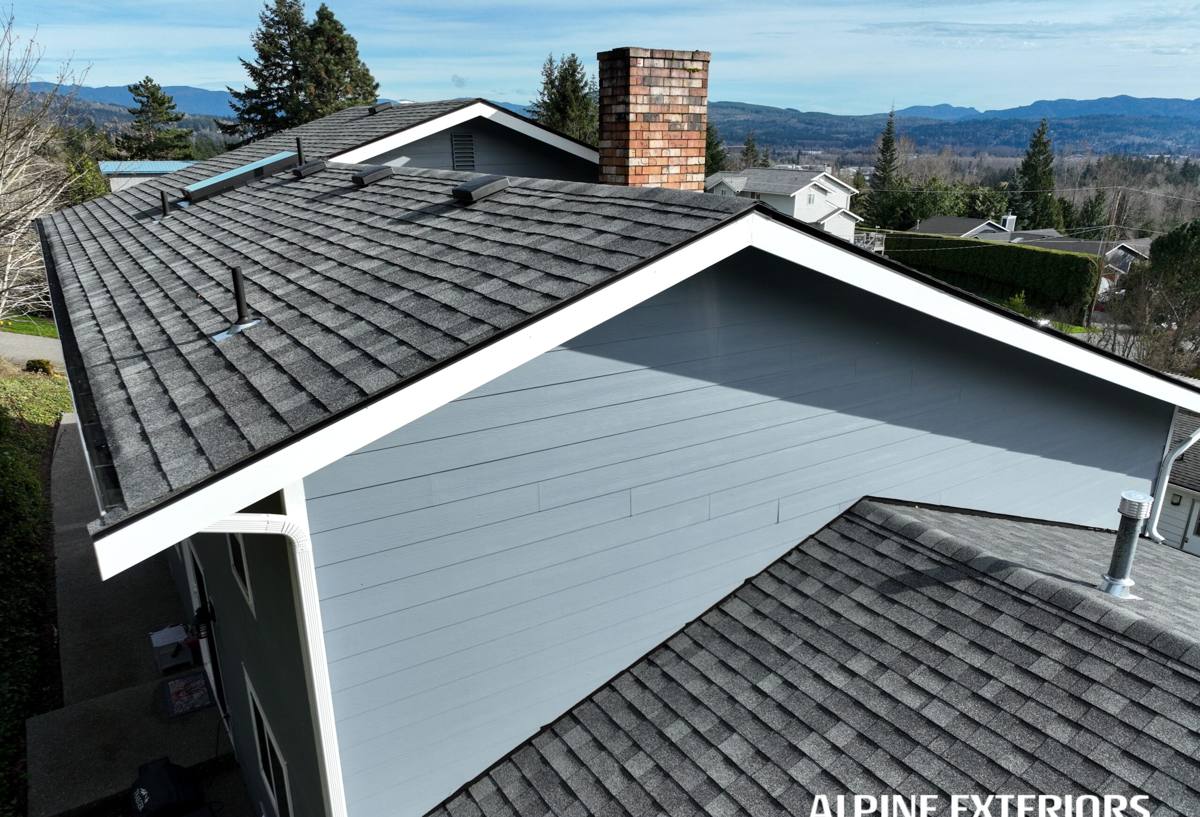
What Salt Air Actually Does to a Shingle Roof
Salt air is corrosive to metal, and a shingle roof has more metal in it than most homeowners realize — nails, flashing, drip edge, vent stacks, valley metal, and fasteners on ridge caps. In a standard inland install, mild steel components can last a long service life without issue. On a home exposed to Semiahmoo Bay and Drayton Harbor salt air, the same components can start showing corrosion years earlier, especially on the side of the roof facing the water.
Corroded fasteners lose their grip over time, which is how shingles start lifting or working loose in wind well before the shingles themselves are worn out. Corroded flashing is worse, because flashing failure is one of the most common causes of roof leaks — and it fails quietly, often showing no visible sign from the ground until water is already getting into the attic or wall cavity.
Why We Spec Different Hardware Out Here
For homes in this exposure, we lean toward corrosion-resistant fasteners and flashing — stainless steel or heavier-gauge galvanized with adequate coating, rather than the lightest-weight standard hardware. It costs a bit more up front. It also means we're not back out replacing rusted-through flashing in eight or nine years instead of twenty-five or thirty.
Driving Rain and the Underlayment Question
Semiahmoo's exposure means rain here isn't always falling straight down — wind off the water regularly drives it sideways and up under shingle edges, at eaves, and around any roof penetration. A roof that's "watertight" under still conditions can still leak under wind-driven rain if the underlayment and flashing details weren't built for that scenario.
This is where we spend more attention than a basic reroof requires:
- Ice-and-water shield style self-adhering membrane at eaves, valleys, and around all penetrations — not just where code minimums require it
- Properly lapped synthetic underlayment across the full deck, with laps run to shed water even under wind-driven conditions
- Extra attention to step flashing at any wall-to-roof intersection, since that's a common entry point for driven rain
- Sealed and properly flashed vent penetrations, checked individually rather than assumed fine because they're new
None of this is exotic. It's standard good roofing practice applied without shortcuts — but on an exposed, waterfront property, skipping any one of these is where leaks start.
Moss Season: Longer and Harder Here Than Most of the County
Whatcom County deals with moss on roofs generally, but the combination of shade, moisture, and mild temperatures around Semiahmoo Resort can extend moss growing conditions across most of the year rather than a shorter seasonal window. Moss doesn't just look bad — it holds moisture directly against the shingle surface, works its way under shingle tabs as it grows, and can lift edges enough to let wind and water underneath.
What Actually Slows Moss Down
The most effective long-term defense is a shingle with algae-resistant granules, which typically use copper or zinc compounds embedded in the granule coating to inhibit moss and algae growth over the life of the roof. This is a standard option from major shingle manufacturers now, not a specialty upgrade, and on a property like this we consider it close to essential rather than optional.
Beyond the shingle itself, moss control comes down to airflow and light exposure. Roofs that stay shaded and damp longer will always be more moss-prone regardless of shingle quality — proper ventilation, keeping overhanging branches trimmed back where practical, and periodic gentle cleaning (never pressure washing, which strips granules and shortens shingle life) all help extend the life of the roof between full replacements.
Ventilation: The Detail That Ties It All Together
Salt air, driving rain, and moss all connect back to one underlying issue: moisture management. A roof deck that stays damp — from poor attic ventilation trapping humid air, or from moss holding water against the shingles — ages faster no matter how good the shingles are. Proper intake ventilation at the eaves and exhaust ventilation at the ridge keeps air moving through the attic space, which helps the roof deck dry out between rain events and reduces the conditions moss needs to establish itself.
On older Semiahmoo Resort homes, we often find ventilation that was adequate when the home was built but doesn't meet what current shingle manufacturers recommend for warranty coverage. Correcting this during a reroof is one of the highest-value, lowest-visibility improvements we make.
What a Correct Asphalt Shingle Job Looks Like Here
A proper install for this location isn't fundamentally different in sequence from anywhere else — it's the attention to detail at each step that changes.
- Tear-off and deck inspection — removing old roofing down to the deck and checking for soft spots, rot, or prior water damage, especially in areas that have historically seen moss or standing moisture
- Deck repair — replacing any damaged sheathing before anything new goes down; skipping this is one of the most common shortcuts in the industry
- Underlayment — self-adhering membrane at vulnerable areas, synthetic underlayment across the field, installed for wind-driven rain conditions
- Flashing — corrosion-resistant metal at all valleys, walls, chimneys, and penetrations
- Shingle installation — algae-resistant shingles, installed to manufacturer nailing specifications (nail placement and count affect wind rating and warranty validity more than most homeowners realize)
- Ventilation check and correction — confirming intake and exhaust balance meets current standards
- Final inspection and cleanup — magnetic sweep for stray fasteners, site cleanup, and a walkthrough of the finished roof
Cost Factors for a Semiahmoo Resort Reroof
Every roof is priced on its own specifics, but the factors that move the number here are fairly consistent:
| Factor | Why It Matters Here |
|---|---|
| Roof size and pitch | Larger and steeper roofs take more material and labor time |
| Layers to remove | Tear-off of multiple existing layers adds disposal and labor cost |
| Deck condition | Rot or soft sheathing found at tear-off requires repair before shingles go on |
| Shingle grade | Algae-resistant, higher wind-rated shingles cost more than base-grade but perform better in this exposure |
| Flashing and fastener upgrade | Corrosion-resistant hardware costs more than standard-grade but avoids early failure near saltwater |
| Ventilation corrections | Adding or upgrading intake/exhaust vents on older homes adds labor but pays off in roof lifespan |
| Access and site conditions | Waterfront lots, landscaping, or limited staging area can affect labor time |
We give a written, itemized estimate before any work starts, so you can see exactly what you're paying for rather than a single lump number.
Signs a Semiahmoo Resort Roof Needs Attention
Because flashing and underlayment failures don't always show obvious exterior signs early on, it helps to know what to watch for:
- Moss buildup along the shaded side of the roof or in valleys
- Granules collecting in gutters or at downspout outlets
- Shingle edges that look lifted or curled, especially on the water-facing slope
- Rust staining below metal flashing or vent stacks
- Any staining on interior ceilings or attic sheathing after a wind-driven rain event
- Visible daylight or gaps around chimney or plumbing vent flashing
Catching these early usually means a repair. Ignoring them usually turns into a full reroof sooner than the shingles' rated lifespan would suggest.
Why a Local Semiahmoo Resort Crew Makes a Practical Difference
A roofing crew that regularly works this specific stretch of Whatcom County coastline isn't guessing about exposure — they've already seen how salt air, wind-driven rain, and extended moss seasons play out on roofs in this exact setting. That translates into practical decisions: which hardware grade to spec by default, where extra membrane actually earns its cost versus where it's unnecessary, and which ventilation corrections make sense for the home's age and layout. It also means faster response if an issue does come up, since we're not routing a first visit from across the county.
We're not going to tell you a shingle roof out here needs to be replaced when a repair will do, and we're not going to sell you upgrades that don't apply to your specific home. Our standard is to spec what the exposure actually requires, explain why, and let you make an informed decision.
Get a Free, No-Pressure Estimate
If you're dealing with moss, a suspected leak, or simply planning ahead for a roof nearing the end of its service life at Semiahmoo Resort, we're happy to take a look and give you a straight assessment. There's no obligation and no pressure — just an honest look at your roof's condition and what it would take to get it right. Use the form below to request a free estimate.