 Semiahmoo
 Building Decks for Semiahmoo Resort's Waterfront Conditions
Homes near Semiahmoo Resort sit in one of the more exposed corners of Whatcom County. The spit and shoreline catch salt-laden air off Semiahmoo Bay and Drayton Harbor almost year-round, and the same weather systems that bring the Pacific Northwest's long, wet winters hit this stretch with more wind-driven rain than you'd get a few miles inland. Add a shaded, moss-friendly climate for most of the year, and a deck here is working harder than a deck in a typical suburban yard. We build custom decks specifically with that combination in mind — not a generic deck plan with the address swapped out.
A deck that looks right the day it's finished but wasn't built for salt air, standing moisture, and moss pressure will show problems within a few seasons: corroding fasteners, soft spots at the ledger board, slick moss buildup on shaded boards, and finishes that fail early on the ocean-facing side. Everything below is how we account for that from the first conversation through the final walkthrough.
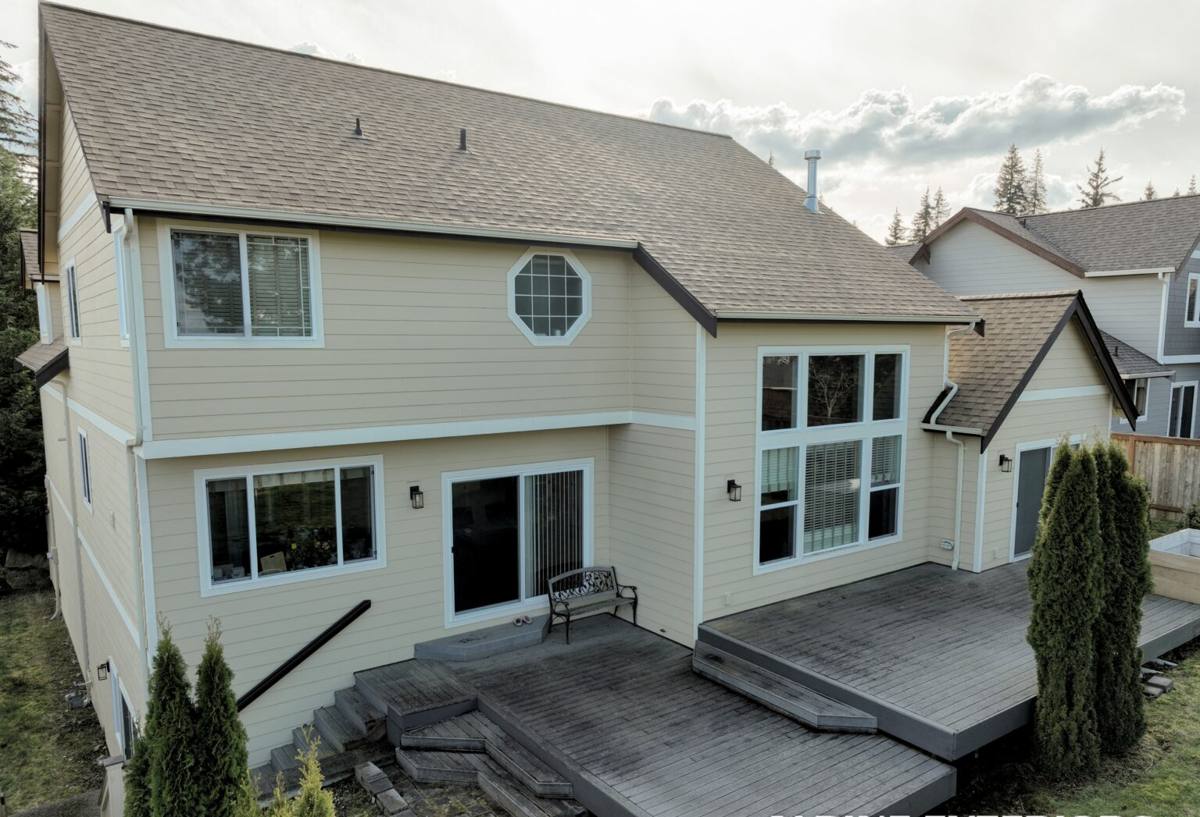
What Makes a Semiahmoo Resort Deck Different
Salt Air and Metal Fatigue
Airborne salt accelerates corrosion on anything metal — fasteners, joist hangers, railing hardware, even some fastener coatings that hold up fine 15 miles inland. On a deck built close to the water, standard galvanized hardware can start showing rust streaks and pitting well ahead of schedule. We spec stainless steel or marine-grade coated fasteners and connectors as a baseline on Semiahmoo builds, not an upsell.
Driving Rain and Wind-Loaded Water
Rain here doesn't just fall — wind off the bay pushes it sideways into ledger connections, railing posts, and any gap in flashing. That means water finds its way into places a calmer climate would never test. Flashing details at the house connection and post bases matter more here than in a lot of the county.
Moss, Shade, and Slow Drying
Long stretches of overcast, wet weather plus tree cover common around the resort's residential areas mean decking surfaces can stay damp for days at a time. That's exactly the environment moss and algae need to take hold, and it's also what makes board spacing and airflow underneath the deck a real structural decision, not just a cosmetic one.
Decking Material Choices for This Environment
There's no single "best" decking material for every yard — it depends on sun exposure, budget, and how much upkeep you actually want to do. Here's how the common options hold up specifically under salt air, driving rain, and moss pressure:
| Material | Salt Air Behavior | Moss/Moisture Resistance | Maintenance |
|---|---|---|---|
| Capped composite | Excellent — no metal-adjacent corrosion issue on the board itself, color-stable | Good; capped shell resists moisture absorption, but surface still needs periodic cleaning to prevent moss film | Low — occasional wash, no staining or sealing |
| Cedar (Western Red) | Naturally rot-resistant, but exposed fasteners near cedar need to be stainless to avoid staining and corrosion | Moderate; needs regular cleaning and reapplication of finish to resist moss in shaded areas | Higher — periodic sealing/staining, cleaning |
| PVC decking | Excellent — fully synthetic, unaffected by salt exposure | Good; nonporous surface sheds moisture well, still benefits from cleaning | Low — similar to composite |
| Pressure-treated lumber | Fair — treatment resists rot but hardware corrosion risk is higher without stainless fasteners | Fair; more porous, holds moisture longer, higher moss risk in shade | Highest — regular sealing, more frequent board replacement |
For homes with direct water views and heavier salt exposure, we lean toward capped composite or PVC for the deck surface itself, paired with cedar or a complementary material for railings and trim where the look matters most. For more sheltered lots further from the immediate shoreline, cedar remains a solid, attractive option as long as the hardware and finish schedule are handled correctly.
Framing and Substructure
The framing underneath a deck rarely gets looked at once the boards go down, which is exactly why it needs to be right the first time. We use pressure-treated or naturally durable framing lumber, stainless or heavy hot-dip galvanized structural connectors rated for coastal exposure, and joist tape or a comparable barrier at fastener penetration points to keep water out of the wood fiber where rot starts.
Ledger Boards, Flashing, and the House Connection
The single most common failure point on any deck — coastal or not — is where it attaches to the house. Get that detail wrong and no amount of good decking material fixes it. On Semiahmoo builds we pay particular attention to:
- Proper flashing that directs water away from the ledger board and house sheathing, sized for wind-driven rain, not just vertical rainfall
- A gap or drainage plane between the ledger and the house siding where the assembly calls for it, so trapped moisture has somewhere to go
- Corrosion-resistant lag bolts or through-bolts sized to the actual load, not undersized hardware that's technically "close enough"
- Sealant compatible with both the flashing material and the siding, applied at the right stage of the build — not painted over gaps after the fact
These aren't optional add-ons. They're the difference between a deck that's still solid in ten years and one that needs ledger repair in three or four.
Railings, Posts, and Wind Exposure
Decks with open water views tend to sit higher and catch more wind, which puts extra load on railing posts and their connections. We size post attachment hardware for actual wind exposure rather than the code minimum for a sheltered lot, and we use stainless fasteners at every railing connection point since this hardware is fully exposed to salt air with no decking or framing to shield it. Cable rail, glass panel, and traditional baluster systems are all viable here — the choice comes down to view priority and maintenance tolerance, and we'll walk through the real trade-offs of each rather than pushing whichever is easiest to install.
Our Process for a Semiahmoo Resort Deck
1. On-Site Assessment
We look at sun exposure, prevailing wind and rain direction, existing drainage patterns, and how close the site sits to direct salt exposure. That assessment drives the material and hardware spec — it's not a one-size-fits-all quote.
2. Design and Material Selection
We walk through decking, railing, and finish options honestly, including what each one costs to maintain over time, not just to install. If a lower-maintenance material makes more sense for your specific exposure than what you originally had in mind, we'll say so.
3. Build
Framing first, with attention to ledger flashing and structural connections since those get covered up. Decking and railing go on last, with fastener spacing and finish work done to hold up to the weather this location actually sees.
4. Walkthrough and Care Guidance
We show you what routine maintenance actually looks like for the material you chose, so the deck holds up the way it's supposed to instead of surprising you in year three.
Maintaining a Deck in This Climate
Whatever material you choose, a few habits go a long way in a salt air, high-rain, moss-prone environment:
- Sweep debris off the deck surface regularly, especially in shaded corners where moss gets a foothold first
- Rinse salt residue off hardware and railings a few times a year, particularly after storms with onshore wind
- Check for standing water after heavy rain — pooling anywhere on the deck usually points to a drainage or slope issue worth addressing early
- Inspect the ledger board connection and flashing annually; catching a small gap early is far cheaper than repairing rot later
- Reapply sealant or finish on wood decking on the schedule the product actually calls for, not "whenever it looks faded"
- Keep an eye on fastener heads for early rust or staining — it's the first sign hardware wasn't rated for this exposure
Why Hire a Crew That Already Works This Area
General contractors who mostly work inland projects sometimes spec the same hardware and materials they'd use anywhere else in Whatcom County, and it shows up as early corrosion or moss buildup within a few years near the water. Working around Semiahmoo Resort regularly means we're not guessing at what this specific stretch of coastline does to a deck over time — we've seen which fastener grades hold up, which decking finishes actually resist moss in the shaded lots common here, and where flashing details matter most given the wind and rain patterns off the bay. That local pattern recognition is worth more than a lower bid from a crew building to a generic spec.
Getting a Straight Answer on Cost
Deck pricing depends heavily on size, framing complexity, decking material, and railing system — a small composite deck on simple framing and a large view deck with cable rail and custom framing are not the same project. Rather than quote a number that doesn't mean anything without seeing the site, we'll walk your property, talk through material trade-offs for your specific exposure, and give you a real range based on what your deck actually needs.
If you're planning a new deck or replacing one that's showing its age near Semiahmoo Resort, we're happy to take a look and put together a free, no-pressure estimate — just fill out the form below.