 Semiahmoo
 Why Semiahmoo Resort Decks Wear Out Faster
Semiahmoo Resort sits right on the water, and that location is exactly why decks here age differently than decks fifteen miles inland. Salt-laden air off the bay works its way into fasteners, flashing, and any exposed end-grain, corroding hardware from the inside out long before the boards themselves look worn. Add in the wind that comes with an exposed waterfront position and the steady, driving rain that defines a Whatcom County winter, and you have a deck assembly under constant moisture pressure for most of the year.
Then there's moss. Western Washington's long wet season keeps shaded and north-facing deck surfaces damp for weeks at a stretch, and moss and algae take hold in that dampness. Beyond being slippery and unattractive, moss holds water against the decking surface and the framing below it, which accelerates rot in wood components and can trap moisture under composite boards that aren't properly ventilated. A deck built without this climate in mind can look fine on the surface while the structure underneath is already failing.
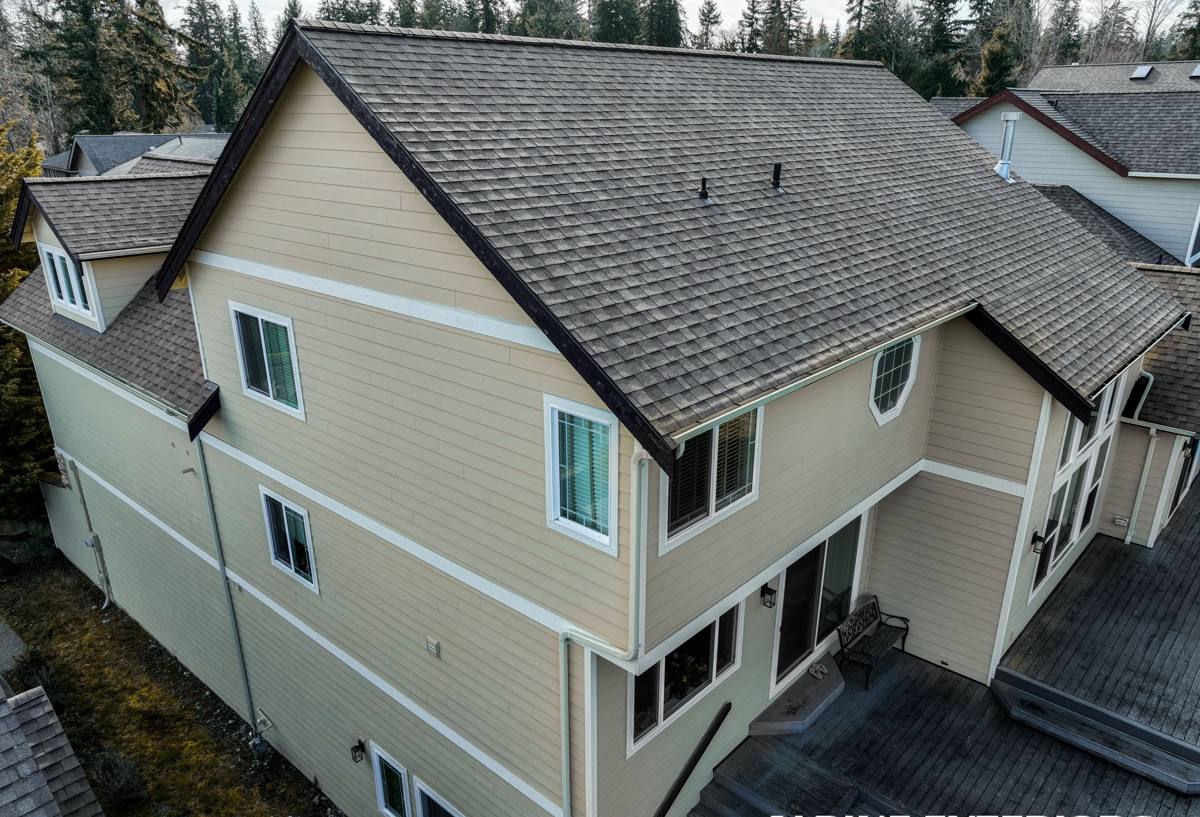
What a Correct Deck Replacement Involves
A deck replacement is not just pulling up old boards and screwing down new ones. Done right, it's a full re-evaluation of everything under the decking surface, because that's the part homeowners can't see and the part that actually determines how long the new deck lasts.
Framing and Ledger Flashing
The ledger board — where the deck attaches to the house — is the single most common failure point on coastal decks, and it's almost always a flashing problem rather than a decking problem. Water gets behind the ledger, the framing rots quietly for years, and nobody notices until the deck feels spongy or a board fails. On every replacement we do at Semiahmoo Resort, we treat ledger flashing, proper house wrap integration, and joist protection as non-negotiable, not an upsell. Joists get wrapped or taped, not just left as bare, exposed lumber that wicks moisture from every cut end.
Fasteners and Hardware for Salt Air
Standard galvanized fasteners have a shorter service life this close to salt water. We spec stainless steel or marine-grade coated fasteners and structural connectors for anything exposed to weather, along with hidden fastener systems where the decking product supports them, so there are fewer exposed metal points for corrosion to start. This matters more here than it would on a deck a few miles inland — it's one of the clearest ways a coastal build differs from an ordinary one.
Guardrails and Code Requirements
Any elevated deck needs a code-compliant guardrail system — correct height, baluster spacing, and secure post attachment back into the structural framing, not just into the decking boards. We build to current Washington state building code and pull the appropriate permit through Whatcom County, so the finished deck is safe and won't create problems if you sell the home later.
Decking Material Options for a Marine Climate
There's no single "best" decking material for every home — it depends on how much sun and shade the deck gets, how close it sits to the water, and how much maintenance you actually want to do. Here's how the common options compare for a Semiahmoo Resort setting specifically:
| Material | Salt/Moisture Behavior | Moss & Algae Resistance | Maintenance |
|---|---|---|---|
| Pressure-treated wood | Prone to fastener corrosion and cupping if not sealed regularly | Low — needs regular cleaning and sealing | High — annual cleaning/sealing recommended |
| Cedar | Naturally rot-resistant but still needs finish maintenance in this climate | Moderate — still requires cleaning | Moderate to high |
| Capped composite (e.g. TimberTech, Fiberon) | Very good — will not rot or absorb moisture into the core | Good — capped surface resists staining, still benefits from periodic washing | Low |
| PVC/cellular decking (e.g. Trex, AZEK) | Excellent — fully synthetic, unaffected by salt spray | Good — smooth surface sheds moss more easily than wood | Low |
For homes taking direct salt spray or heavy shade, we lean toward capped composite or PVC decking because it removes the moisture-absorption problem entirely — the board itself simply doesn't rot. For homeowners who want a natural wood look and are willing to keep up with sealing, cedar is a reasonable choice, but we're upfront that it's a higher-maintenance commitment in this environment. We don't push a single brand; we talk through what fits your budget, your deck's exposure, and how much upkeep you actually want to sign up for.
Our Deck Replacement Process
- On-site inspection. We check the existing framing, ledger connection, footings, and any signs of rot or corrosion before quoting anything — this tells us whether it's a decking-only job or a full structural rebuild.
- Written estimate. You get a clear scope: what's being replaced, what materials are proposed, and why, with no vague allowances.
- Permit and, where applicable, HOA paperwork. We handle the Whatcom County permit application and can provide the documentation your resort association's architectural review committee typically asks for.
- Demolition and structural repair. Old decking, and any rotten framing or footings, comes out and gets replaced before a single new board goes down.
- Waterproofing and flashing. Ledger flashing, joist protection, and any necessary house wrap integration are installed correctly the first time.
- Decking, railing, and stairs. Installed to manufacturer spec with corrosion-resistant fasteners throughout.
- Final walkthrough. We go over the finished deck with you, including basic maintenance guidance specific to the material you chose.
Permits, HOA Review, and Shoreline Considerations
Because Semiahmoo Resort is a planned waterfront community, most deck replacements here involve more than just a county permit. Many homes fall under a resort or homeowners association with its own architectural review process for exterior changes, including deck rebuilds, so we build extra time into the schedule for that approval step rather than treating it as an afterthought. Waterfront and near-shoreline properties in Whatcom County can also be subject to state shoreline management rules depending on the lot's exact location relative to the water — we don't assume every project qualifies or doesn't, we check it for your specific address before work starts. If your deck footprint is changing size or getting closer to a setback line, that's worth flagging early so it doesn't stall the project mid-build.
Cost Factors for a Semiahmoo Resort Deck Replacement
Every deck is different, but the same handful of factors drive most of the cost difference between projects here:
| Factor | Why It Matters Here |
|---|---|
| Framing condition | Salt air and moss accelerate hidden rot; more structural repair means more cost, but it's not optional |
| Decking material | Composite/PVC costs more upfront than wood but needs far less maintenance in this climate |
| Fastener and hardware spec | Marine-grade stainless adds cost but is the difference between a deck that lasts and one that corrodes early |
| Deck size and layout | Multiple levels, stairs, and built-in railings add labor and material |
| Permitting/HOA review | Waterfront and association requirements can add time, and occasionally scope, to a project |
Broadly, a straightforward deck replacement runs in the low-to-mid thousands, while larger, multi-level, or fully rebuilt structures with premium decking can run considerably higher. We won't know the real number for your home until we've actually looked at the framing.
Maintenance Checklist for a Salt-Air, Moss-Prone Climate
Whatever material you choose, a few habits will meaningfully extend the life of a Semiahmoo Resort deck:
- Rinse salt residue off decking and railings periodically, especially after storms with onshore wind
- Sweep or brush shaded and north-facing sections regularly to keep moss from taking hold
- Keep gutters and downspouts near the deck clear so water isn't dumping directly onto it
- Check fastener heads and railing connections annually for early signs of corrosion
- Reseal wood decking on the manufacturer's recommended schedule — don't wait until it looks gray
- Confirm deck drainage isn't pooling water against the house or ledger board
Why Hire a Crew That Already Works Semiahmoo Resort
A contractor who's worked in this community already knows the questions to ask before the crew shows up — what the HOA review process typically requires, how exposed a given lot is to wind and salt spray, and which decking products actually hold up here versus which ones just look good in a showroom. That local familiarity shortens the front end of a project and reduces the chance of a surprise mid-build. We'd rather walk your deck, tell you honestly what it needs, and give you a straight estimate than guess from a photo.
If your deck is showing its age — soft spots, rusted hardware, persistent moss, or just years of exposure to the bay air — we're happy to take a look and give you a free, no-pressure estimate. Use the form below to get started.