 Semiahmoo
 Siding Installation for Blaine Harbor: A Job That Has to Account for the Water
Blaine Harbor sits at the waterfront edge of Blaine, where Drayton Harbor opens toward Semiahmoo Bay, and homes along that stretch face a different set of conditions than houses set back even a few blocks inland. Wind has open water to build across before it hits a wall, salt hangs in the air on a near-daily basis, and moisture doesn't dry off the way it does on a sheltered inland lot. Siding installed here needs to be planned around those conditions from the first measurement, not treated the same way a standard Whatcom County job would be treated.
We install siding on Blaine Harbor properties regularly, and we install one product: James Hardie fiber cement. That's not a default we fell into — it's a standard we set after seeing, over and over on tear-offs in exposed waterfront settings like this one, which materials actually hold up and which ones start showing trouble within a handful of years. This page focuses specifically on siding installation for Blaine Harbor homes: what the climate demands of it, what a correct install actually involves, and why the crew doing the work matters as much as the material itself.
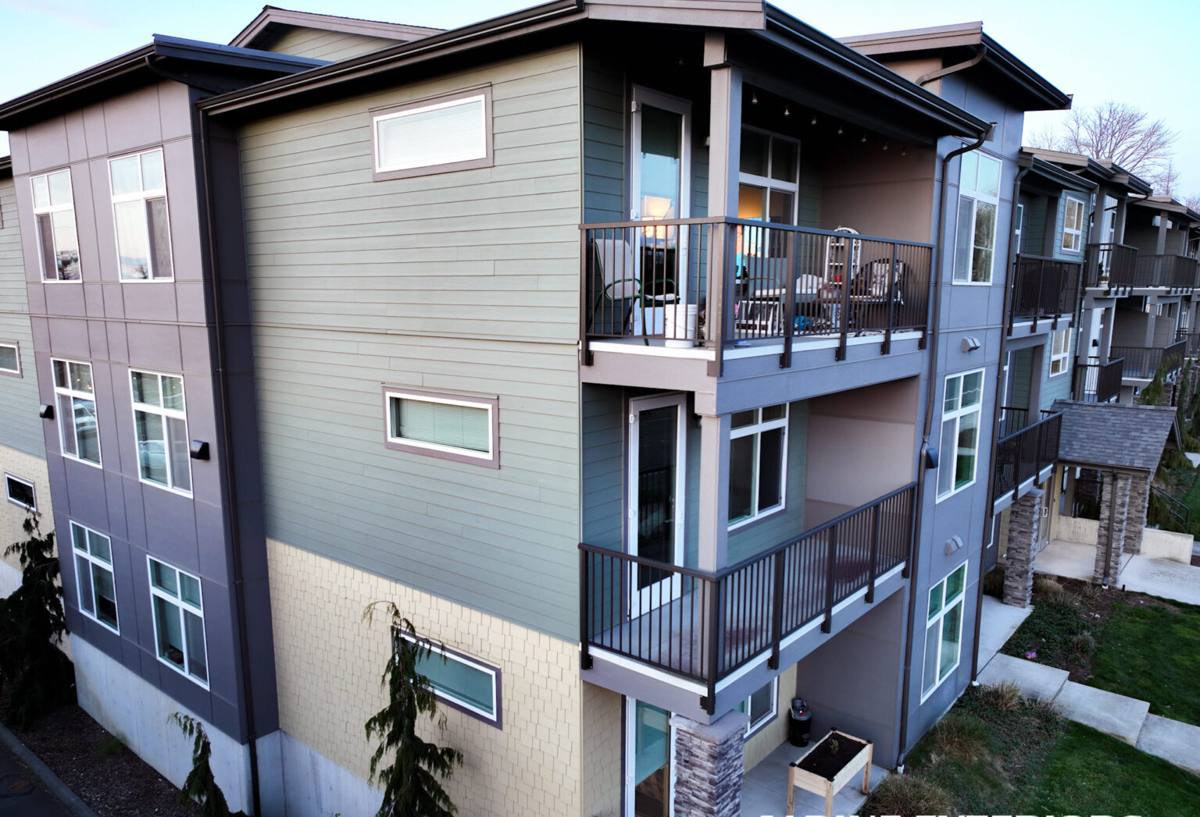
What Harborside Exposure Does to Siding
Salt Air, Almost Every Day
A home a block or two off the water in Blaine still gets salt exposure, but a home right at Blaine Harbor gets it constantly, from wind coming straight off the bay and harbor basin. Salt speeds up corrosion in fasteners and metal trim, and it degrades lower-grade paints and coatings faster than a drier inland site would ever see. On siding specifically, that means finish quality and fastener corrosion resistance aren't cosmetic details here — they're the difference between a wall system that looks the same in year fifteen and one that's already chalking, staining, or rusting at the nail heads by year five.
Wind-Driven Rain With No Break
Open water in front of a house means wind has nothing to slow it down before it reaches the siding, and it pushes rain sideways into joints, laps, and trim transitions instead of letting it run straight down and off. That sideways force finds weak points in an installation that would never get tested on a calmer, more sheltered lot. A siding job that looks fine going up can still fail within a few storm seasons if the laps, caulking, and drainage detailing weren't built for that kind of load.
A Moss and Mildew Season That Barely Breaks
Mild temperatures and near-constant humidity off the water keep moss and mildew active on Blaine Harbor exteriors most of the year, especially on north-facing walls and anywhere shaded by trees or neighboring structures. Siding with any surface porosity gives that growth something to hold onto. It's one more reason the material choice and the finish quality matter more here than they would in a drier part of the county.
What a Correct Siding Installation Involves
A siding job is judged on how it looks the day it's finished, but what actually determines whether it lasts happens underneath, in details a homeowner won't see again once the project wraps up.
Tear-Off and Substrate Check
Before new siding goes up, the old material comes off and the sheathing underneath gets inspected for any moisture damage that's already set in. Skipping this step and installing over compromised sheathing just buries a problem that will keep getting worse behind the new siding, which is a bad trade on any home but a worse one this close to the water.
Drainage Plane and Rain Screen Detailing
A small drainage gap between the siding and the wall sheathing lets any moisture that gets past the outer surface drain out and dry, instead of sitting trapped against the wall. On a harborside property taking wind-driven rain from an open exposure, that drainage plane is doing real work, not serving as an optional upgrade.
Fastener Choice and Spacing
James Hardie specifies fastener type and spacing for a reason, and in salt air that spec matters even more. Corrosion-resistant fasteners placed correctly hold the panel where it belongs for decades; the wrong fastener or loose spacing is one of the most common causes of early siding failure we find when we tear off someone else's earlier work.
Flashing and Joint Sealing
Every window, door, and trim transition is a place where water can get behind the siding if the flashing and sealing aren't done right. On an exposure like Blaine Harbor's, those transitions need to be built to shed wind-driven rain moving sideways, not just rain falling straight down, which is a meaningfully different standard.
Why We Install Only James Hardie Fiber Cement
We used to offer a broader range of siding products. We narrowed to one after watching how different materials actually performed on exposed, salt-air properties over years of service calls and tear-offs — not because of a supplier arrangement.
- Non-combustible core: fiber cement doesn't feed a fire the way wood-based siding can, which matters for safety and often for insurance underwriting.
- Factory-applied ColorPlus finish: baked on under controlled conditions rather than brushed on-site, so it resists fading, chalking, and moisture intrusion far longer in salt air.
- HZ5 formulation: Hardie's HZ5 line is engineered for regions with sustained moisture and freeze-thaw cycling, which fits coastal Whatcom County closely.
- Dimensional stability: fiber cement doesn't swell, cup, or warp the way engineered wood products can after repeated wetting.
- Strong transferable warranty: backed by one of the more substantial warranty structures in the industry when installed to spec.
We don't install LP SmartSide, vinyl siding, Cemplank, Allura, primed spruce, or cedar. Those products all have a legitimate place in the market, and plenty of homeowners are satisfied with them in more sheltered settings. On a harborside property, though, we've made a professional call to install one system we can fully stand behind rather than offer something cheaper that quietly passes maintenance risk on to the homeowner a few years down the road.
Comparing Siding Options for a Harborside Home
| Material | Behavior in Salt Air | Moisture Resistance | Typical Longevity Here |
|---|---|---|---|
| James Hardie fiber cement | Factory finish resists chalking and fade | Dimensionally stable, doesn't swell | 30+ years with correct installation |
| Vinyl siding | Can distort or warp under sun and heat cycling | Seams and fastener points are exposure risks | Shorter in high-wind, open-water settings |
| LP SmartSide / engineered wood | Cut edges and joints are moisture-sensitive | Depends heavily on caulking and edge sealing upkeep | Varies with installation quality and maintenance |
| Cedar / primed wood | Absorbs and releases moisture readily | Needs regular refinishing in wet, salty air | Shorter without consistent, ongoing upkeep |
Signs a Blaine Harbor Home's Siding Needs Attention
- Chalking, fading, or peeling finish, especially on the side of the house facing open water
- Soft spots or visible warping, particularly around window and door trim
- Rust streaks running down from fastener heads or metal trim
- Moss or mildew that keeps returning on shaded or north-facing walls no matter how often it's cleaned
- Gaps or separation at butt joints and corner trim that weren't there when the siding was new
- Interior wall staining near exterior walls after a windy storm off the water
Cost Factors for a Blaine Harbor Siding Installation
| Factor | Why It Matters |
|---|---|
| Home size and wall complexity | More square footage and more corners, dormers, or trim detail mean more material and labor |
| Tear-off vs. installing over existing siding | Tear-off allows a full sheathing inspection, which matters more on a property with direct water exposure |
| Substrate repair | Any moisture damage found once old siding comes off needs to be addressed before new siding goes on |
| Drainage and flashing detailing | A harborside exposure calls for more careful rain-screen and flashing work than a sheltered inland lot |
| Trim and color selection | Factory-finished ColorPlus trim and accent choices affect material cost but not labor complexity much |
These are the drivers, not a quote. Every Blaine Harbor property sits at a slightly different distance from the water and under different wind exposure, so we walk the house before putting a real number on the work. What looks like a straightforward re-side from the street can turn up sheathing damage once the old siding comes off, which is exactly why we're cautious about giving firm pricing without seeing the property first.
Our Installation Process, Start to Finish
We start with an on-site walk of the existing siding, paying close attention to how it's held up against wind and moisture from the water side of the house versus the more sheltered sides. From there we put together a clear, written scope covering tear-off, any substrate repair, drainage detailing, and the specific Hardie products and colors selected, before any work begins. During installation, fastener spacing, flashing integration, and joint sealing get done to Hardie's published spec as standard practice, not as an upsell. When the job wraps up, we walk the property with the homeowner to review the finished work before calling it done.
Why Hiring a Crew That Already Works Blaine Harbor Matters
A crew that regularly installs siding on this stretch of waterfront already knows how differently salt air and wind-driven rain behave here compared to a job a mile inland. That shows up in decisions a homeowner never sees directly — how much drainage detailing gets built in, which fastener grade gets specified, how joints get sealed against sideways-driven moisture — and those are exactly the decisions that determine whether a siding job holds up for one wet season or several decades on an exposed property like this. Experience with this specific kind of exposure isn't interchangeable with general siding experience; it's a different set of judgment calls learned by doing the work here repeatedly.
Before Hiring for a Blaine Harbor Siding Project
- Ask what siding material they install and why, and whether they back it with a written manufacturer warranty
- Confirm current Washington contractor licensing and active liability insurance
- Ask specifically how they detail drainage and flashing for open, wind-driven water exposure
- Ask about fastener corrosion resistance for salt-air conditions
- Get a written scope of work, including tear-off and any substrate repair terms, before signing anything
If you're considering new siding for a Blaine Harbor home, we're glad to walk the property with you and give an honest read on what it actually needs. Reach out below for a free, no-pressure estimate.