 Semiahmoo
 Why Point Roberts Puts Different Demands on Siding
Point Roberts sits on a peninsula exposed to open water on three sides, which means homes here take a steadier beating from the elements than siding just a few miles inland. Salt-laden air off the water works into seams and fastener heads over time. Driving rain off the Strait comes in sideways during winter storms, testing every lap, corner, and butt joint in a wall system. And the long, damp moss season that defines this part of Whatcom County keeps north- and west-facing walls wet for weeks at a stretch, which is exactly the kind of condition that finds every weakness in a siding installation.
None of this means Point Roberts homes need exotic materials. It means the installation has to be done correctly, with the right product, the right flashing details, and the right attention to drainage — because a marginal job that would hold up fine in a drier, more sheltered location will show problems here in a fraction of the time.
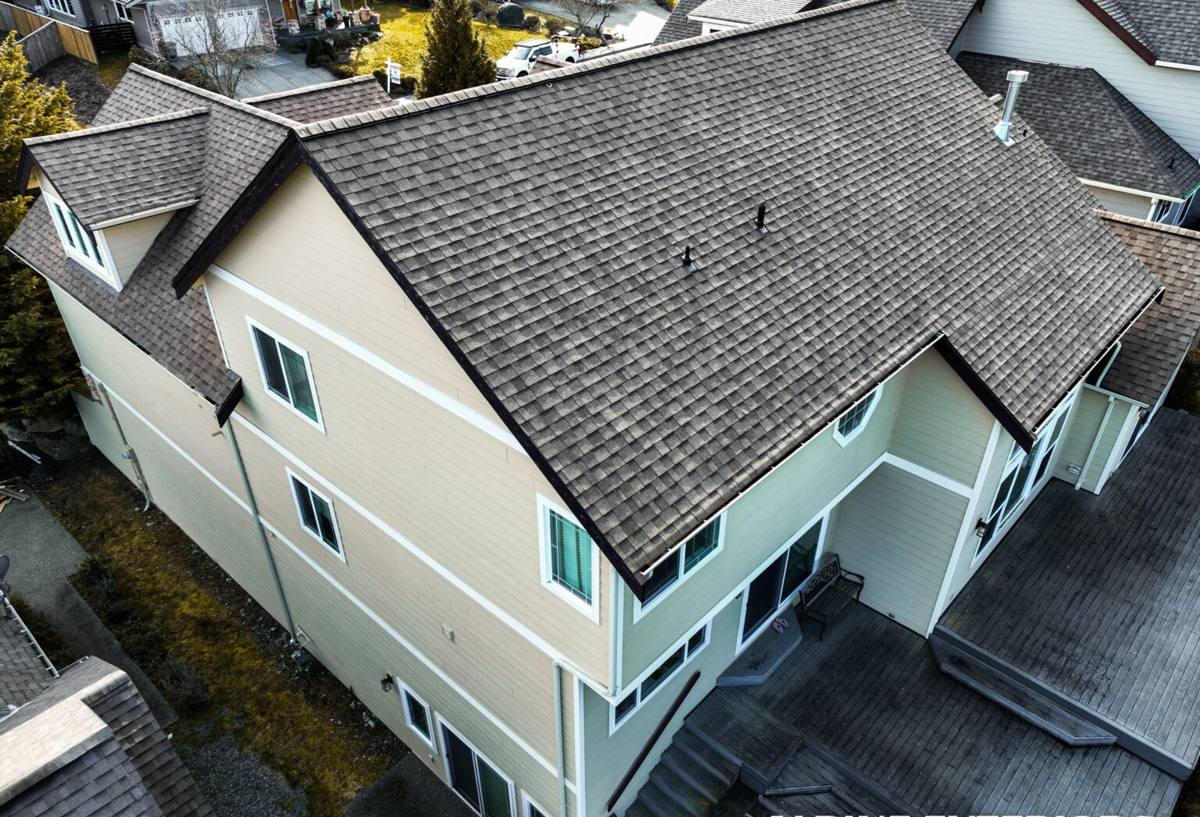
What Correct Siding Installation Actually Involves
Siding is a system, not just a surface. The visible boards get the attention, but most of what determines whether a siding job lasts is hidden underneath. A correct installation on a Point Roberts home includes:
- Sound sheathing: Any rotten or delaminated sheathing gets replaced before new siding goes on — covering over damaged sheathing just seals the problem in.
- A continuous weather-resistive barrier: House wrap or building paper installed shingle-style so water is always directed outward and down, never trapped behind the siding.
- Properly flashed penetrations: Every window, door, hose bib, light fixture, and vent needs flashing that sheds water down and away, not just caulk covering a gap.
- Correct fastening: Fiber cement has specific nailing patterns and fastener types. Under- or over-driven nails, or the wrong fastener material, are a leading cause of early siding failure in coastal climates.
- Clearance and drainage: Siding held off the foundation, decks, and roof lines by the manufacturer's minimum clearance, with kick-out flashing at roof-to-wall intersections so runoff doesn't dump behind the wall.
- Caulking only where it belongs: Sealant is a backup, not the primary defense. Sealing joints that should be able to drain traps moisture instead of shedding it.
Skip any one of these steps and the siding may look right for a few years before the underlying problem surfaces — usually as soft trim, staining, or paint failure that's expensive to diagnose because the cause is hidden behind the cladding.
Why This Matters More in a Coastal, High-Moisture Climate
In a drier region, a sloppy flashing detail might go unnoticed for a decade. On a Point Roberts wall that sees salt spray, near-constant humidity, and driving rain for months of the year, the same shortcut can show up as a problem within a few wet seasons. The margin for error is smaller here, which is exactly why installation quality matters more than the marketing on the siding box.
Why We Install Only James Hardie Fiber Cement
We standardized on James Hardie fiber cement siding and don't install vinyl, LP SmartSide, or other engineered wood products. That's a deliberate call, not a default. Fiber cement is non-combustible, doesn't absorb water the way wood-based products can, and holds paint and factory finish far longer under sun and salt exposure. James Hardie's ColorPlus factory finish is baked on and warranted separately from the substrate, which matters in a climate where UV and salt air chew through field-applied paint faster than most homeowners expect.
Hardie also builds region-specific product lines engineered for different climate zones — including HZ5 formulations suited to the Pacific Northwest's wet, moderate-temperature conditions. That climate engineering, combined with a strong transferable warranty, is why we put it on homes instead of the alternatives. If you're weighing siding materials generally, we're glad to walk through the trade-offs of what we don't install and why.
Our Installation Process
| Stage | What Happens |
|---|---|
| Assessment | On-site inspection of existing siding, sheathing, and trim condition; identify any rot, moisture damage, or flashing failures before quoting. |
| Removal & prep | Old siding stripped, sheathing repaired or replaced as needed, surfaces prepped for a clean weather barrier install. |
| Weather barrier | House wrap installed shingle-lapped, all seams taped, penetrations flashed before any siding goes up. |
| Siding installation | James Hardie boards or panels installed to manufacturer spec — fastening pattern, clearances, and joint treatment specific to the product line. |
| Trim & detail work | Corners, window and door trim, and roof-to-wall transitions finished with correct flashing and clearance. |
| Final walkthrough | Site cleanup and a walk-through so you can see the finished detailing before we call the job done. |
Product Line: Matching Hardie's System to This Exposure
James Hardie makes several siding profiles — lap siding, shingle-style panels, and vertical board-and-batten among them — all available in factory ColorPlus finishes or primed for field paint. For a property with heavy salt exposure and long wet stretches, we pay close attention to a few choices that matter more here than in a sheltered inland lot:
- Fastener material: Corrosion-resistant fasteners rated for coastal exposure, not standard interior-grade nails.
- Trim compatibility: Matching trim boards designed to move and weather the same way as the siding field, so you don't get mismatched expansion or premature trim failure.
- Finish selection: ColorPlus factory finish over field-applied paint wherever budget allows — it holds color and resists the chalking and fading that salt air and UV accelerate.
Moss, Algae, and Long-Term Maintenance
The moss and algae growth that's common on north- and shaded west-facing walls in this area isn't usually a sign the siding is failing — it's a surface condition that thrives wherever a wall stays damp and shaded for long stretches. Fiber cement resists the kind of moisture absorption that lets moss root into the material itself, unlike some wood-based sidings. Still, a few habits keep a Point Roberts home's siding looking right longer:
- Keep gutters clear so overflow isn't running down the wall face.
- Trim back vegetation and tree cover that keeps a wall in constant shade and dampness.
- Rinse visible moss or algae growth with a garden hose and soft brush rather than a pressure washer, which can force water behind laps and trim.
- Have caulking and trim joints checked every few years — sealant is the first thing to wear out, well before the siding itself.
What a Point Roberts Siding Project Typically Costs
| Factor | Why It Moves the Price |
|---|---|
| Sheathing condition | Rot or moisture damage found during removal adds repair scope before new siding can go on. |
| Home size and complexity | More corners, dormers, and trim detail mean more labor and material cuts. |
| Siding profile | Lap siding, shingle-style panels, and board-and-batten carry different material and install costs. |
| Finish choice | Factory ColorPlus finish costs more up front than primed siding but avoids a future paint job. |
| Access and logistics | Material delivery and site access can add cost on a peninsula property with limited staging space. |
We give firm numbers only after an on-site look at your specific walls — anything else is a guess, and guesses aren't useful when you're budgeting a real project.
Why a Crew That Already Works Point Roberts Matters
Point Roberts is geographically separated from the rest of Whatcom County — reaching it means crossing an international border, which shapes how material deliveries, crew scheduling, and permitting logistics have to be planned. A contractor who hasn't worked out those logistics before will pass that learning curve on to your project in the form of delays or scheduling surprises. A crew that's already done siding work out here knows how to plan material staging and timing so the job runs on the schedule you were quoted, not around avoidable friction.
Local familiarity also means knowing what actually happens to siding in this specific microclimate over years, not just in a manufacturer's brochure — which flashing details tend to get missed on older homes, which wall orientations need extra attention to moss and moisture, and which installation shortcuts show up as callbacks two winters later.
Signs Your Current Siding Needs Attention
- Soft or spongy spots when you press on the siding, especially near the bottom courses or below windows
- Persistent staining or streaking that reappears after cleaning
- Visible gaps, warping, or buckling in boards or panels
- Paint that's peeling or bubbling rather than just fading
- Moss or algae that keeps returning heavily in the same spots year after year
- Cracked or missing caulking at trim joints and corners
Any one of these on its own isn't necessarily urgent, but a few showing up together on the same wall usually means water is getting past the surface, and it's worth having someone look before it turns into sheathing repair.
If you're weighing a siding replacement in Point Roberts, we're happy to take a look, walk the exterior with you, and give you a straight, no-pressure estimate — including an honest read on whether it's a full replacement or a smaller repair. There's a form below to get started.