 Semiahmoo
 Why Siding Repair in Lynden Is Different From a Generic Patch Job
Lynden sits inland from the coast, but it still gets the full weather package that makes Whatcom County siding age faster than siding in drier parts of Washington: long stretches of driving rain off the Pacific, humid air that lingers in the low valleys, and a moss season that can run from early fall through late spring. Add in the salt-laden air that moves inland from the Semiahmoo area and the Strait of Georgia on a west wind, and you have a combination that finds every weak point in a home's exterior. Small gaps that would be cosmetic issues in a dry climate become entry points for moisture in this one.
Siding repair here isn't just about making a wall look right again. It's about restoring the barrier that keeps water out of the wall assembly before that water has a chance to do real damage — rot in the sheathing, mold behind the surface, or a paint and caulk failure that keeps coming back no matter how many times it's touched up.
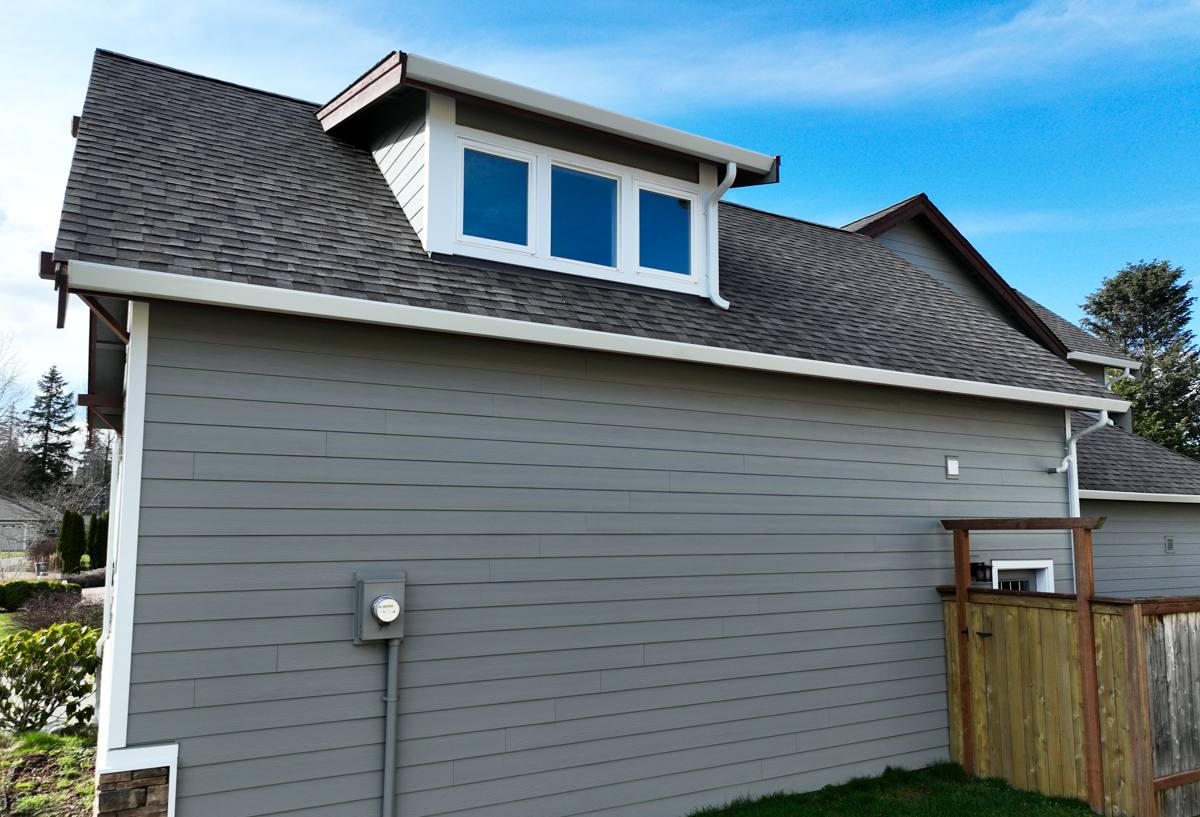
Signs Your Siding Needs Repair, Not Just a Repaint
What homeowners usually notice first
Most calls we get start with something visible: a cracked or buckled board, a stain that keeps bleeding through fresh paint, or a soft spot near a downspout or window sill. Those are real problems, but they're often just the part you can see. The moisture that caused them has usually been working on the wall for longer than the visible damage suggests.
Checklist: signs it's time to have siding looked at
- Boards that are soft, spongy, or flex when you press on them
- Paint that blisters, peels, or fails again within a year or two of repainting
- Dark streaking or green-black growth that returns quickly after cleaning
- Visible gaps, cracks, or separation at seams, corners, and trim joints
- Warping or bowing, especially on north- and west-facing walls
- A musty smell in an adjoining interior room, or warm-to-the-touch drywall
- Caulk that's cracked, shrunk, or missing at butt joints and penetrations
Any one of these on its own might be minor. Two or three together, especially on the sides of the house that take the worst weather, usually mean there's moisture intrusion behind the surface that needs to be traced back to its source.
What a Correct Siding Repair Actually Involves
Finding the cause before touching the siding
Replacing a damaged board without figuring out why it failed just buys a few more years before the same spot fails again. A proper repair starts with pulling back enough of the surrounding material to check the water-resistive barrier, the flashing at windows and penetrations, and the condition of the sheathing underneath. If the underlying moisture path isn't fixed, the new board is just a countdown to the next repair call.
Matching the material, not just the color
This is where a lot of repairs go wrong. Fiber cement, vinyl, and wood all move, weather, and age differently, so patching one material with a mismatched product — even if the color looks close on day one — creates a seam that ages unevenly and often traps moisture at the joint. On a home already sided in James Hardie fiber cement, a correct repair uses matching Hardie boards and, where the finish is ColorPlus factory-applied, color-matched product so the repair doesn't stand out or weather at a different rate than the rest of the wall.
Sealing, flashing, and the details that actually stop water
The visible board is the least important part of a good repair. What matters more is the flashing above windows and trim, the house wrap or building paper behind the siding, the gap left at the bottom of each course for drainage, and the caulk joints at penetrations. We rebuild those details to current best practice every time we open up a wall section, not just slot in a new board and caulk around the edges.
Repair vs. Replacement: How We Actually Decide
Not every damaged section needs a full re-side, and not every home is a good candidate for a patch repair. The honest answer depends on how much of the wall is affected, how old the existing siding is, and what's happening underneath it.
| Situation | Repair usually makes sense | Replacement usually makes sense |
|---|---|---|
| Extent of damage | Isolated boards or a single wall section | Damage spread across multiple walls or elevations |
| Cause of failure | One-time event (impact, isolated flashing failure) | Systemic issue — original install error, wrong product for the climate |
| Age of siding | Siding is well within its expected service life | Siding is near or past the end of its practical lifespan |
| Sheathing condition | Sheathing underneath is sound once opened up | Rot or moisture damage found in multiple areas of sheathing |
| Material on the house | Matching material is still available and appropriate | Existing material (old vinyl, deteriorated wood) can't be matched or isn't worth matching |
We'll tell you straight which category your home falls into. A lot of contractors default to recommending a full re-side because it's a bigger job — we'd rather do an honest repair when that's genuinely the right call, and earn the bigger project when your home actually needs one.
Why We Repair and Install Only James Hardie Fiber Cement
We don't install or patch with vinyl, LP SmartSide, primed spruce, or cedar, even though all of those products have their place. In a climate like this one — heavy rain, salt-tinged air, and long moss seasons — the trade-offs of those materials show up faster than they would somewhere drier. Vinyl expands and contracts with temperature swings and can crack or warp with age and impact. Engineered wood products like LP SmartSide depend heavily on unbroken paint and caulk lines to keep moisture out of the wood-based core, which is a hard standard to maintain year after year in this weather. Cedar and primed spruce look great new but need ongoing maintenance to fight rot and moss growth, and that maintenance schedule only gets less forgiving the closer you are to the coast.
James Hardie fiber cement is non-combustible, doesn't support rot the way wood-based products can, and holds its factory-applied ColorPlus finish far longer than field-applied paint on other materials. Hardie also engineers specific product lines for different climate zones, and the HZ5 line used in this part of Washington is built for exactly the freeze-thaw and moisture exposure Whatcom County sees. When we repair a Hardie-sided home, we're working with a product designed for this weather in the first place — which is a big part of why the repairs hold up.
Our Siding Repair Process
1. Inspection and diagnosis
We look at more than the obvious damage — trim, flashing, caulk lines, and the general drainage path of water off the wall. We'll tell you what we find, including anything that isn't urgent yet but is worth watching.
2. A clear scope and honest recommendation
You get a plain explanation of what needs to happen, why, and whether that means a targeted repair or something larger. No pressure toward a bigger job than the house actually needs.
3. The repair itself
Damaged material comes out, the sheathing and barrier underneath get inspected and corrected if needed, flashing and drainage details are rebuilt properly, and new matching Hardie board goes in with correct fastening and joint treatment.
4. Final check
We walk the repaired area with you before we call the job done, and make sure the finished work blends with the rest of the wall rather than standing out as an obvious patch.
Why Hiring a Crew That Already Works in This Area Matters
Siding repair done by someone unfamiliar with this specific climate tends to miss the same things: not enough drainage gap left at the bottom of courses, caulk used in places where a proper flashing detail was needed instead, or a repair material that isn't rated for the moisture and salt exposure this area actually gets. A crew that regularly works Lynden and the surrounding Whatcom County communities has already seen what fails here and why, which means fewer repairs that need a repeat visit in a year or two.
Local experience also means we know what moss season does to a wall over a full year, not just what a house looks like on the day of the estimate. That matters when we're deciding how aggressively to address drainage and airflow behind the siding versus just fixing what's visibly broken.
What Affects the Cost of a Siding Repair
Every repair is priced on its own scope, but the same handful of factors drive most of the cost difference between a simple job and a more involved one.
- Extent of hidden damage — what we find once the wall is opened up often matters more than what's visible from the outside
- Sheathing and framing condition — rot repair adds cost beyond the siding itself
- Height and access — second-story and steep-roof areas take more time and equipment
- Color and product matching — matching an existing ColorPlus finish or discontinued profile can add lead time
- Number of separate repair areas — several small spots across a home can add up to more labor than one larger contiguous section
- Trim and flashing work required — repairs that involve window or roofline flashing take longer than a straightforward board swap
We won't know the real scope until we've had a look, but we'll always explain what's driving the price before any work starts.
Get an Honest Look at Your Siding
If you're seeing damage, staining, or moss buildup on your Lynden home's siding, it's worth having someone who knows this climate take a look before a small problem turns into a bigger one. We'll give you a straight assessment of what's going on, whether it calls for a repair or something more, and a free, no-pressure estimate using the form below.