 Semiahmoo
 Building a Deck That Actually Holds Up in Sumas
A deck in Sumas doesn't fail the way a deck fails in a dry climate. It doesn't crack from sun exposure or dry out and split. Out here, the enemy is moisture — day after day of it, for months at a time. Whatcom County sits in a wet, marine-influenced weather pattern: driving rain off the Pacific systems, heavy fog and dew in the low river valleys, and a moss season that can run from October clear through April. Add in freeze-thaw cycles most winters, and you've got a structure that's constantly expanding, contracting, absorbing, and drying out again. A deck built without that cycle in mind will show it within a few years — soft spots, blackened boards, rust streaks, loose railings.
We build and repair decks throughout the region, from homes closer to the salt air near Semiahmoo Bay to the inland properties around Sumas where fog settles into the flats overnight. The core problems are the same everywhere in this county: water finds a way in, and moss and mildew take hold anywhere water sits. The details that keep a deck dry and solid are what separate a deck that lasts fifteen years from one that lasts thirty-five.
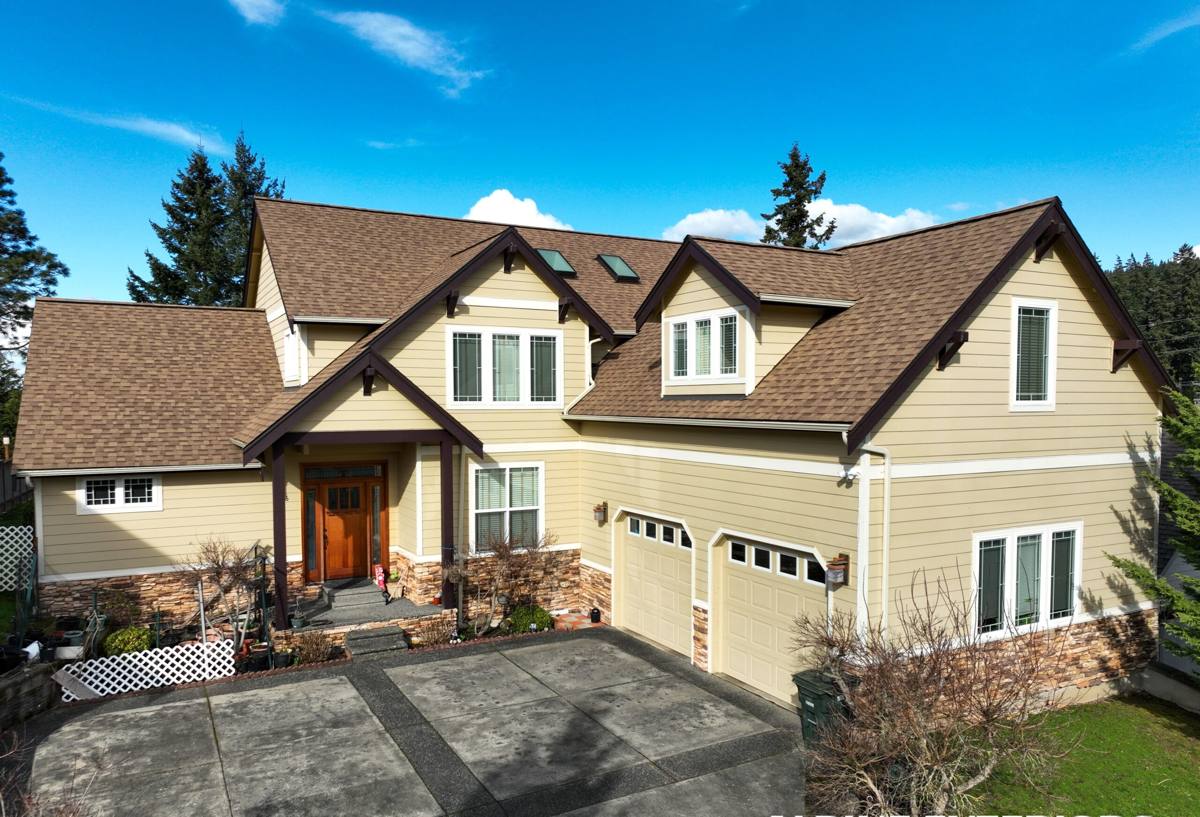
What Sumas Homes Need From a Deck
Most of the decks we see fail for one of three reasons: the ledger board wasn't flashed correctly and water got behind the siding, the framing used the wrong fasteners and they corroded, or the decking itself was chosen without thinking about drainage and moss growth. None of these are exotic problems. They're basic build-quality issues that show up faster here than they would in a drier climate.
The Big Three for This Climate
- Drainage first, always. Every deck we build is designed so water sheds off the surface and away from the structure — proper board spacing, correct slope on ledger connections, and no flat spots where puddles can sit and breed moss or algae.
- Corrosion-resistant hardware. In a wet climate, the wrong screw or joist hanger rusts from the inside out long before the wood itself fails. We use fasteners and connectors rated for ground-contact and coastal-grade exposure, not standard interior-grade hardware.
- Moisture management at every connection point. Ledger boards, post bases, and stair stringers are where decks rot first because they trap water against the house or the ground. Flashing tape, proper standoffs, and ventilation gaps matter more here than in almost any other region.
Framing and Foundation: Getting the Bones Right
The part of a deck nobody sees is the part that determines whether it's still standing in twenty years. Footings need to be set below frost depth and sized for the soil conditions on your lot — river-valley properties around Sumas can have softer, wetter soil than higher ground, and that changes what the footing needs to carry the load properly. We check this on-site rather than assuming a standard footing spec will work everywhere in the county.
Ledger Attachment: The Most Common Failure Point
If a deck is going to rot, it usually starts at the ledger board — the piece that attaches the deck to the house. Without proper flashing, rain runs down the siding, gets trapped behind the ledger, and rots both the ledger and the rim joist behind it, sometimes for years before it's visible from the outside. We flash every ledger connection with self-adhering waterproof membrane and maintain a drainage gap so water has somewhere to go besides into your framing.
Joist and Beam Spacing
Manufacturers publish span tables for a reason — pushing joist spacing past what a decking product is rated for leads to bounce, sag, and premature wear at the fasteners. We follow manufacturer span specs for whatever decking material you choose, not a generic "standard spacing" that may not match the product on top of it.
Choosing Decking Material for This Climate
There's no single "best" decking material — there's a best material for your budget, your maintenance appetite, and how much moss and moisture exposure your particular lot gets. Here's how the common options actually perform in a wet Pacific Northwest climate like ours:
| Material | Moisture & Moss Behavior | Maintenance | Typical Lifespan |
|---|---|---|---|
| Pressure-treated wood | Absorbs water readily; moss and algae take hold quickly without regular cleaning and sealing | Annual cleaning, re-staining every 2–3 years | 10–15 years |
| Cedar | Naturally rot-resistant but still needs sealing; greys and can host moss if left untreated | Sealing every 1–2 years, regular cleaning | 15–20 years |
| Capped composite | Doesn't absorb moisture into the core; surface can still host surface algae/moss film if never cleaned | Occasional wash, no staining or sealing | 25–30+ years |
| PVC decking | Fully moisture-resistant core; best resistance to moss staining and rot of the common options | Occasional wash | 30+ years |
We don't push one product on every homeowner. A tight budget and a covered deck with less rain exposure might make treated wood or cedar the right call. A deck that sits low, gets heavy runoff, or that you want to genuinely forget about for a decade points toward composite or PVC. We'll walk your specific site with you and give you the honest trade-offs rather than a one-size answer.
Fighting Moss and Mildew From the Design Stage
Moss doesn't grow because a material is bad — it grows because moisture sits somewhere long enough to let it take hold. That's a design and maintenance problem more than a material problem, and it's the single biggest complaint we hear from deck owners in this county.
- Board gaps sized correctly so water drains through rather than pooling on the surface
- Under-deck drainage systems where usable space below the deck matters (patios, storage, walkways)
- Joist tape over every joist top to keep water from wicking into the frame from standing puddles
- Deck orientation and any nearby tree cover considered during design — shaded, damp corners are where moss establishes first
- A yearly cleaning routine that actually gets followed, not just recommended
We'll talk through a simple seasonal cleaning plan when we hand off a finished deck. It's a ten-minute job a couple times a year, and it's the difference between a deck that stays looking new and one that turns green by its third winter.
Railings and Hardware Deserve the Same Attention
Railings and stairs take a beating from freeze-thaw and constant handling, and they're also where code compliance matters most for safety — height, baluster spacing, and load capacity all have to meet current building code, not just look right. We use corrosion-resistant fasteners and hidden hardware rated for the same exposure as the decking itself, so you don't end up with rust streaks bleeding down a clean composite board a year after installation — a common sight on decks where interior-grade screws were used to save a few dollars.
Our Process for a Sumas Deck Project
- On-site assessment. We walk your property, check soil and drainage conditions, and talk through how you'll actually use the deck.
- Design and material selection. We lay out size, layout, and material options with real cost and maintenance trade-offs — no upsell pressure.
- Permitting. Most decks above a certain height or attached to the house require a permit through the local jurisdiction. We handle that process rather than leaving it to you.
- Framing and inspection. Footings, framing, and ledger flashing get built and, where required, inspected before decking goes down.
- Decking, railing, and finish work. Final surface, railings, stairs, and hardware installed to spec.
- Walkthrough. We go over the finished deck with you, including care and cleaning guidance specific to the material you chose.
Permits and Local Considerations
Deck projects in Whatcom County jurisdictions typically require a permit once you're above a certain height off grade or attaching structurally to the house, and setback rules can affect how close a deck can sit to a property line. Requirements vary by exact location and lot, so we confirm what applies to your specific address rather than assuming — this is part of what we handle for you as part of the build, not an extra step you're left to figure out.
What to Check Before You Hire Anyone for This Kind of Work
- Do they pull permits themselves, or leave that step to you?
- Do they specify corrosion-resistant, ground-contact-rated hardware in writing, or just "standard" fasteners?
- Do they flash ledger connections with a waterproof membrane, or just bolt the ledger to the siding?
- Can they explain the drainage plan for your specific lot, not just a generic answer?
- Do they carry current liability insurance and offer a written warranty on workmanship?
- Have they actually built decks in this climate, or mostly worked drier regions?
Why Local Experience in Sumas Matters
A crew that only occasionally works this part of Whatcom County will build to a generic spec — the kind of deck that holds up fine somewhere dry but starts showing rot and moss within a few seasons here. A crew that works this region regularly already knows which fastener grades hold up, which materials fight moss without babysitting, and how the local permitting process actually runs. That familiarity isn't a luxury — it's what keeps a deck from becoming a five-year problem instead of a thirty-year asset.
We'd rather build it right the first time, with materials and details matched to what this climate actually does to a structure, than build something fast and cheap that you're calling us back about in three years. If you're planning a new deck or replacing one that's showing its age, we're happy to come take a look at your property and give you a straight assessment — no pressure, no hard sell. Fill out the form below and we'll set up a free estimate.