 Semiahmoo
 Why Decks in Sumas Wear Out Faster Than Homeowners Expect
Whatcom County weather is hard on wood and hardware in ways that aren't always obvious from the surface. Sumas sits inland from the coast, but the same marine weather systems that soak the rest of the county still move through — driving rain in fall and winter, long stretches of overcast damp, and a moss season that can run six months or longer on any surface that doesn't get direct sun and airflow. A deck doesn't fail because of one storm. It fails from years of moisture getting into joints, fasteners, and end grain that never fully dry out between rain events.
Moisture Cycling and Moss
Moss and algae aren't just a cosmetic problem. They hold water against the decking surface and framing long after a storm has passed, which is exactly the condition that leads to rot, delamination in composite boards, and corrosion on fasteners and hardware that weren't rated for ground contact or persistent moisture. A deck that looks fine from a few feet away can have soft, compromised framing underneath if moss and debris have been sitting on it for years.
Freeze-Thaw and Structural Movement
Sumas gets colder snaps than the immediate coastline, and the freeze-thaw cycle that follows a cold night and a wet day works joints and fasteners loose over time. Combined with years of moisture exposure, this is usually what turns a "deck that needs some boards replaced" into a deck that needs full replacement — the framing has moved and softened enough that patching isn't a real fix anymore.
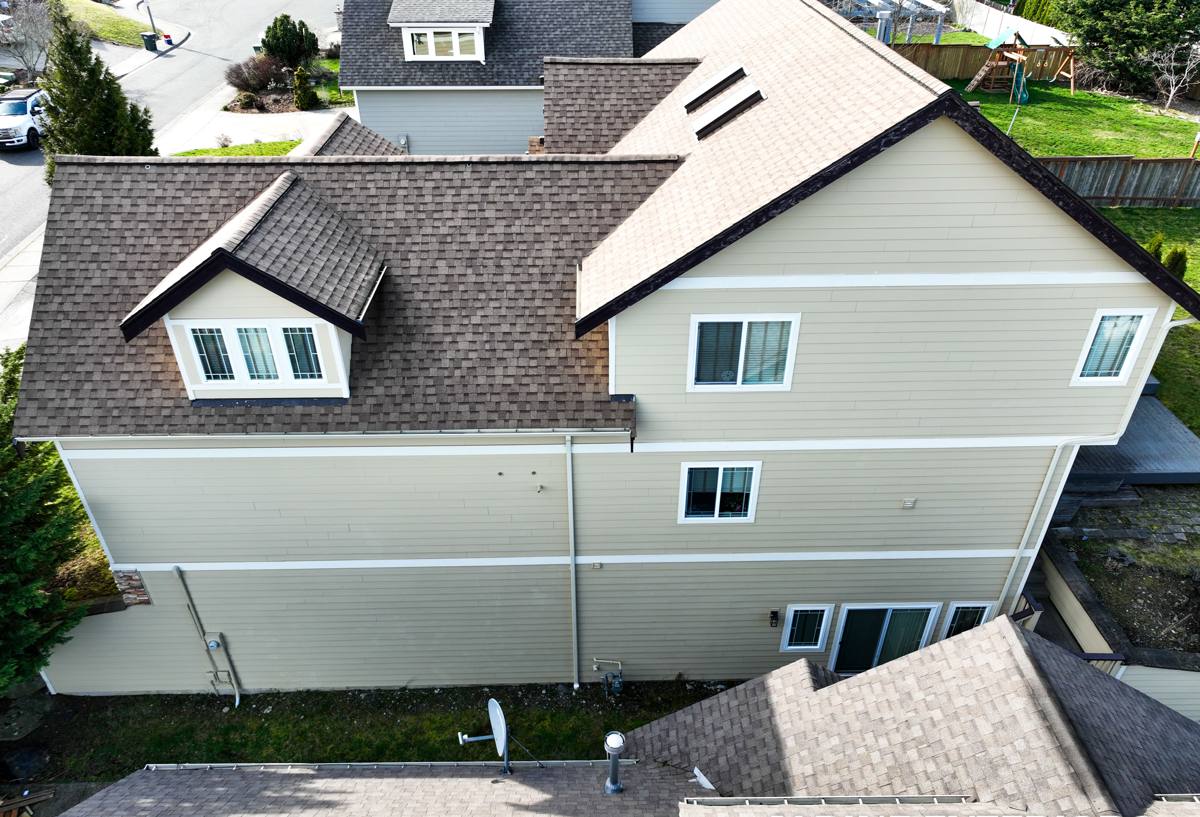
Signs Your Deck Needs Replacement, Not Just Repair
Not every deck problem calls for a full tear-off. But there's a point where board-by-board repair stops being cost-effective and starts being a way to spend money without actually solving the problem. Here's what we look for when we're evaluating whether a deck can be repaired or should be replaced:
- Soft or spongy spots in the decking surface, especially near the house or in shaded corners
- Visible rot, splitting, or crumbling at joist ends, beams, or the ledger board where the deck attaches to the house
- Rust staining or corroded fasteners, which usually means the hardware wasn't rated for the moisture exposure it's been getting
- A deck that feels bouncy, sways, or has developed a noticeable lean
- Persistent moss or algae that comes back within weeks of cleaning, indicating poor drainage or airflow underneath
- Gaps opening up between boards or around posts as the structure shifts
- A ledger board connection that was never properly flashed — a common issue on older decks built before flashing requirements were standard practice
If you're seeing two or more of these, it's worth having someone look at the structure, not just the surface boards.
What a Correct Deck Replacement Actually Involves
A deck replacement done right starts below the decking boards, not at them. The visible surface is the last thing installed, not the first thing considered.
Ledger Board and Flashing
Where the deck attaches to the house is the single most common point of failure we see on older decks in this climate. If the ledger board isn't properly flashed to shed water away from the house framing, water gets trapped between the ledger and the siding or sheathing and rots both from the inside out — often long before it's visible from outside. Correct flashing detail here is non-negotiable on every replacement we do.
Footings and Posts
Footings need to be sized and set to current code depth for frost protection, and posts need proper post bases that keep the wood off the concrete and out of standing water. A lot of older decks in this area were built with posts set directly in or on concrete, which holds moisture against the wood and is one of the more common causes of below-grade rot we find during tear-off.
Joists, Beams, and Hardware
All structural hardware — joist hangers, post bases, structural screws — needs to be rated for the exposure it's going to see, not just galvanized in a general sense. In a climate with this much sustained moisture, using the correct fastener rating is the difference between hardware that lasts the life of the deck and hardware that's corroding within a few years.
Choosing the Right Decking Material for This Climate
Every decking material has real trade-offs. We'll walk you through what fits your budget and how much maintenance you're willing to take on, but here's the honest comparison for a climate with this much sustained moisture and moss pressure:
| Material | Upfront Cost | Maintenance | Moisture & Moss Behavior |
|---|---|---|---|
| Pressure-Treated Wood | Lowest | Needs cleaning and re-sealing every 1-2 years to perform well | Prone to moss growth and surface checking if maintenance lapses; treatment protects against rot but not appearance |
| Cedar | Mid-range | Regular cleaning and periodic finish maintenance | Naturally rot-resistant but still needs airflow and cleaning to stay ahead of moss and graying |
| Capped Composite | Higher | Low — occasional washing | Doesn't rot or splinter, but moss and algae can still grow on the surface film if the deck stays shaded and damp; needs periodic cleaning to prevent staining |
| PVC Decking | Highest | Lowest | Fully synthetic, no organic material for rot; still benefits from cleaning to keep moss from taking hold on the surface |
Our standard is to spec fasteners, hardware, and structural lumber to hold up regardless of which surface material you choose — the framing underneath is what determines whether the deck is safe and solid in ten years, not just what the top boards look like today.
Our Process From Estimate to Final Walkthrough
We keep the process straightforward because homeowners deserve to know what's happening at each stage of a project on their own house.
- On-site evaluation. We inspect the existing deck, including probing framing and the ledger connection where we can, to give you an honest read on whether repair or full replacement makes sense.
- Written estimate. You get a clear scope of work and pricing before anything is scheduled — no surprise add-ons once demo starts.
- Permitting. We handle the permit application with the applicable local building department so the work is inspected and documented correctly.
- Demolition and disposal. The old deck comes out, including any compromised framing, footings, or ledger connections that need to be replaced rather than reused.
- Structural rebuild. New footings, posts, beams, joists, and properly flashed ledger connection, all built to current code.
- Decking and finish work. Surface material installed per manufacturer spec, railings and stairs completed, and all fasteners and hardware checked.
- Final walkthrough. We go over the finished deck with you and answer any maintenance questions before we consider the job done.
Permits and Code Considerations
Most full deck replacements in this area require a building permit, since you're dealing with structural elements — footings, framing, and often railings and stairs — not just a cosmetic surface swap. Depending on where your property sits, that permit goes through the City of Sumas or Whatcom County. Skipping the permit process on a structural project like this isn't a shortcut worth taking: it can create real problems at resale, with insurance, or if something needs to be corrected later. We build the permit and inspection process into our estimate and timeline up front so there are no surprises.
What Drives the Cost of a Deck Replacement
Every deck is different, so we won't quote a number without seeing the site, but the main factors that move the price are consistent from job to job:
| Factor | Why It Matters |
|---|---|
| Deck size and shape | Square footage and complexity (multiple levels, angles, curves) directly affect material and labor |
| Decking material choice | Pressure-treated, cedar, composite, and PVC span a wide cost range, as shown above |
| Extent of structural rebuild | Reusing sound footings versus replacing everything below the surface changes both cost and timeline |
| Height and railing requirements | Taller decks need code-compliant railings and sometimes additional structural bracing |
| Stairs and access points | Each set of stairs adds material, framing, and labor |
| Site access and demo complexity | Tight access or difficult debris removal adds time to the job |
We'd rather walk your property and give you real numbers than throw out a broad range that doesn't mean much once we see the actual conditions.
Why a Local Sumas Crew Matters
A deck built for this climate needs to account for how moisture behaves here specifically — how long moss season runs, how much rain the framing needs to shed without ever fully drying between storms, and which fastener and flashing details actually hold up over years of that exposure rather than just passing inspection on day one. That's the kind of judgment that comes from working on decks in this specific area repeatedly, not from a general framing crew passing through. It also means we're not disappearing after the final payment — if a warranty question or a maintenance question comes up two years down the road, we're still working in the same area and easy to reach.
Maintaining Your New Deck
Whatever material you choose, a little seasonal maintenance goes a long way in this climate. Clear leaves and debris regularly so water and moss don't have a place to sit. Keep gutters and downspouts near the deck clear so runoff isn't dumping directly onto or under it. Wash the surface at least once a year to stay ahead of moss and algae before it takes hold, and check railings and stair connections periodically for looseness. A deck built correctly and maintained lightly will outlast one that was built cheap and ignored, by a wide margin.
If your deck is showing its age, or you're just not sure whether it needs repair or full replacement, we're happy to take a look and give you a straight answer. Reach out for a free, no-pressure estimate using the form below.