 Semiahmoo
 Roofing Built for Sumas, Not for a Catalog Photo
A new roof is one of the few home improvements where the installation matters more than the material. In Sumas and the rest of Whatcom County, that's especially true. Salt-laden air off the Strait, long stretches of driving rain, and a moss season that can run most of the year all put stress on a roof system that a dry-climate installer simply doesn't plan for. We install roofs for this specific set of conditions, and this page walks through what that actually means for a Sumas homeowner.
This isn't a general overview of roofing. It's what a correct new roof installation looks like when the job is here, on a home that has to hold up to this weather, year after year.
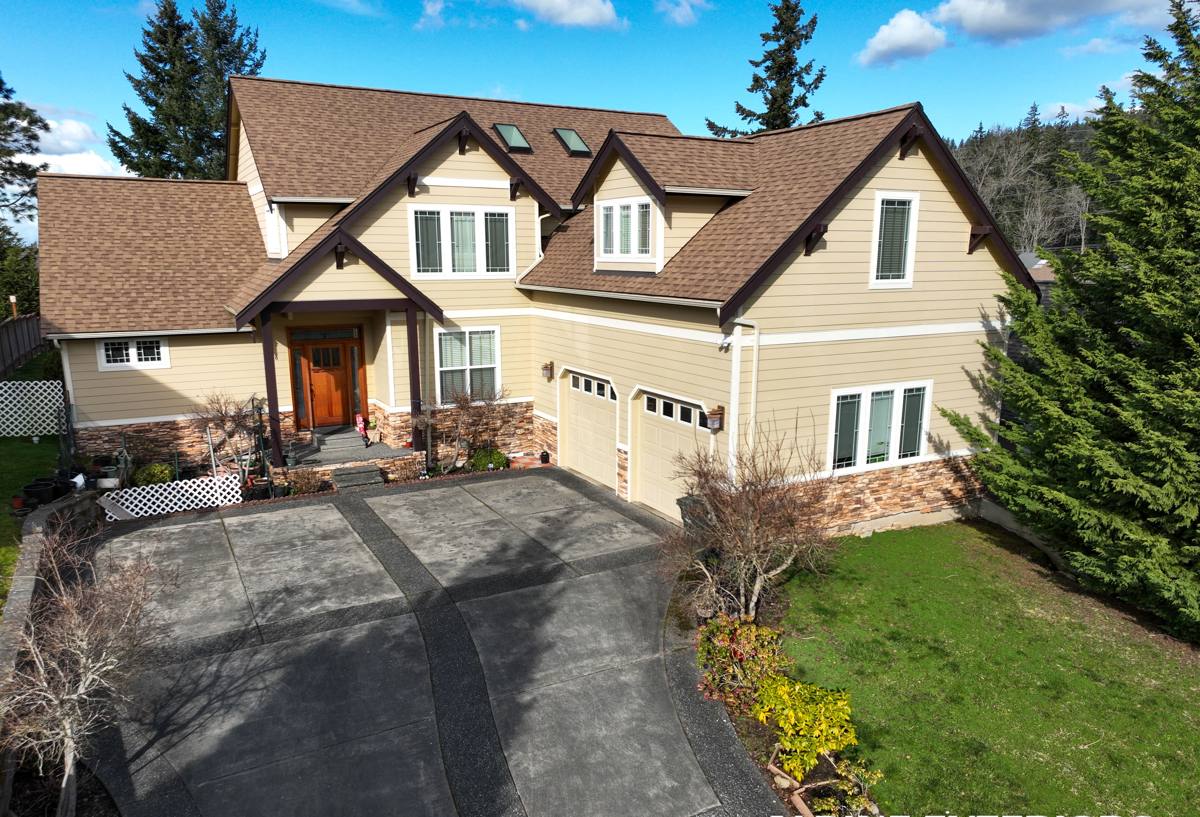
What Northwest Washington Weather Does to a Roof
Moss and Organic Growth
Moisture that lingers on a roof surface, combined with shade from mature trees common to this part of the county, creates ideal conditions for moss and algae. Left alone, moss holds water against shingles and underlayment, lifts shingle edges, and works its way into fastener lines. A roof that's shedding water properly and ventilated correctly resists this far better than one that isn't — much of moss prevention is actually a design and installation issue, not just a cleaning chore.
Wind-Driven Rain
Rain here rarely falls straight down. Wind pushes it sideways and up under laps, edges, and penetrations — the places a roof is most likely to leak. This is why flashing detail and underlayment choice matter as much as the shingle or panel on top. A roof that looks fine from the ground can still be letting water in at a poorly lapped valley or an under-flashed vent.
Salt Air and Metal Components
Homes closer to the water deal with airborne salt that accelerates corrosion on unprotected fasteners, flashing, and metal roofing components. It doesn't mean metal or steel fasteners are off the table — it means the grade of metal and the fastener coating need to match the exposure, not just be whatever's cheapest at the supply house.
Signs a Sumas Home Actually Needs a New Roof
Not every roof problem calls for full replacement. Before we recommend a new roof, we look for a pattern of issues rather than one isolated symptom. These are the signs that usually point to replacement rather than repair:
- Granule loss heavy enough that shingles look patchy or bald in sun-exposed areas
- Shingles that are cupping, curling, or cracking, especially on south- and west-facing slopes
- Moss or algae buildup that returns quickly after cleaning
- Soft or spongy decking felt underfoot during inspection
- Daylight visible through the roof deck from inside the attic
- Water stains on ceilings or in the attic that show up after wind-driven rain specifically
- A roof at or past 20–25 years old for asphalt composition, regardless of visible condition
- Multiple past repairs in different areas rather than one contained problem
If a roof is showing two or more of these, it's usually more cost-effective to replace than to keep patching.
What a Correct Roof Installation Actually Involves
Tear-Off and Deck Inspection
We remove the old roofing down to the deck rather than laying new material over old — overlaying hides deck problems and shortens the life of everything installed on top of it. Once the deck is exposed, we check for soft spots, delamination, and any framing issues that need to be addressed before new material goes down. Any bad decking gets replaced, not covered.
Ice and Water Barrier, and Underlayment
Given how much wind-driven rain this area sees, self-adhering ice-and-water membrane at eaves, valleys, and around penetrations isn't optional — it's the backup layer that keeps a home dry when wind pushes water past the primary roofing material. A synthetic underlayment covers the rest of the deck, giving a second line of defense across the whole roof.
Ventilation
A roof that can't breathe traps moisture in the attic, which shortens the life of the decking and encourages the exact moss and mildew problems this climate already pushes toward. Proper intake at the eaves and exhaust at the ridge keeps air moving and the deck dry from underneath, not just the top.
Flashing Details
Valleys, chimneys, skylights, and wall intersections are where roofs actually fail. We flash these areas individually rather than relying on the field material to do the work, and we use flashing metal and fasteners suited to the salt exposure common in this part of Whatcom County.
Choosing the Right Material for This Climate
There's no single "best" roofing material — the right choice depends on the home, the budget, and how much maintenance the owner wants to take on. Here's an honest comparison of the options we install most often in this area:
| Material | Moss/Moisture Resistance | Wind Performance | Maintenance | Typical Lifespan |
|---|---|---|---|---|
| Architectural Asphalt Composition | Good, especially with algae-resistant granules | Good when properly nailed and sealed | Periodic moss removal recommended | 25–30 years |
| Standing Seam Metal | Excellent — sheds water fast, little surface for moss to grip | Excellent | Low; occasional fastener/coating check near salt exposure | 40–60 years |
| Cedar Shake | Requires diligent upkeep — organic material in a wet climate | Good when installed correctly | High; regular treatment and inspection needed | 20–30 years with upkeep |
| Composite/Synthetic Shake | Good — engineered to resist moisture absorption | Good to excellent depending on product | Low to moderate | 30–50 years |
We'll walk through these trade-offs honestly during an estimate rather than steering toward whatever has the highest margin. For a lot of Sumas homes, architectural asphalt with a moss-resistant granule package is the most sensible balance of cost, appearance, and performance. For homes closer to the water or with a lot of tree shade, metal is worth serious consideration even at a higher upfront cost, because it holds up to both driving rain and salt air with the least ongoing maintenance.
Our Installation Process, Start to Finish
- On-site inspection and estimate. We look at the existing roof, attic ventilation, and any problem areas before quoting anything.
- Material selection. We go over the options above in plain terms, matched to the home and budget — no upsell pressure.
- Scheduling around weather windows. Roofing here has to work with the rain, not against it — we plan tear-off and dry-in to minimize exposure days.
- Tear-off and deck repair. Old material comes off, the deck gets inspected, and any bad sections are replaced.
- Underlayment and flashing installation. Ice-and-water barrier, synthetic underlayment, and detailed flashing at every penetration and transition.
- New roofing installation. Installed to manufacturer specification, not just "close enough" — this is what warranty coverage actually depends on.
- Ventilation check and final walkthrough. We confirm intake and exhaust venting are balanced and walk the finished roof with the homeowner.
- Cleanup. Job site and yard cleared of debris and old material, including a magnetic sweep for stray fasteners.
Why Local Experience in Sumas Matters
A crew that only shows up for the occasional job in this area doesn't have a feel for how differently a roof behaves half a mile from the water versus further inland, or which slopes on a given lot roof tend to hold moss longest based on tree cover and sun exposure. Working regularly throughout Whatcom County means we've seen how these specific conditions — salt air, driving rain, extended moss season — actually play out on real roofs over years, not just on a spec sheet. That shapes decisions like underlayment choice, flashing metal, and ventilation layout in ways a one-size-fits-all approach misses.
It also means we're accountable locally. If something needs attention after installation, we're not driving in from three counties away.
Permits, Warranty, and What to Expect
Most roof replacements in this area require a building permit, and we handle that process as part of the job rather than leaving it to the homeowner. Manufacturer warranties on materials typically range from 25 years to lifetime depending on the product line, but that coverage is usually contingent on correct installation — another reason installation quality matters as much as the material itself. We also stand behind our own workmanship separately from the manufacturer's material warranty, and we'll explain exactly what's covered by each before any work starts.
Cost varies by roof size, pitch, material, and how much deck repair is needed once the old roofing comes off — anyone quoting a firm number without seeing the roof in person is guessing. We give real numbers after a real inspection, not a phone estimate.
Ready for a Straight Answer on Your Roof?
If your roof in Sumas is showing its age, holding moss it shouldn't, or you just want an honest read on how much life it has left, we're glad to take a look. Use the form below to request a free, no-pressure estimate — we'll inspect the roof, explain what we find, and lay out real options without any hard sell.