 Semiahmoo
 Roof Repair in Sumas: What Local Homes Are Up Against
Sumas sits at the edge of Whatcom County, and like the rest of this corner of Washington, it gets a long, wet season that doesn't let up quickly. Roofs here don't usually fail because of one big storm — they fail slowly, from months of standing moisture, shaded moss growth, and wind-driven rain finding the smallest gap in flashing or shingles. A roof that would hold up fine in a drier climate can start showing leaks within a few years here if it wasn't detailed correctly for this region.
We work on homes throughout the Semiahmoo area and into Sumas, and the repair calls we get tend to follow a pattern tied directly to the local climate: moss-related shingle damage, flashing that's corroded or come loose from repeated wet-dry cycling, and gutters that overflow during heavy rain and send water back up under the roof edge. None of these are unusual problems — but they need to be diagnosed and fixed with this climate in mind, not treated like a generic patch job.
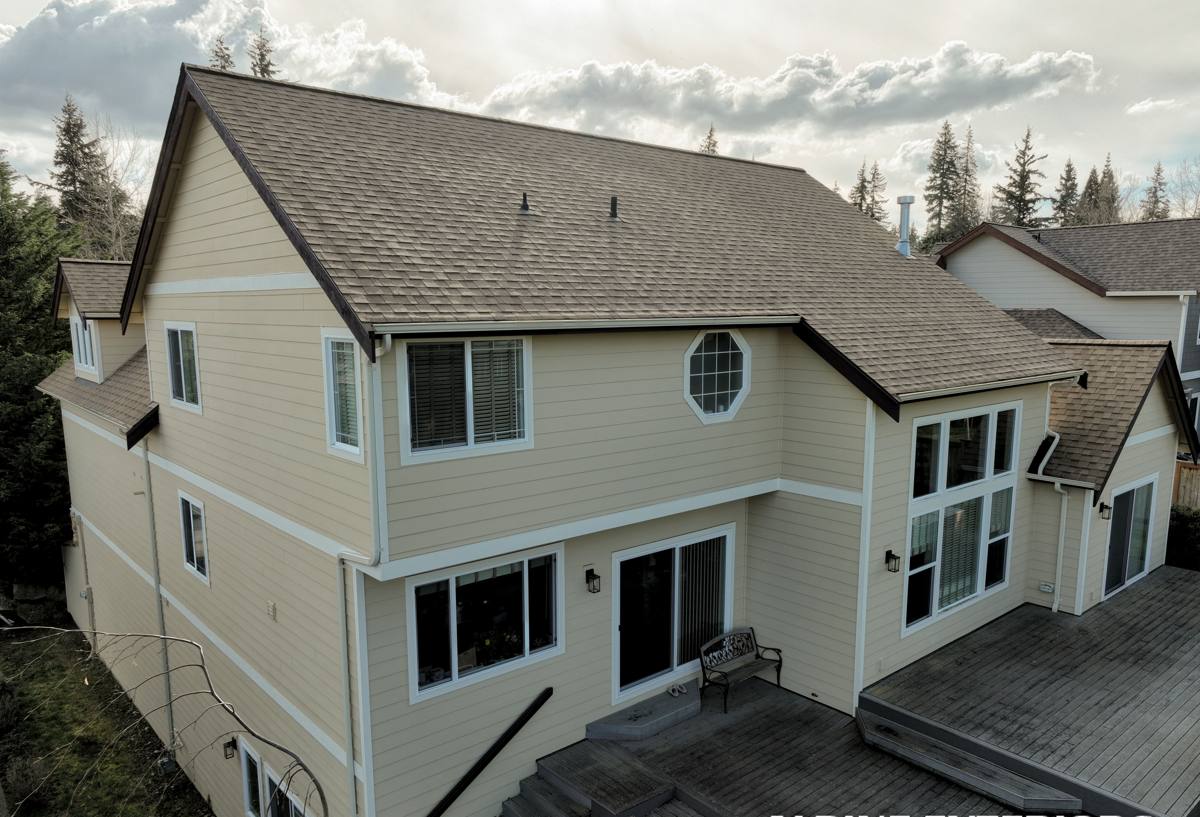
Why Roofs in This Area Wear Differently
Whatcom County's climate is a mix of steady rainfall, cool damp air for much of the year, and enough proximity to salt air near the water to accelerate corrosion on exposed metal. That combination changes how a roof ages compared to drier or more inland parts of Washington.
Moss and Organic Growth
Shaded roof sections — north-facing slopes, areas under overhanging trees — stay damp longer here than they would in a sunnier climate. Moss takes hold in those spots, and as it grows it lifts shingle edges and holds moisture directly against the roofing material. Left alone, that moisture works its way under the shingle layer and starts breaking down the decking underneath.
Driving Rain and Wind
Storms coming off the water often bring rain at an angle rather than straight down. That kind of driving rain finds weaknesses that vertical rain wouldn't — lifted shingle tabs, gaps at ridge caps, and flashing that's slightly separated from the surface it's sealed to. A roof can look fine in dry weather and still leak during a windy rain event.
Salt Air and Metal Fatigue
Homes closer to the water deal with salt-laden air that speeds up corrosion on exposed fasteners, flashing, and any unprotected metal roofing components. Corroded flashing is one of the most common leak sources we find on older roofs in this area — it's often the actual point of failure even when the shingles themselves still look okay.
What a Correct Roof Repair Actually Involves
A roof repair done right isn't just about stopping the drip you can see from inside. Water rarely leaks straight down — it travels along the underside of the roof deck and shows up somewhere other than where it entered. That means a proper repair starts with finding the real source, not just patching the visible symptom.
- Inspecting the full roof surface, not just the area near the reported leak
- Checking flashing around chimneys, vents, skylights, and roof-to-wall transitions — the most common leak points
- Assessing moss coverage and any shingle lift or granule loss it's caused
- Confirming gutters and downspouts are actually moving water away from the roof edge and foundation
- Checking attic decking (where accessible) for signs of moisture staining, soft spots, or existing rot
- Matching replacement materials to the existing roof so the repair blends in and performs consistently
Skipping the diagnostic step is how homeowners end up paying for the same leak twice — once for a patch that only addressed where the water was visible, and again later when the actual entry point finally gets found.
Common Repair Scenarios We See in Sumas
Flashing Failures
Flashing is thin metal, and it's the piece most exposed to the wet-dry, sometimes salt-tinged air cycle this region puts it through. Once it corrodes, cracks, or pulls away from its seal, it becomes a direct path for water. Flashing repair or replacement is one of the most common — and most cost-effective — fixes we do, especially around chimneys and roof valleys.
Moss-Damaged Shingle Sections
When moss has been established for a while, the shingles underneath it are often already compromised — lifted, cracked, or stripped of granules. In these cases, a full moss treatment plus targeted shingle replacement in the affected section is usually more durable than just cleaning the moss off and leaving damaged shingles in place.
Leaks Around Roof Penetrations
Vents, skylights, and anything else that punches through the roof surface is a seal that can fail over time. These leaks are often small and slow, which means they can go unnoticed until there's visible water staining on a ceiling — by which point there may already be some deck moisture to address.
Gutter-Related Water Damage
This isn't technically a roofing problem, but it causes roofing problems. Clogged or undersized gutters back water up at the roof edge, which can work its way under the first course of shingles. We flag this during every repair inspection because fixing the roof without addressing the gutter issue often means the same damage comes back.
Repair or Replace: How We Help You Decide
Not every damaged roof needs full replacement, and not every leak can be permanently solved with a patch. The right call depends on the roof's age, how widespread the damage is, and what condition the decking underneath is in.
| Factor | Leans Toward Repair | Leans Toward Replacement |
|---|---|---|
| Roof age | Under 15 years, within expected lifespan | Near or past manufacturer's expected service life |
| Damage extent | Localized — one section or a few spots | Widespread moss, multiple leak points, or aging across the whole surface |
| Decking condition | Solid, no rot found during inspection | Soft spots or moisture damage found in the deck itself |
| Repair history | First or second repair on this roof | Recurring leaks in different spots despite past repairs |
| Material availability | Matching shingles/materials still available | Original material discontinued, making patches visually mismatched |
We'll walk you through where your roof lands on that table honestly. If a repair will genuinely hold, that's what we'll recommend — replacement isn't the answer just because it's more billable.
Our Repair Process
- Inspection and diagnosis — We assess the whole roof, not just the reported problem area, and identify the actual water entry point.
- Written scope and estimate — You get a clear explanation of what's damaged, why, and what the repair involves before any work starts.
- Repair work — Flashing, shingles, moss treatment, or decking work is completed using materials matched to your existing roof.
- Cleanup and gutter check — We confirm water is draining properly away from the repaired area so the same issue doesn't recur.
- Follow-up — If anything about the repair doesn't hold up as expected, we want to hear about it.
Why a Crew That Already Works This Area Matters
Roof repair isn't a one-size-fits-all trade. A contractor who mostly works drier inland climates may not think to check flashing corrosion first, or may underestimate how much moss can compromise a shingle section before it's visibly obvious. Working roofs throughout Whatcom County and the Semiahmoo area consistently means we're used to diagnosing the specific failure patterns this climate produces, rather than treating every leak as a generic one-off.
It also means we're realistic about timing. Roof repairs in this region are weather-dependent, and scheduling around dry windows matters — both for the safety of the crew and for getting a proper seal on the work. A crew unfamiliar with the local weather pattern can end up rushing repairs into marginal conditions, which shortens how long the fix actually lasts.
Simple Maintenance That Extends Your Roof's Life
A few habits go a long way toward reducing how often you need repair work in the first place:
- Clear moss buildup before it spreads across a full slope — early treatment is far cheaper than shingle replacement
- Keep gutters clear, especially in fall and through the wet season
- Trim back tree branches that keep sections of the roof shaded and slow to dry
- Have flashing checked periodically, especially on roofs over 10 years old
- Address small leaks quickly — a slow drip today is cheaper to fix than deck rot next year
If you're dealing with a leak, visible moss damage, or just want an honest read on your roof's condition, we're glad to take a look. Fill out the form below for a free, no-pressure estimate — we'll tell you straight whether you're looking at a repair or something bigger, and why.