 Semiahmoo
 Why Birch Bay Windows Age Faster Than Windows Inland
Birch Bay sits right on the water, and that changes how windows fail. Homes a few miles inland in Whatcom County deal with plenty of rain and cold, but they don't get the constant salt-laden air rolling off the bay day after day. That salt air works its way into frame corners, weep holes, and hardware, and it speeds up corrosion in ways that are hard to see until a window won't latch right or the frame starts pitting near the bottom corners.
Add in driving rain that comes sideways off the water during fall and winter storms, and there's a second problem: wind-driven moisture finds every gap in flashing and sealant that a calmer inland site would never expose. Then there's the long moss season — Whatcom County's wet, mild winters keep moss and algae growing on north- and west-facing walls for months at a stretch, holding dampness against wood trim and frame edges long after the rain itself has stopped.
None of this means Birch Bay homes need exotic materials or gimmicks. It means the installation details that get skipped on a rushed job — the ones nobody sees once the trim goes back on — matter more here than in most parts of the region.
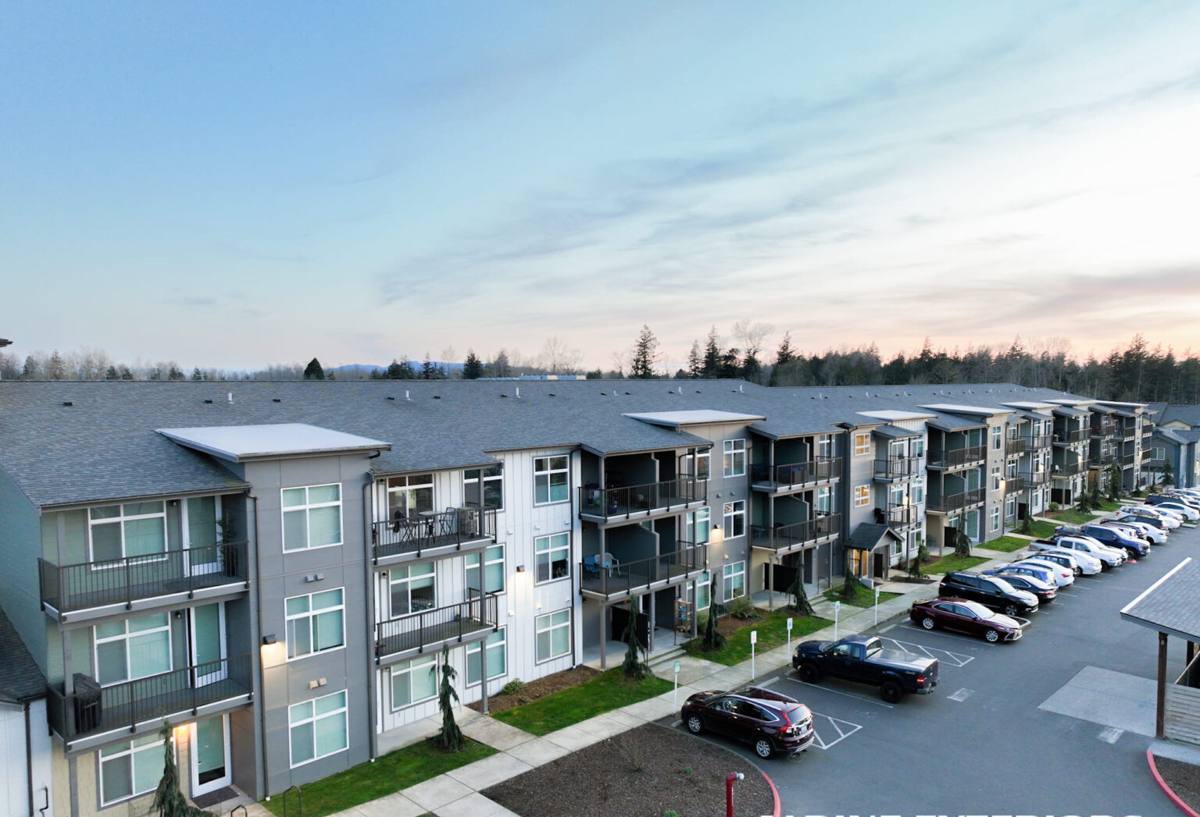
What a Correct Window Replacement Actually Involves
It Starts Below the Window, Not At It
A window replacement that holds up in this climate isn't really about the window unit itself — it's about everything built around the opening. That means a sloped sill pan that sheds water outward instead of letting it pool against the sheathing, a properly lapped weather-resistant barrier, and flashing tape sequenced so water is always directed down and out, never trapped behind the new frame.
Sealant Is a Backup, Not the Plan
Caulk and sealant fail eventually — that's true of every product on the market, regardless of brand. A correct install treats mechanical flashing and lapping as the primary defense against water intrusion, with sealant working as a secondary layer on top of that. If sealant is doing all the work on its own, the window will leak eventually; it's just a matter of when the caulk gives up.
Fastening and Shimming Matter for Longevity
Windows shimmed unevenly, or fastened without support at the right points, will rack, bind, and stop operating smoothly within a few years — often well before the glass or hardware would have failed on its own. Correct shimming keeps the frame square so sashes open, close, and lock the way they're supposed to for the full life of the window.
Signs a Birch Bay Home Needs Window Replacement
Some of these show up gradually, others all at once after a bad storm off the water. Worth checking for:
- Fogging or a hazy film between panes — the seal on the insulated glass unit has failed
- Frames that feel soft, spongy, or discolored at the bottom corners
- Visible pitting, chalking, or corrosion on frames facing the bay
- Windows that are hard to open, won't stay up on their own, or don't latch tightly
- A cold draft at the frame edge even when the window is fully closed and locked
- Moss or dark staining building up on the sill or lower trim year after year
- A noticeable jump in heating costs with no other clear explanation
- Condensation forming on the inside of the glass regularly during cold snaps
Any one of these on its own might just need a repair. Several at once, especially on the bay-facing side of the house, usually means the window and the flashing around it are past the point where patching makes sense.
Frame Material Comparison for a Marine Climate
Every frame material has trade-offs. In a salt-air, high-moisture environment like Birch Bay, some of those trade-offs matter more than they would a hundred miles inland.
| Material | How It Handles Salt Air & Moisture | Maintenance | Where It Fits Best |
|---|---|---|---|
| Vinyl | Won't corrode or rust; performs consistently near the water | Low — occasional rinse and wipe-down | Most Birch Bay homes, especially full-home replacements on a budget |
| Fiberglass | Excellent — dimensionally stable, resists moisture and salt exposure well | Low | Homes closer to the water or with heavy sun and storm exposure |
| Aluminum | Prone to pitting and corrosion over time in salt air unless heavily coated | Moderate to high near the bay | Better suited to drier, inland applications than direct waterfront exposure |
| Wood-clad | Vulnerable wherever cladding is breached; interior wood can hold moisture | High — ongoing inspection and finish upkeep | Homes prioritizing a specific interior wood look, with realistic maintenance expectations |
We don't push one material on every homeowner. What we do is explain honestly which materials hold up with the least fuss given how close a given home sits to the water and how much sun or wind exposure it gets. For most Birch Bay properties, vinyl or fiberglass ends up being the lower-maintenance, longer-term choice — not because aluminum or wood-clad are bad products, but because they ask more of the homeowner in this specific climate.
Energy Performance and Comfort in a Marine Climate
Whatcom County's winters aren't brutally cold compared to the rest of the state, but the combination of persistent dampness, wind off the water, and long stretches of gray, low-sun days means comfort is as much about draft control and condensation resistance as it is about raw insulation value. An old, leaky window doesn't just waste energy — it lets in enough cold, damp air to make a room feel uncomfortable even when the thermostat says it should be fine.
Double-pane, low-E glass is the standard starting point for most Birch Bay replacements, and it performs well here. Triple-pane is worth discussing for rooms that face directly into prevailing wind and rain, or for homeowners who are especially sensitive to drafts and outside noise, but it's not a blanket recommendation — the added cost only makes sense in specific situations, and we'll tell you plainly when we think it does or doesn't for your home.
Condensation on the inside of new, correctly installed windows during cold snaps is often a sign of household humidity levels, not a defective window — bathroom fans, kitchen ventilation, and general airflow in the home all play a role. We'll flag this during the estimate if it looks like it could be a factor.
Our Window Replacement Process
- On-site assessment. We look at every opening individually — sun exposure, wind exposure, existing flashing condition, and any signs of past water intrusion around the frame.
- Honest scope. We tell you which windows genuinely need replacement now, which are fine for a few more years, and where a repair is the more sensible call.
- Removal and inspection of the opening. Once the old window is out, we check the sheathing and framing underneath before anything new goes in. Hidden rot or old damage gets addressed, not covered up.
- Sill pan and flashing installed correctly. This is the step that determines whether the window is still performing in fifteen years or leaking in three.
- New window set, shimmed, and fastened square. Proper shimming keeps the unit operating smoothly for its full service life.
- Interior and exterior finish work. Trim, sealant, and touch-up are completed to match the rest of the home.
- Walkthrough. Every replaced window gets opened, closed, and locked in front of the homeowner before we consider the job done.
What Drives Cost on a Birch Bay Window Job
Every project is different, but the same handful of factors move the price up or down on most jobs in this area:
| Factor | Why It Matters |
|---|---|
| Number and size of windows | Larger openings and full-home replacements use more material and labor per project, but often land at a better per-window price than one-off jobs |
| Frame material chosen | Vinyl is typically the most budget-friendly; fiberglass and wood-clad cost more upfront |
| Condition behind the existing window | Rot or water damage found during removal adds repair work before the new window can go in correctly |
| Exposure and access | Bay-facing walls, second-story openings, or difficult access can add labor time |
| Existing flashing and trim condition | Homes needing a full re-flash or new trim cost more than a straightforward swap into good existing conditions |
We give a written estimate that breaks these out so you know what you're paying for, not just a single lump-sum number.
Why Local Experience in Birch Bay Specifically Matters
A crew that mostly works dry, inland jobs can still install a technically correct window — but they're guessing at how much margin to build in for wind-driven rain, how aggressive the salt exposure will be on a given wall, and how long moss and moisture tend to sit against trim before anyone notices. A crew that already works Birch Bay and the wider Semiahmoo area isn't guessing. We've seen which walls take the worst of the weather, which older flashing details tend to fail first, and what actually holds up through a full Whatcom County winter, not just what looks good on installation day.
That local pattern recognition shows up in small decisions — which sill pan detail to use on a bay-facing wall, when to recommend a slightly higher-spec sealant, when a homeowner's "it's just condensation" is actually an early seal failure. None of it is complicated work, but it only comes from having done the job here, repeatedly, in this specific climate, rather than treating it like any other job in any other town.
Keeping New Windows Performing After Installation
A correctly installed window in this climate still needs a little upkeep from the homeowner:
- Rinse salt residue off frames and glass a few times a year, especially on bay-facing sides
- Keep gutters and downspouts clear so runoff isn't sheeting down across window heads
- Clear moss and organic buildup off sills and trim before it holds moisture through the winter
- Check and re-lubricate hardware annually so locks and rollers don't seize or corrode
- Watch for new gaps in exterior caulking each spring and have them addressed promptly
None of this is high-maintenance — it's the same kind of seasonal check most homeowners already do for gutters and siding. Doing it consistently is what lets a well-installed window actually reach its expected lifespan instead of falling short of it.
If you're noticing drafts, fogged glass, or sticking windows on a Birch Bay home, we're happy to take a look and give you a straightforward, no-pressure estimate — free, with no obligation, using the form below.