 Semiahmoo
 Siding That Has to Work Year-Round in Wiser Lake
Homes around Wiser Lake sit in one of the wetter corners of Whatcom County, and the siding on those homes earns its keep. Salt-tinged air drifting in off the water, long stretches of driving rain, and a moss season that seems to run longer every year all put steady pressure on whatever material is nailed to the wall. Siding here isn't just cosmetic — it's the first line of defense against moisture finding its way into wall sheathing, framing, and insulation, and it has to hold up to that pressure for decades, not years.
That's why we install fiber cement siding, and specifically why we install only James Hardie products, on every home we side in this area. It's a material built to shed water, resist the moisture-loving growth that coats north-facing walls and shaded eaves around here, and hold its finish without constant upkeep from the homeowner.
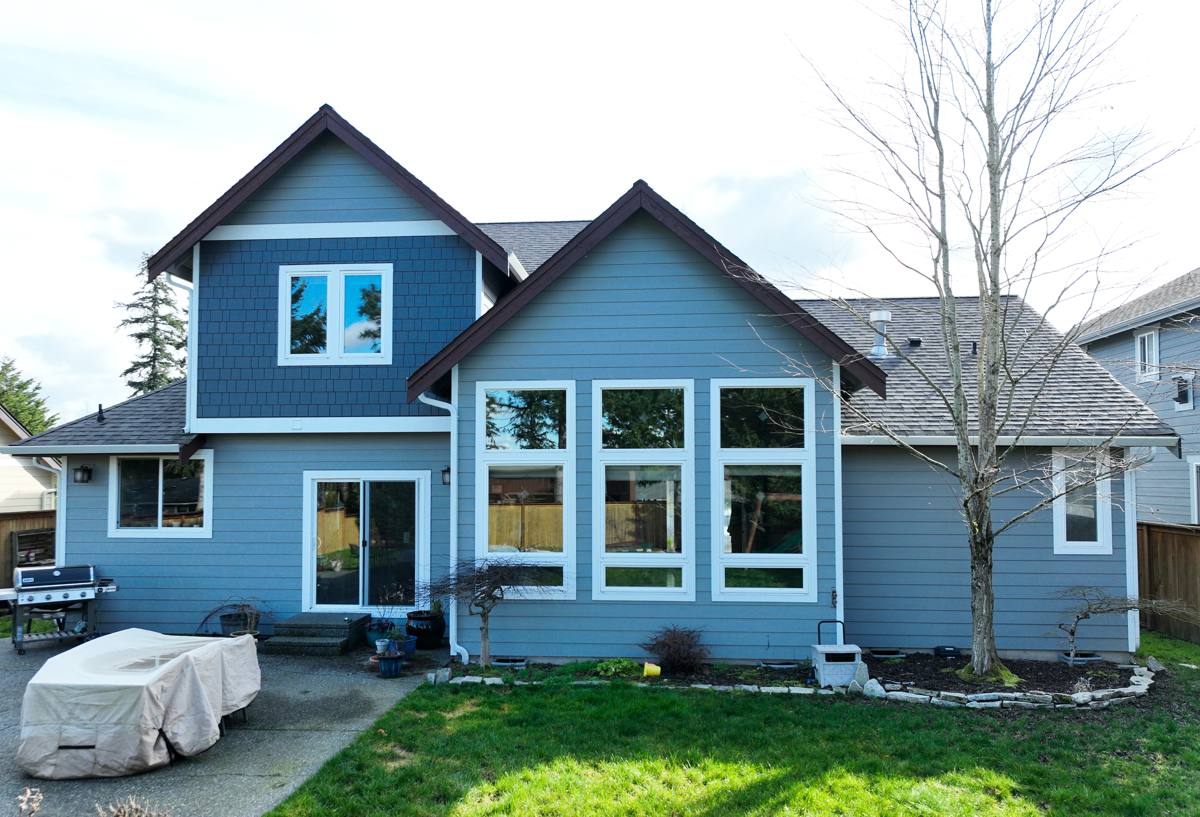
What the Climate Actually Does to Siding
Moisture That Doesn't Let Up
Whatcom County gets a lot of rain, and a good share of it arrives sideways during winter storms. Wind-driven rain finds every gap, seam, and fastener hole that wasn't detailed correctly. Over time, siding that isn't flashed and installed to spec lets water behind the cladding, where it can sit against sheathing and framing for months at a stretch before anyone notices a problem.
Salt Air and Slow Corrosion
Proximity to the water means a steady, low-level exposure to salt-laden air. It's not the same as a beachfront property getting direct spray, but it's enough over the years to accelerate corrosion on fasteners, hardware, and any siding material that isn't rated for it, and to speed up the breakdown of paint films and coatings that aren't factory-cured.
Moss, Algae, and Shade
Between tree cover and the long wet season, moss and algae get a real foothold on siding here, especially on north- and west-facing walls that don't get much direct sun to dry out. Some materials give moss something to grip and feed on — porous surfaces, wood grain, seams that trap organic debris. Others shed it far more easily.
Why We Standardized on James Hardie
We made a deliberate decision to install only James Hardie fiber cement siding, and we turn down jobs where a homeowner wants us to install something else. That's not a marketing position — it's based on what holds up in this specific climate and what we're willing to put our name behind.
What We Don't Install, and Why
- Vinyl siding — inexpensive and low-maintenance in mild climates, but it's a thin material that expands and contracts with temperature swings, can crack in cold snaps, and is genuinely vulnerable to wind damage in the kind of driving storms this area sees. It also fades over time with no practical way to refinish it short of replacement.
- LP SmartSide — an engineered wood product with real strengths, but wood-based substrates depend on flawless caulking, flashing, and end-cut sealing to keep water out. In a climate this wet, any lapse in maintenance creates an opening for swelling and rot at the seams.
- Primed spruce or cedar — beautiful materials, but they need repainting or staining on a recurring cycle, and in a moss-prone, high-moisture climate, that maintenance window shrinks. Skipped maintenance shows up fast as rot, cupping, and moss growth.
- Cemplank and Allura — both are legitimate fiber cement products, but they're not what we build our installation process, flashing details, and warranty backing around. We standardized on one manufacturer's system so every crew member installs it the same correct way every time, and so the factory warranty and our workmanship line up cleanly if anything ever needs attention.
What Hardie Gets Right for This Climate
James Hardie fiber cement is a cement, sand, and cellulose fiber composite — it doesn't rot, it doesn't feed moss the way wood fiber does, and it's non-combustible. Hardie's HZ5 formulation is engineered specifically for climates with freeze-thaw cycles and heavy moisture exposure like the Pacific Northwest, and the ColorPlus factory-applied finish is baked on and warranted separately from the substrate, which means the color holds up to UV and salt air far longer than field-applied paint.
Comparing the Options
| Material | Moisture Behavior | Moss/Algae Resistance | Maintenance Cycle |
|---|---|---|---|
| James Hardie fiber cement | Dimensionally stable, doesn't swell or rot | Resists growth better than wood-fiber products | Occasional wash-down; no repainting for years |
| Vinyl | Doesn't absorb water but can crack/warp with temperature swings | Sheds growth but seams trap debris | Low, but no refinishing option once faded |
| LP SmartSide / engineered wood | Vulnerable at cut edges and seams if sealing fails | Moderate; wood fiber can support growth if damp | Regular caulk/seal inspection required |
| Cedar / primed spruce | Absorbs moisture; prone to cupping and rot over time | Low resistance in shaded, wet conditions | Repaint or restain every few years |
What a Correct Fiber Cement Job Actually Involves
Fiber cement siding is only as good as its installation. A misaligned nail pattern, a missed flashing detail, or siding installed tight to a deck or roofline with no clearance will cause problems no matter how good the material is. On a Wiser Lake home, we pay particular attention to:
Water Management Behind the Siding
A correctly lapped weather-resistive barrier, properly integrated window and door flashing, and a drainage plane that lets any incidental moisture escape rather than pool behind the cladding. This is the part of the job nobody sees once it's finished, and it's the part that determines whether the wall assembly stays dry for the next thirty years.
Fastening and Clearances
James Hardie specifies fastener type, spacing, and placement for a reason — get it wrong and you risk buckling, cracking, or reduced wind resistance. We also hold the manufacturer's minimum clearances from grade, roofing, and decking, which keeps splash-back moisture and standing water away from the bottom edge of the siding.
Joints, Caulking, and Trim
Butt joints, corners, and trim transitions are where most siding failures start. We follow Hardie's detailing for joint treatment and use compatible sealants at every transition, rather than relying on caulk to cover up a poor fit.
Our Process for a Wiser Lake Home
- On-site assessment — we look at existing siding condition, sheathing, moisture history, and anything specific to the lot (shade, drainage, exposure) that should shape the install.
- Tear-off and inspection — removing the old siding lets us check sheathing and framing for hidden moisture damage before anything new goes up, rather than covering a problem.
- Water barrier and flashing — house wrap, flashing, and drainage details go in first and get inspected before siding starts.
- Hardie installation to spec — correct fastening, clearances, and joint treatment throughout, following James Hardie's published installation requirements.
- Trim, caulking, and finish details — the visible finish work that determines how clean the job looks and how well it sheds water at every transition.
- Final walkthrough and warranty registration — we register the product warranty and walk the homeowner through basic care.
What Drives the Cost of a Siding Job Here
| Cost Factor | Why It Matters |
|---|---|
| Home size and wall complexity | More square footage and more corners, gables, and dormers mean more material and labor. |
| Tear-off vs. install over existing | Removing old siding adds labor but lets us inspect and fix sheathing issues before they're hidden again. |
| Siding profile selected | Lap siding, shingle-style panels, and board-and-batten all have different material and labor costs. |
| Trim and detail work | Homes with more windows, custom trim, or architectural detailing take more time to finish correctly. |
| Site access | Steep lots, limited driveway access, or tight setbacks near neighboring homes can affect staging and labor time. |
Living With Fiber Cement in This Climate
Once it's installed correctly, Hardie siding asks very little of a homeowner. It won't need repainting on the schedule wood does, and it won't develop the moss buildup as quickly as more porous materials in shaded, damp spots. That said, a few habits keep it looking its best in a climate like this one:
- Rinse siding periodically, especially on shaded or north-facing walls where moisture lingers longest
- Keep gutters clear so overflow doesn't run down the siding face repeatedly
- Trim back vegetation and tree limbs that keep a wall section damp and shaded
- Inspect caulking at trim joints and penetrations every year or two and refresh as needed
- Address any impact damage promptly rather than letting an exposed edge take on water
Why a Locally Experienced Crew Matters
Fiber cement installation isn't complicated in theory, but the details that matter most — flashing choices, clearance decisions, how aggressively to detail a joint against wind-driven rain — are the ones a crew learns by working this specific climate repeatedly. A crew that already works homes around Semiahmoo and Whatcom County has seen how moisture actually moves on local walls, where moss tends to establish first, and which details are worth extra attention versus which are standard. That local pattern recognition is difference between a siding job that looks good on installation day and one that's still performing exactly as it should twenty years later.
If you're weighing options for a Wiser Lake home, we're glad to take a look, walk you through what correct installation involves, and put together a free, no-pressure estimate.